Guides on how commercial property losses actually unfold — what downtime costs, which building systems control the recovery, and when a property is genuinely ready to reoccupy.
Home/Blog/Las Vegas Restaurant Sewage Cleanup and Reopening Checklist
Las Vegas Restaurant Sewage Cleanup and Reopening Checklist
Published November 18, 2026 · Commercial Water Damage Restoration Team · Reoccupancy & Safety
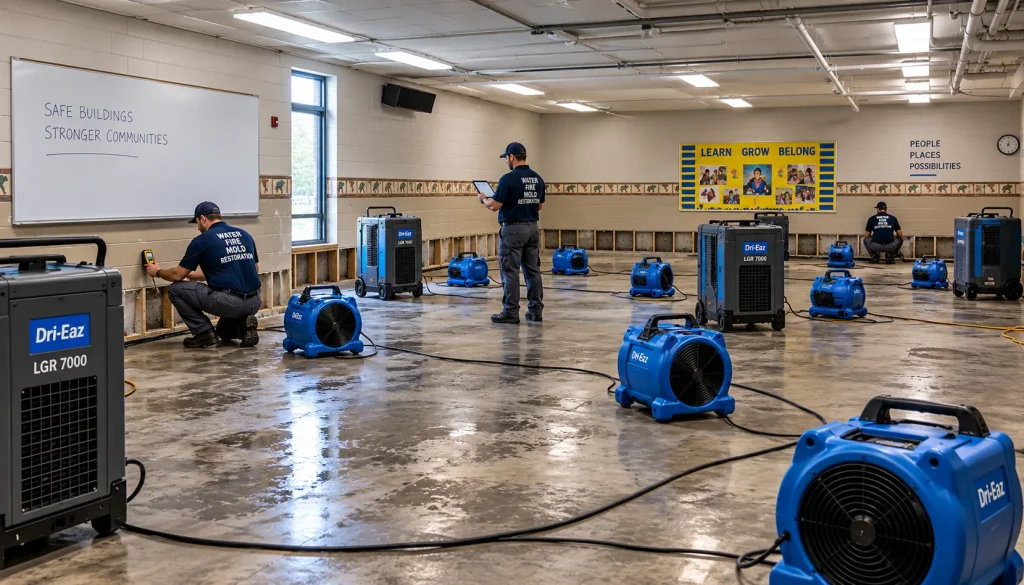
Retail cleanup has to protect merchandise and keep shoppers safe at the same time.
Written for: restaurant owners, general managers and kitchen managers in Las Vegas. The decision: when the restaurant can safely reopen after a sewage backup.
Short answer: Only after the cause is fixed, contaminated porous materials are removed, all food-contact and prep areas are cleaned and sanitized, and you have confirmed what the Southern Nevada Health District requires for your situation.
Example scenario (hypothetical): During a Friday dinner rush, a floor drain in the dish area of a Las Vegas restaurant backs up. Sewage spreads under the dish machine and into a dry storage area.
The First Hour
Stop food prep and service in affected areas. Move guests away from the area.
Keep staff out of the water. Anyone helping needs gloves, boots and eye protection.
Call a plumber to clear the line and find the cause.
Throw away any food or packaging that the water touched.
Photograph the area, the drain and affected stock before cleanup.
The Las Vegas Detail That Changes the Plan
Food establishments in Clark County are regulated by the Southern Nevada Health District. A sewage backup in a kitchen is the kind of event that can require you to stop operating and contact the district. Check their current guidance or call them early, rather than after cleanup is done.
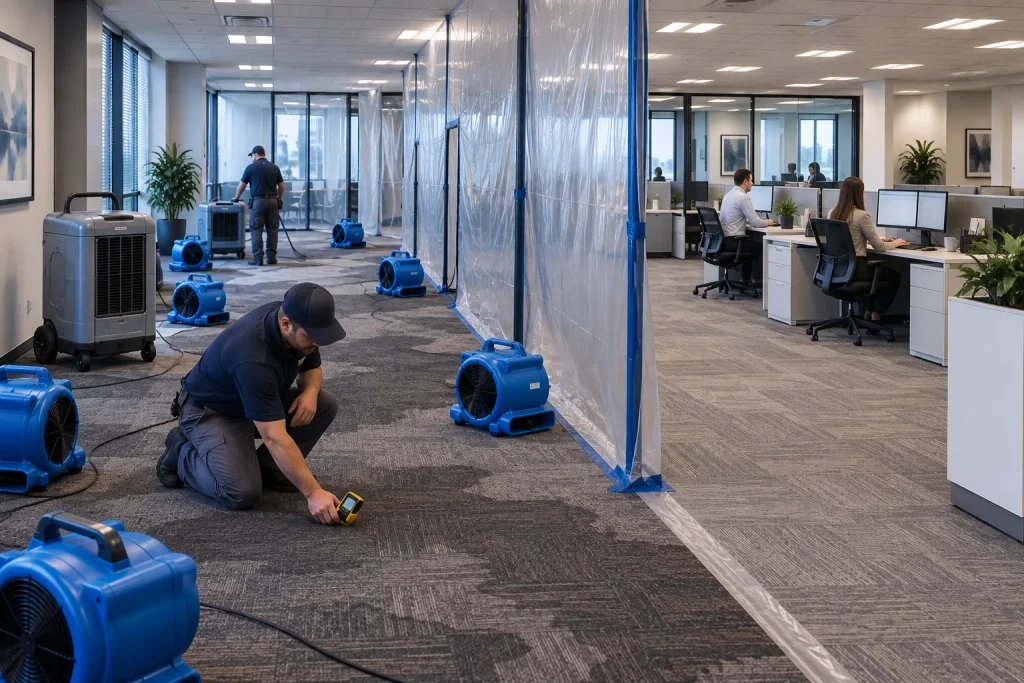
Barriers and hidden equipment let parts of the store stay open during drying.
What Gets Cleaned and What Gets Removed
Item
Usually
Stainless steel, sealed tile, sealed concrete
Cleaned and sanitized
Drywall, insulation and wood touched by sewage
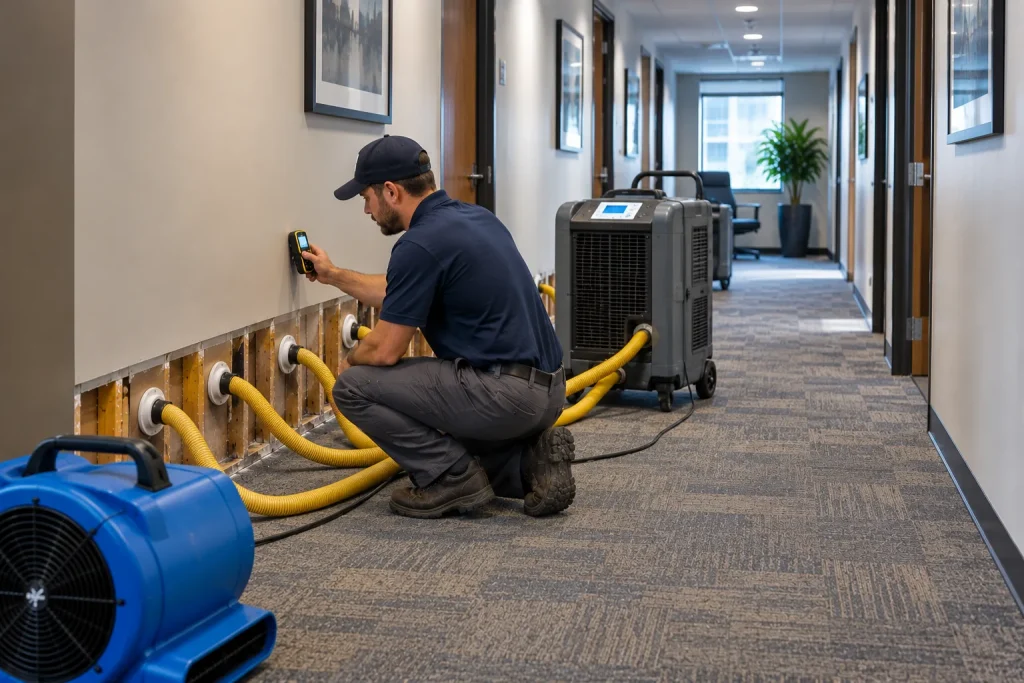
Removed above the wet line
Food, single-use items, open packaging touched by water
Discarded
Rubber floor mats
Cleaned and sanitized, or replaced if damaged
Sewage is treated as contaminated water under industry standards, which is why porous materials are removed rather than dried.
From the Field
The area most often missed is behind and under fixed equipment such as dish machines and reach-in coolers. Sewage runs under them and stays there. Experienced crews pull or lift equipment where it is safe to do so, and check wall bases behind it, before calling the area clean.
Fast, tidy recovery helps a store reopen and win back its customers.
Tool: Reopening Checklist
Cause found and line repaired by a plumber
Contaminated porous materials removed
All food-contact and prep surfaces cleaned and sanitized
Affected food and supplies discarded and logged
Floors, drains and equipment bases cleaned
Health district requirements confirmed for your case
Staff briefed before service resumes
Next Step
Print this checklist and keep it with your kitchen’s emergency contacts. If it is happening now, call with the location of the backup and whether it reached food storage.