Commercial Fire Sprinkler Systems
Denver, CO — Service & Repair
In Colorado, the Fire Sprinkler System That Protects a Building Is Also One of the Most Common Sources of Water Damage in It
Fire sprinkler systems save lives and property, and they are required across nearly every category of commercial building. They are also a pressurized water distribution network running through every ceiling in the facility, and when one fails, it releases water at rates most facility teams underestimate.
A single activated head typically discharges in the range of twenty to thirty gallons per minute. Unnoticed overnight, that is thousands of gallons distributed through a building that had no fire at all.
Denver adds a specific complication: freeze risk. Colorado’s freeze-thaw cycling makes accidental sprinkler discharge from frozen piping one of the most common commercial water losses on the Front Range.
Commercial Water Damage provides educational resources that help facility managers, property managers, building owners, developers, and commercial contractors better understand fire sprinkler system service, inspection, repair, and the water damage consequences of system failure throughout the Denver metropolitan area.
What Commercial Fire Sprinkler Service Covers
✓ Inspection, testing, and maintenance programs
✓ Wet-pipe, dry-pipe, and pre-action system service
✓ Backflow prevention testing and certification
✓ Fire pump testing and maintenance
✓ Control valve, alarm, and supervisory device checks
✓ Sprinkler head replacement and obstruction correction
✓ Pipe repair, corrosion assessment, and replacement
✓ System modification for tenant improvements
Why Sprinkler Systems Discharge When There Is No Fire
Accidental discharge is far more common than fire activation.
- Frozen piping rupturing in unheated space
- Mechanical impact from forklifts, ladders, or racking
- Corrosion pinholes in aging steel pipe
- Microbiologically influenced corrosion in wet systems
- Manufacturing defects and recalled head models
- Overheating near unit heaters, lighting, or cooking equipment
- Damage during tenant improvement and construction work
- Air pressure loss in dry and pre-action systems
- Vandalism or accidental contact in accessible areas
Freeze failures in Denver concentrate in parking garages, loading docks, unheated attics and mezzanines, exterior canopies, and vacant tenant spaces where heat has been reduced.
What Happens When a Sprinkler Discharges
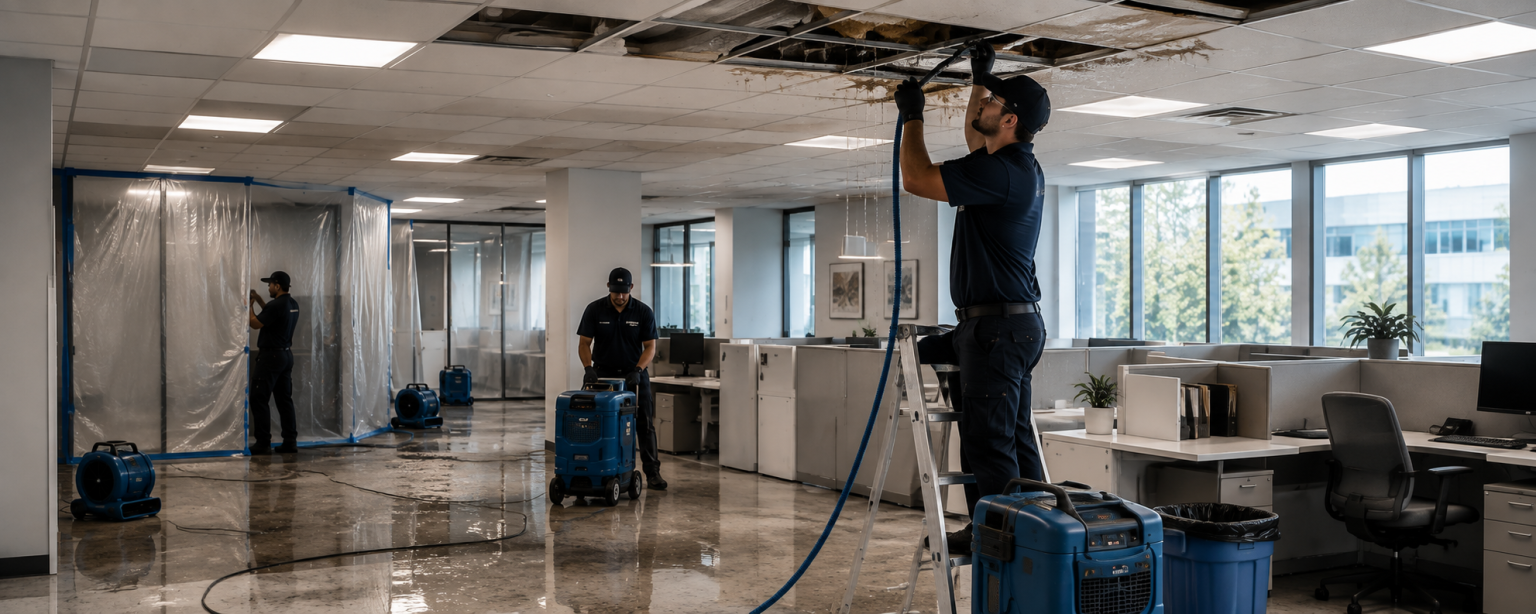
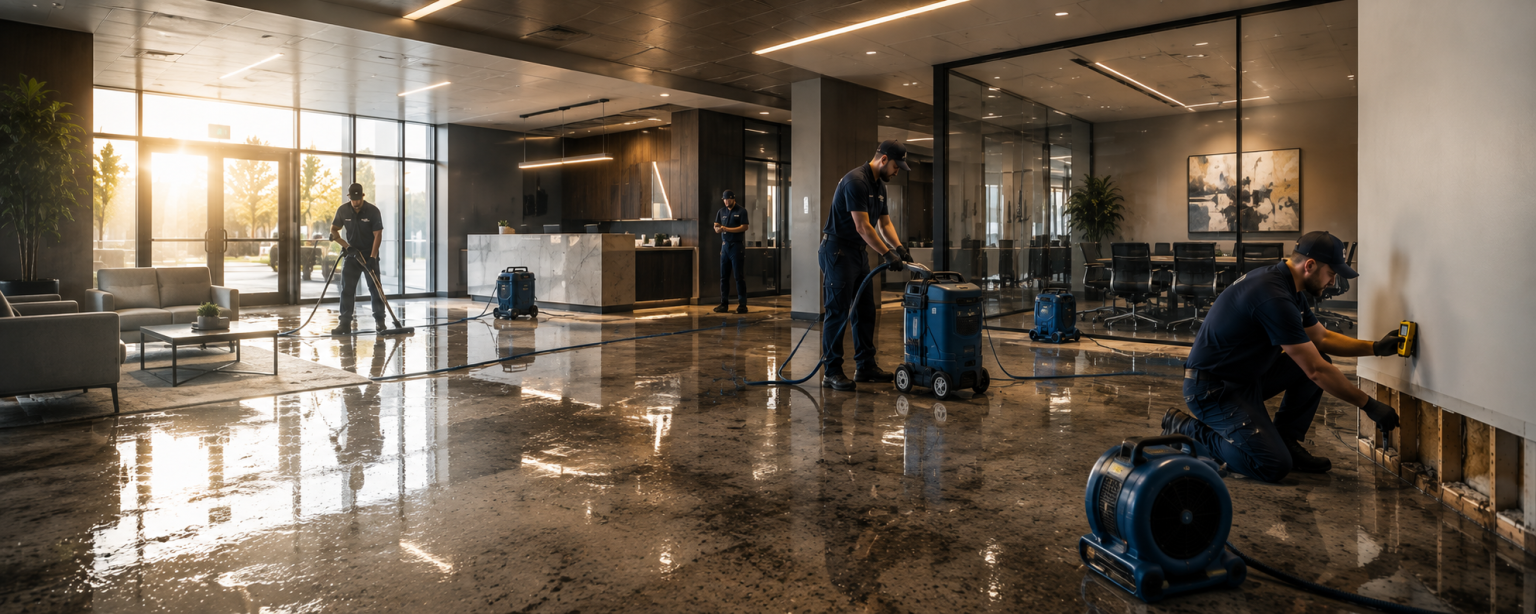
Water from a ceiling-level source behaves differently than a floor-level leak. It saturates from above and travels down through every available path.
- Ceiling tile, insulation, and light fixtures
- Ceiling plenums and return air pathways
- Wall cavities down to lower floors
- Electrical panels, conduit, and low-voltage rooms
- Server rooms, network closets, and equipment
- Elevator shafts and stairwells
- Inventory, furnishings, and documents
- Slab penetrations to floors below
Sprinkler water that has sat in piping for years also carries corrosion products and sediment, which stains finishes and complicates cleaning well beyond what clean supply water would.
Inspection, Testing, and Maintenance Requirements
NFPA 25 establishes the framework for inspection, testing, and maintenance of water-based fire protection systems, and Colorado jurisdictions enforce it through local fire authorities.
Typical intervals include:
- Weekly or monthly checks of gauges and control valves, depending on supervision
- Quarterly inspection of alarm devices and connections
- Annual inspection and testing of the overall system
- Five-year internal pipe inspection
- Five-year obstruction investigation
- Periodic sprinkler head testing or replacement based on type and age
- Fire pump testing on defined schedules
Requirements vary by system type, occupancy, and the authority having jurisdiction, so property owners should confirm specifics with their local fire authority and licensed sprinkler contractor. Documented compliance also matters in insurance disputes after a loss.
Denver Building Types That Depend on Sprinkler Systems
✓ Downtown and LoDo office towers
✓ Healthcare campuses and surgical centers
✓ Distribution centers and high-pile storage warehouses
✓ Hotels and multifamily mixed-use buildings
✓ Parking structures and loading facilities
✓ Data centers and technology facilities
✓ Manufacturing and aerospace plants
✓ Retail centers, restaurants, and entertainment venues
Repair Work Commonly Required
- Replacing frozen and ruptured pipe sections
- Replacing discharged, damaged, or recalled heads
- Correcting corrosion and pinhole leaks
- Repairing or replacing control and check valves
- Restoring air pressure on dry and pre-action systems
- Correcting obstructions found during internal inspection
- Adjusting head layout after tenant improvements
- Recharging, testing, and returning the system to service
A building is generally not permitted to reoccupy affected areas until the system is restored and certified, which is why sprinkler repair usually sits on the critical path of the entire restoration schedule.
Questions Denver Facility Managers Frequently Ask
- Why did the system discharge when there was no fire?
- Are other sections of pipe at risk of the same failure?
- Should unheated areas convert to a dry-pipe system?
- Is internal corrosion present, and how far has it progressed?
- How quickly can the system be returned to service?
- Can the building legally reoccupy while repairs proceed?
- Does our inspection documentation meet local requirements?
- Would zone isolation valves have limited this loss?
Reducing the Risk of Accidental Discharge
✓ Pre-winter freeze protection audits of all sprinkler zones
✓ Dry-pipe or antifreeze systems in unheated areas
✓ Heat trace and low-temperature alarms at vulnerable runs
✓ Head guards in warehouses and loading areas
✓ Corrosion monitoring and nitrogen inerting where appropriate
✓ Zone isolation valves that limit discharge area
✓ Water flow alarms monitored after hours
✓ Contractor protocols during tenant improvement work
Why Commercial Water Damage Covers Fire Sprinkler Systems in Denver
Fire protection and water damage are usually managed by different vendors and different budgets, but on the Front Range they are the same conversation. Freeze-related sprinkler failures are among the most frequent and most preventable commercial water losses in Colorado.
Commercial Water Damage provides educational resources that help facility managers, property managers, building owners, developers, and commercial contractors better understand sprinkler system types, inspection and testing obligations, discharge causes, water damage response, insurance coordination, and long-term building performance.
Whether responding to a frozen sprinkler main in a parking structure, a corrosion pinhole above an office ceiling, an impact discharge in a distribution center, or a system that needs recertification before reoccupancy, informed planning helps reduce downtime, preserve valuable assets, and support a faster, more efficient recovery.