Water emergency? Our commercial crews respond 24/7.
Home / Commercial Fire Sprinkler Systems TX Austin – Service & Repair
Commercial Fire Sprinkler Systems
- 24/7 Response
- Extraction
- Structural Drying
- Restoration
What happens when you call
24/7 dispatch
Call any hour. Crews mobilize for commercial losses, including nights and weekends.
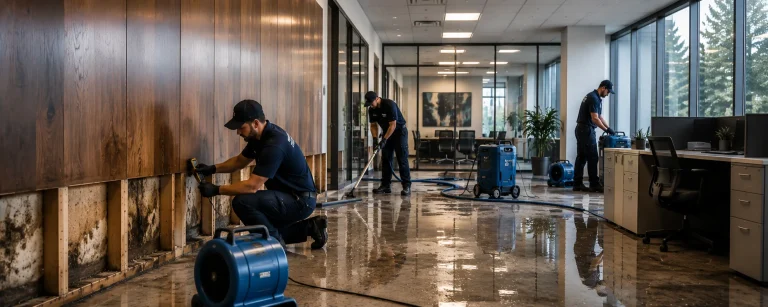
Extraction & drying
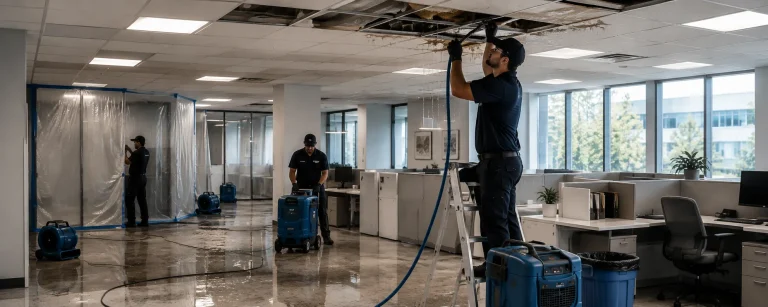
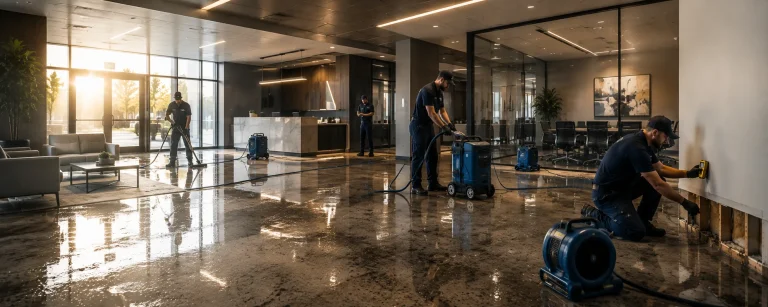
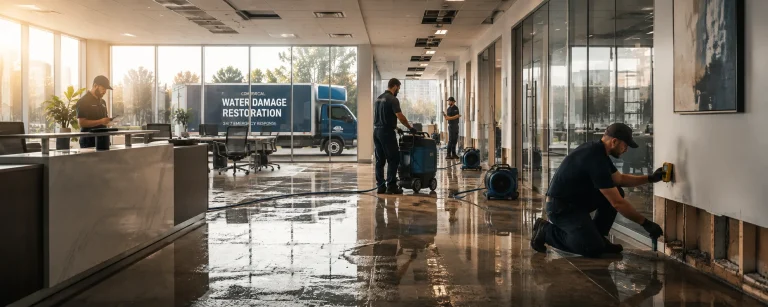
Standing water removed, then structural drying with monitored moisture readings.
Insurance-ready records
Readings, photos and scope notes documented for your carrier from day one.
Austin, TX — Service & Repair
Texas Buildings Are Not Designed for Hard Freezes, Which Is Exactly Why Sprinkler Failures Are So Costly Here
Austin’s commercial building stock was largely designed around heat, not cold. Sprinkler piping runs through attics, parking structures, exterior corridors, and unconditioned spaces that are entirely appropriate for a climate that rarely freezes — until it does.
The February 2021 winter storm demonstrated the consequence at scale. Frozen and ruptured fire sprinkler piping was among the largest single sources of commercial property damage across Texas during that event, in buildings that had operated without incident for decades.
Commercial Water Damage provides educational resources that help facility managers, property managers, building owners, developers, and commercial contractors better understand fire sprinkler system service, inspection, repair, and the water damage consequences of system failure throughout the Austin metropolitan area.
What Commercial Fire Sprinkler Service Covers
✓ Inspection, testing, and maintenance programs
✓ Wet-pipe, dry-pipe, and pre-action system service
✓ ESFR and high-pile storage system servicing
✓ Fire pump testing and maintenance
✓ Backflow prevention testing and certification
✓ Control valve, alarm, and supervisory device checks
✓ Sprinkler head replacement and obstruction correction
✓ System modification for tenant improvements
The Texas Freeze Problem Is a Design Assumption Problem
Freeze risk in Austin is not about how cold it gets. It is about what the building assumed would never happen.
Commonly exposed locations include:
- Attic and above-ceiling piping with minimal insulation
- Parking structures and covered garages
- Exterior corridors and breezeways
- Loading docks and unconditioned storage
- Rooftop mechanical rooms and penthouses
- Piping in exterior wall cavities
- Vacant tenant space with heat shut off
- Buildings that lose power and heat during grid events
The compounding factor is simultaneity. Regional freeze events affect thousands of buildings at once, so sprinkler contractors, water mitigation crews, and drying equipment are all in severe shortage exactly when they are needed.
Other Causes of Discharge Without a Fire
- Mechanical impact from forklifts, ladders, or racking
- Corrosion pinholes in aging steel pipe
- Microbiologically influenced corrosion in wet systems
- Overheating in attics during extreme summer temperatures
- Manufacturing defects and recalled head models
- Damage during tenant improvement and construction work
- Air pressure loss in dry and pre-action systems
Austin’s summer attic temperatures deserve mention. Ordinary-temperature heads have defined activation ratings, and unconditioned attic spaces in Central Texas can approach them, which is why head temperature ratings must match the actual space they occupy.
What Happens When a Sprinkler Discharges
- Ceiling tile, insulation, and light fixtures
- Ceiling plenums and return air pathways
- Wall cavities down to lower floors
- Electrical panels, conduit, and low-voltage rooms
- Server rooms, labs, and clean rooms
- Elevator shafts and stairwells
- Racked inventory and automation equipment
- Semiconductor and prototyping equipment
Austin’s concentration of technology, semiconductor, and data center facilities raises the stakes considerably. Water reaching fabrication or server infrastructure can produce losses far exceeding the building repair cost.
Inspection, Testing, and Maintenance Requirements
NFPA 25 establishes the framework for inspection, testing, and maintenance of water-based fire protection systems, enforced locally through the Austin Fire Department and applicable Texas requirements.
Typical intervals include:
- Weekly or monthly checks of gauges and control valves, depending on supervision
- Quarterly inspection of alarm devices and connections
- Annual inspection and testing of the overall system
- Five-year internal pipe inspection
- Five-year obstruction investigation
- Periodic sprinkler head testing or replacement based on type and age
- Fire pump testing on defined schedules
Texas also requires sprinkler contractors to hold state licensing through the State Fire Marshal’s Office. Requirements vary by system type and occupancy, so owners should confirm specifics with their local fire authority and licensed sprinkler contractor.
Austin Building Types That Depend on Sprinkler Systems
✓ Technology campuses and office parks
✓ Semiconductor and advanced manufacturing facilities
✓ Data centers and colocation facilities
✓ Distribution centers and high-pile storage warehouses
✓ Healthcare campuses and medical office buildings
✓ Hotels, restaurants, and entertainment venues
✓ University and institutional buildings
✓ Parking structures and mixed-use developments
Repair Work Commonly Required
- Replacing frozen and ruptured pipe sections
- Replacing discharged, damaged, or recalled heads
- Correcting head temperature ratings in hot attic spaces
- Correcting corrosion and pinhole leaks
- Converting vulnerable zones to dry-pipe systems
- Repairing or replacing control and check valves
- Adjusting head layout after tenant improvements
- Recharging, testing, and returning the system to service
Questions Austin Facility Managers Frequently Ask
- Which sprinkler zones are exposed if we lose heat or power?
- Should attic and garage zones convert to dry-pipe systems?
- Do our head temperature ratings match actual attic conditions?
- Is internal corrosion present in the system?
- Do we have a freeze event response plan and shutoff procedure?
- How quickly can the system be recertified for reoccupancy?
- Was clean room or server infrastructure exposed?
- Would zone isolation valves have limited this loss?
Reducing the Risk of Accidental Discharge
✓ Freeze vulnerability audit of every sprinkler zone
✓ Dry-pipe conversion for attics, garages, and exterior areas
✓ Heat trace and insulation on exposed piping
✓ Low-temperature alarms with remote notification
✓ Documented freeze event and shutoff procedures
✓ Head guards in warehouses and material handling areas
✓ Zone isolation valves that limit discharge area
✓ Water flow alarms monitored after hours
Why Commercial Water Damage Covers Fire Sprinkler Systems in Austin
Central Texas has learned that infrequent freeze events cause disproportionate damage precisely because buildings were not designed to expect them. Fire sprinkler systems are the clearest example, and freeze preparedness is now a standard part of commercial asset management here.
Commercial Water Damage provides educational resources that help facility managers, property managers, building owners, developers, and commercial contractors better understand sprinkler system types, inspection and testing obligations, freeze protection, discharge causes, water damage response, insurance coordination, and long-term building performance.
Whether responding to a frozen attic main after a winter storm, an impact discharge in a distribution facility, a corrosion pinhole above a technology office, or a system requiring recertification before reoccupancy, informed planning helps reduce downtime, preserve valuable assets, and support a faster, more efficient recovery.
Water Emergency?
Our commercial response team is available 24/7 for water extraction, structural drying and restoration.
Our Services
Talk To A Specialist
Need help with a water loss right now?
Call our commercial team for extraction, drying and restoration planning built around your building and your operations.