Water emergency? Our commercial crews respond 24/7.
Home / Commercial Roofing Water Damage Austin
Commercial Roofing Water Damage
- 24/7 Response
- Extraction
- Structural Drying
- Restoration
What happens when you call
24/7 dispatch
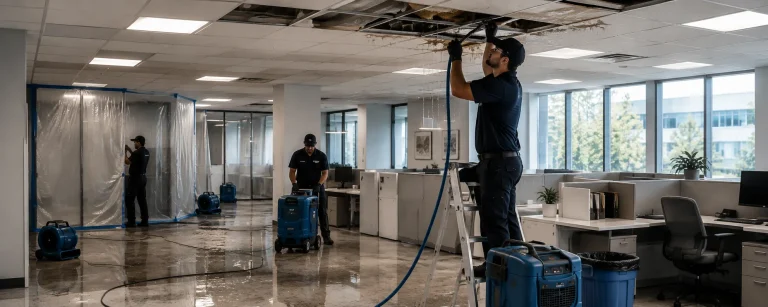
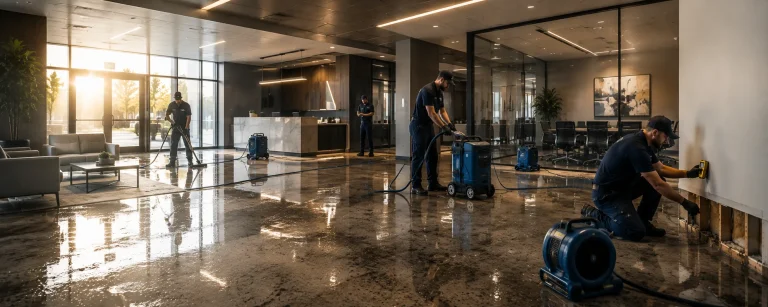
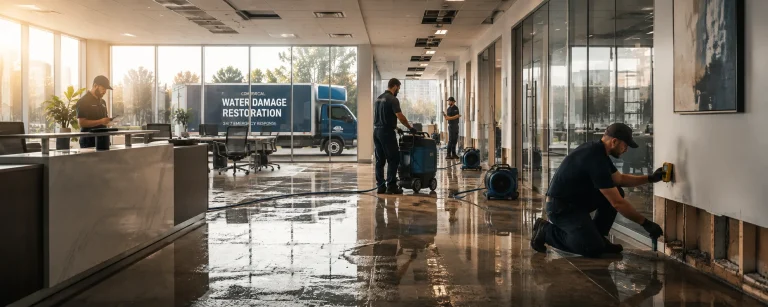
Call any hour. Crews mobilize for commercial losses, including nights and weekends.
Extraction & drying
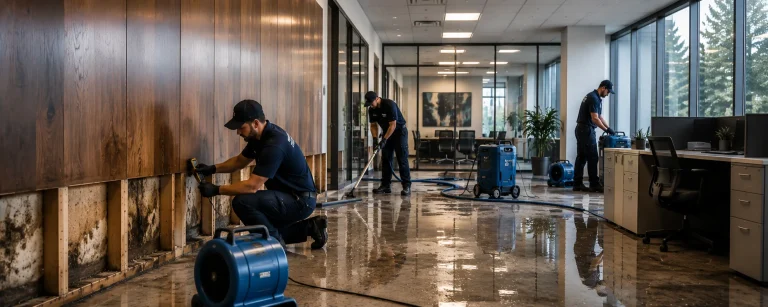
Standing water removed, then structural drying with monitored moisture readings.
Insurance-ready records
Readings, photos and scope notes documented for your carrier from day one.
Austin, TX
Hail, Extreme Heat, and Sudden Downpours Make the Roof the Most Common Entry Point for Water in Austin
Most commercial water damage in Austin does not begin with a burst pipe. It begins on the roof, often months before anyone sees a stain on a ceiling tile.
Central Texas puts commercial roofing under an unusual combination of stresses: prolonged summer heat well above 100 degrees, intense ultraviolet exposure, sudden high-volume rainfall, spring hail, and occasional hard freezes. Few climates age a roof membrane faster.
Commercial Water Damage provides educational resources that help facility managers, property managers, building owners, developers, and commercial contractors better understand roof-related water damage throughout the Austin metropolitan area.
Why Commercial Roofs Fail in Central Texas
Roof failure in Austin is usually cumulative rather than sudden.
- Thermal cycling expands and contracts the membrane daily
- UV exposure degrades surfacing, coatings, and seams
- Hail bruises membranes without producing an immediate leak
- High-volume downpours exceed drainage capacity in minutes
- Ponding water accelerates seam and adhesive failure
- Freeze events stress already-fatigued materials
- Foot traffic from rooftop HVAC service damages the surface
- Debris and pollen block drains and scuppers
The most important characteristic of hail damage is its delay. A storm bruises the membrane, the roof continues to shed water for a season or two, and the leak finally appears long after the event that caused it — which complicates both diagnosis and insurance documentation.
Roof Assemblies Common on Austin Commercial Buildings
✓ TPO and PVC single-ply membranes
✓ EPDM rubber membranes
✓ Modified bitumen and built-up roofing
✓ Standing seam and structural metal roofing
✓ Spray polyurethane foam with protective coatings
✓ Low-slope roofs with internal drainage
✓ Ballasted and vegetated assemblies
✓ Insulated metal panel systems on industrial buildings
Each assembly fails differently, holds water differently, and requires a different drying approach once moisture reaches the insulation layer.
Where Roof Water Actually Goes
The stain on the ceiling is almost never directly below the breach. Water enters the assembly, travels laterally along the deck, and exits at the first available penetration.
- Laterally across metal or concrete deck to a low point
- Into roof insulation, where it can remain saturated for months
- Down structural steel and along beam webs
- Through deck seams, fasteners, and conduit penetrations
- Into ceiling plenums and return air pathways
- Down interior wall cavities to lower floors
- Into electrical conduit and light fixtures
- Onto raised flooring and equipment below
Wet roof insulation is the detail most often missed. A membrane repair stops the entry point but leaves saturated insulation in place, and that moisture continues to feed the deck, the fasteners, and the interior below.
Common Roof Failure Points
- Rooftop HVAC curbs and equipment penetrations
- Parapet walls, coping, and counterflashing
- Roof drains, scuppers, and overflow provisions
- Expansion joints and transitions between assemblies
- Skylights, smoke hatches, and roof access points
- Pipe boots, vents, and conduit penetrations
- Seams, laps, and previously patched areas
- Solar array mounting points and cable penetrations
Emergency Roof Response Versus Permanent Repair
These are two separate scopes, and confusing them is a common and expensive mistake.
Emergency response typically involves:
✓ Temporary membrane patching and sealing
✓ Tarping and water diversion
✓ Interior containment and equipment protection
✓ Drain clearing to restore flow
✓ Interior extraction and initial drying
Permanent repair requires moisture surveying of the roof assembly, removal of saturated insulation, deck evaluation and any needed replacement, correction of the underlying detail that failed, and restoration of the interior once the assembly above it is genuinely dry.
Documenting Roof Water Damage for Insurance
Roof claims in Texas frequently turn on a single distinction: was this storm damage, or was it deferred maintenance?
- Date the causing storm event and correlate weather records
- Photograph hail bruising, splits, and impact marks before repair
- Use infrared or capacitance surveys to map wet insulation
- Record interior moisture readings over time
- Retain prior inspection and maintenance records
- Separate roof scope from interior restoration scope
- Track business interruption and tenant impact
A documented maintenance history is often the single most valuable piece of evidence a property owner can produce.
Austin Property Types With Significant Roof Exposure
✓ Technology campuses and office parks
✓ Semiconductor and advanced manufacturing facilities
✓ Distribution centers along I-35 and SH-130
✓ Healthcare campuses and medical office buildings
✓ Data centers and colocation facilities
✓ Retail centers and mixed-use developments
✓ Hotels and event venues
✓ University and institutional buildings
Questions Austin Property Owners Ask About Roof Leaks
- Where did the water actually enter, as opposed to where it appeared?
- How much of the roof insulation is saturated?
- Is the metal deck corroded or structurally compromised?
- Was this caused by a specific hail event, and when?
- Does this roof warrant repair, recover, or full replacement?
- Is the existing drainage adequate for current storm intensity?
- Can operations continue below while roof work proceeds?
- How should the roof and interior scopes be documented separately?
Preventive Roof Programs That Reduce Water Losses
✓ Semi-annual and post-storm roof inspections
✓ Drain, scupper, and overflow cleaning schedules
✓ Infrared moisture surveys on aging assemblies
✓ Sealant and flashing renewal cycles
✓ Reflective coatings to reduce thermal cycling
✓ Walk pads on HVAC service routes
✓ Documented roof condition records and warranties
✓ Capital planning tied to actual remaining service life
Why Commercial Water Damage Covers Roofing in Austin
Roofing and water damage are usually treated as separate trades, but in Central Texas the roof is where most commercial water intrusion begins. Treating a ceiling stain as an interior problem, without surveying the assembly above it, is how the same leak returns three times.
Commercial Water Damage provides educational resources that help facility managers, property managers, building owners, developers, and commercial contractors better understand roof assemblies, moisture migration, drying strategy, insurance documentation, and long-term building performance.
Whether responding to hail damage on a North Austin office park, a drain backup at an I-35 distribution center, a curb leak above a semiconductor facility, or ponding on an aging downtown roof, understanding what happens above the ceiling helps reduce downtime, preserve valuable assets, and support a more efficient recovery.
Water Emergency?
Our commercial response team is available 24/7 for water extraction, structural drying and restoration.
Our Services
Talk To A Specialist
Need help with a water loss right now?
Call our commercial team for extraction, drying and restoration planning built around your building and your operations.