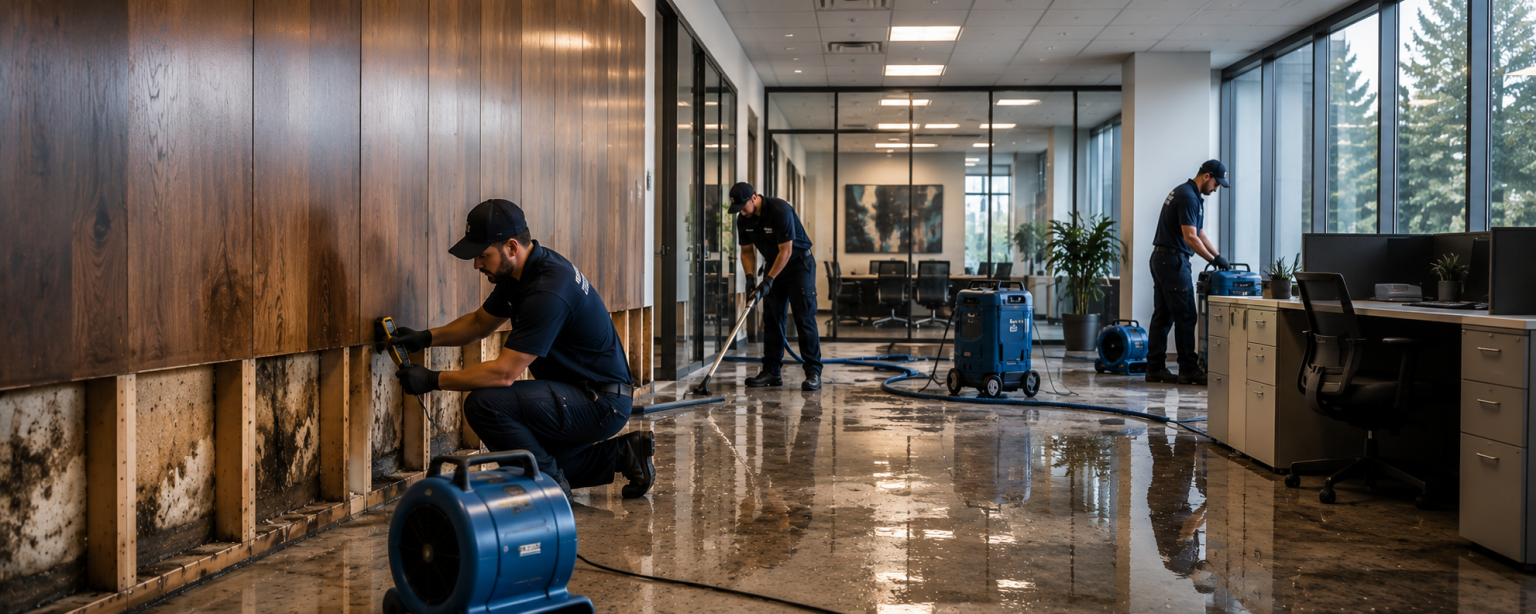
Commercial Water Damage
Minnesota — Minneapolis
Extreme Cold Makes Frozen Pipes the Dominant Commercial Water Damage Cause in the Twin Cities
Few American commercial markets experience the sustained cold that Minneapolis does. Stretches of subzero temperatures lasting days or weeks put commercial plumbing and fire suppression systems under a kind of stress that most of the country never encounters.
The Twin Cities support Fortune 500 headquarters, major healthcare and medical device operations, financial services, higher education, food and agricultural processing, and a substantial logistics sector. Many of those buildings are connected by skyways, which introduces its own set of envelope and transition-detail vulnerabilities.
Commercial Water Damage provides educational resources that help facility managers, property managers, building owners, developers, and commercial contractors better understand commercial water damage throughout the Minneapolis and St. Paul metropolitan area.
Frozen Pipe Failures Dominate the Loss Profile
When water freezes it expands, and the resulting pressure ruptures pipe walls and fittings. The damage is usually discovered not at the moment of freezing but at the moment of thaw, when flow resumes through a pipe that is already broken.
Vulnerable locations include:
- Wet-pipe sprinkler mains in unheated attics and parking ramps
- Piping in exterior wall cavities
- Loading docks and vestibules with frequent door openings
- Rooftop mechanical penthouses
- Vacant or partially leased tenant spaces with reduced heat
- Backflow preventers and fire department connections
- Crawl spaces and utility tunnels
A single heating failure over a holiday weekend can produce a loss affecting multiple floors, and in Minnesota those failures reliably occur at the coldest and least convenient moment.
Ice Damming and Snow Load Attack From Above
Commercial water damage in the Twin Cities also results from:
- Ice dams at parapets, eaves, and roof edges
- Heavy snow load and structural deflection
- Frozen roof drains and internal leaders
- Rapid spring melt overwhelming drainage
- Skyway and building transition detail failures
- Condensation from severe indoor and outdoor temperature differentials
- Summer severe storms and hail
- Mississippi River and tributary flooding
Condensation deserves particular mention. With interior air heated and humidified against outdoor temperatures far below zero, any thermal bridge in the envelope becomes a condensation surface, and that moisture accumulates inside assemblies where nobody is looking.
Water Can Travel Well Beyond the Initial Leak
Moisture may migrate through:
- Concrete floor systems and slab penetrations
- Insulated wall assemblies and vapor barriers
- Ceiling plenums and return air pathways
- Skyway connections between buildings
- Elevator shafts and stairwells
- Underground parking structures
- Mechanical and electrical rooms
- Multi-tenant demising walls
Twin Cities Commercial Property Types
Commercial restoration projects throughout the region may involve:
✓ Downtown office towers and skyway-connected properties
✓ Healthcare systems and medical device facilities
✓ Corporate headquarters campuses
✓ Food processing and agricultural facilities
✓ Universities and institutional buildings
✓ Distribution centers and cold storage
✓ Hotels, stadiums, and event venues
✓ Retail centers and mixed-use developments
Winter Restoration Has Its Own Constraints
Restoration work in deep winter is not simply restoration work done in the cold.
Planning has to account for:
- Maintaining building heat while walls are open
- Temporary enclosure and weather protection
- Preventing secondary freezing during the repair
- Reduced outdoor air drying capacity
- Equipment power loads on already-strained systems
- Safe access across ice and snow
- Material delivery and curing temperature requirements
- Sprinkler system restoration before reoccupancy
Modern Restoration Protects Valuable Commercial Assets
Commercial restoration frequently includes:
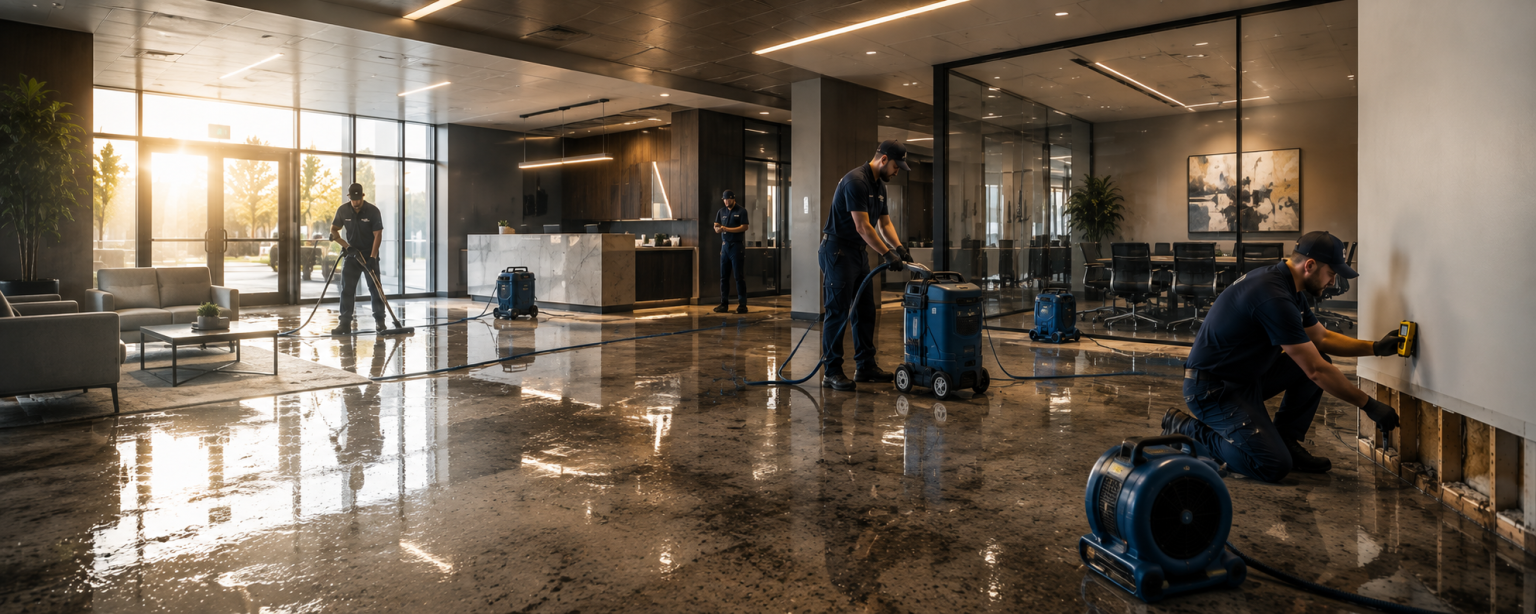
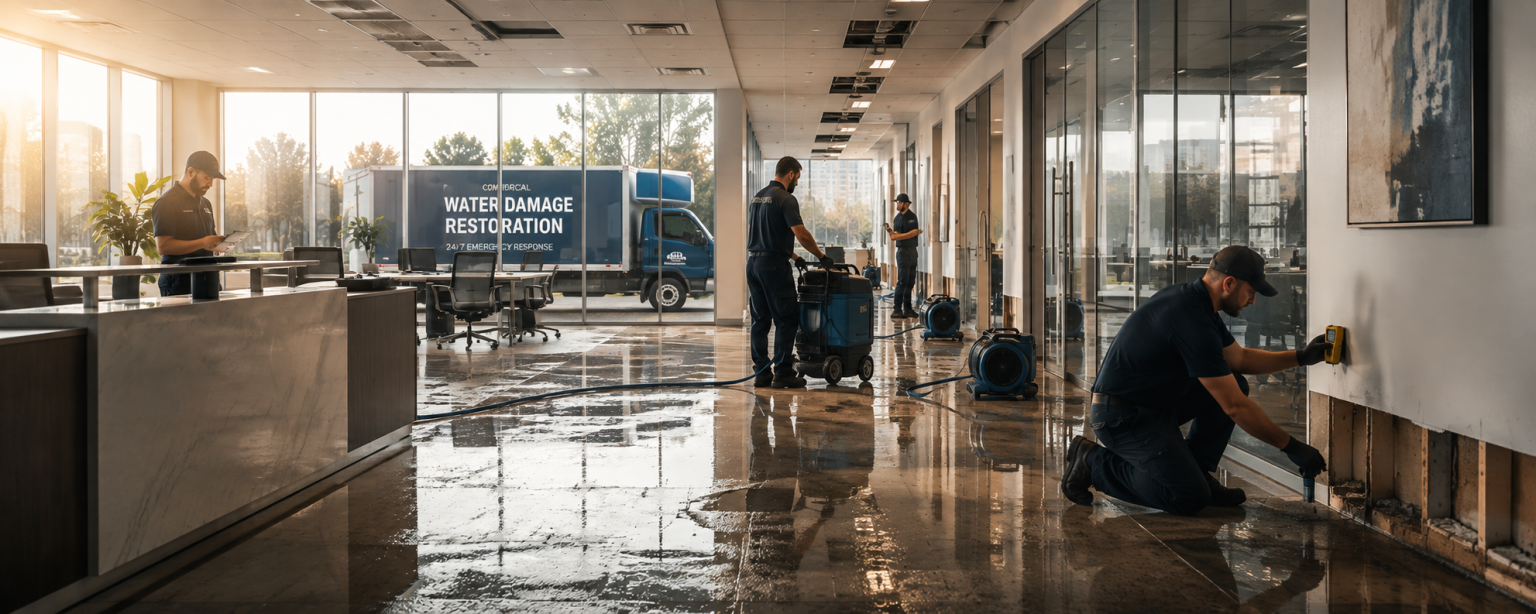
✓ Moisture mapping and thermal imaging
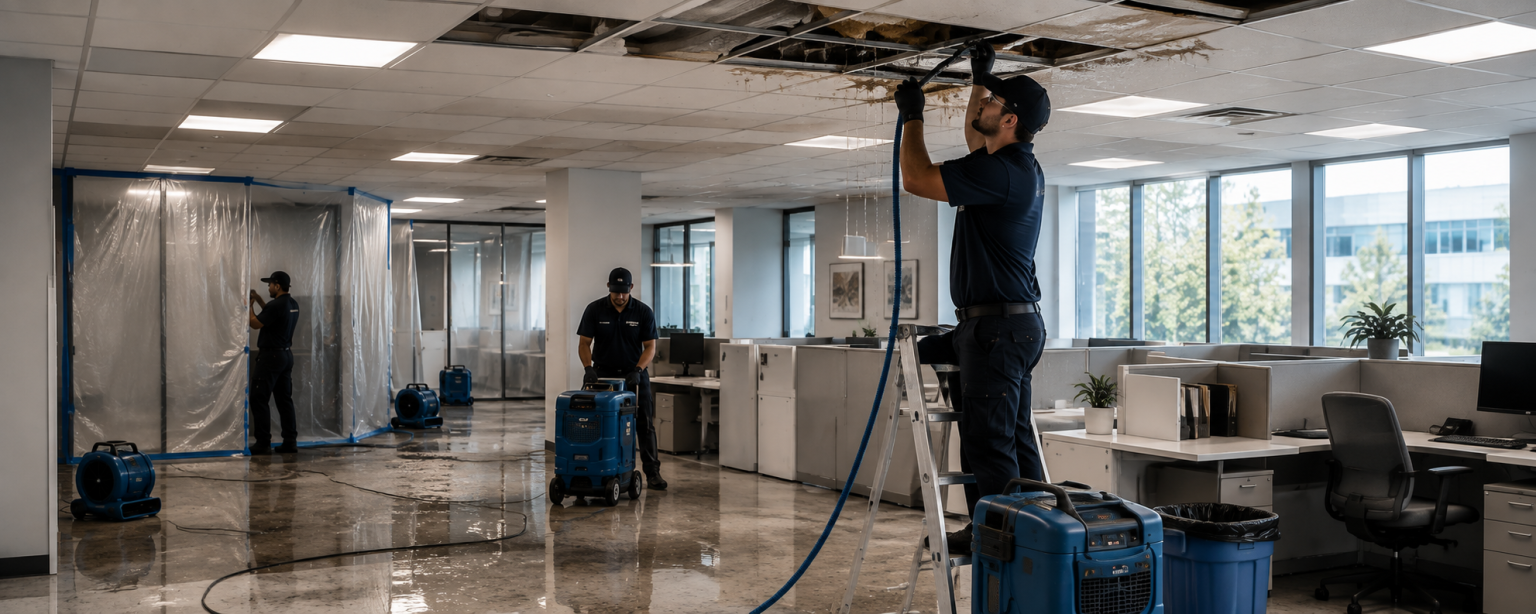
✓ Structural drying with documented targets
✓ Desiccant dehumidification suited to cold conditions
✓ Insulation assessment and selective replacement
✓ Controlled demolition
✓ Building system and equipment protection
✓ Targeted reconstruction
✓ Verification before reoccupancy
Questions Minneapolis Property Owners Frequently Ask
- How far did water travel before the freeze was discovered?
- Is wet insulation salvageable or does it require replacement?
- Are other sections of pipe at risk of failing next?
- Does the policy treat frozen pipe damage differently?
- Can drying be completed effectively in winter conditions?
- When can the sprinkler system be returned to service?
- What freeze protection improvements should be made before next season?
- Is condensation inside the envelope contributing to the problem?
Preparing Commercial Buildings for the Next Deep Freeze
Potential improvements include:
✓ Pre-winter freeze vulnerability audits
✓ Heat trace installation, testing, and monitoring
✓ Low-temperature alarms with remote notification
✓ Dry-pipe or antifreeze sprinkler systems in unheated areas
✓ Minimum heat policies for vacant tenant space
✓ Roof snow removal and ice dam management plans
✓ Automatic water shutoff and leak detection
✓ Holiday and after-hours building checks
Why Commercial Water Damage Focuses on Minneapolis
Minneapolis combines corporate headquarters, healthcare, medical devices, food processing, and higher education with one of the most demanding cold-weather climates in the country.
Commercial Water Damage provides educational resources that help facility managers, property managers, building owners, developers, and commercial contractors better understand moisture migration, water mitigation, restoration planning, repair strategies, insurance coordination, and long-term building performance.
Whether responding to a frozen sprinkler main in a downtown parking ramp, an ice dam leak at a corporate campus, a burst supply line in vacant tenant space, or spring melt flooding at a distribution facility, informed planning helps reduce downtime, preserve valuable assets, and support a faster, more efficient commercial recovery.