
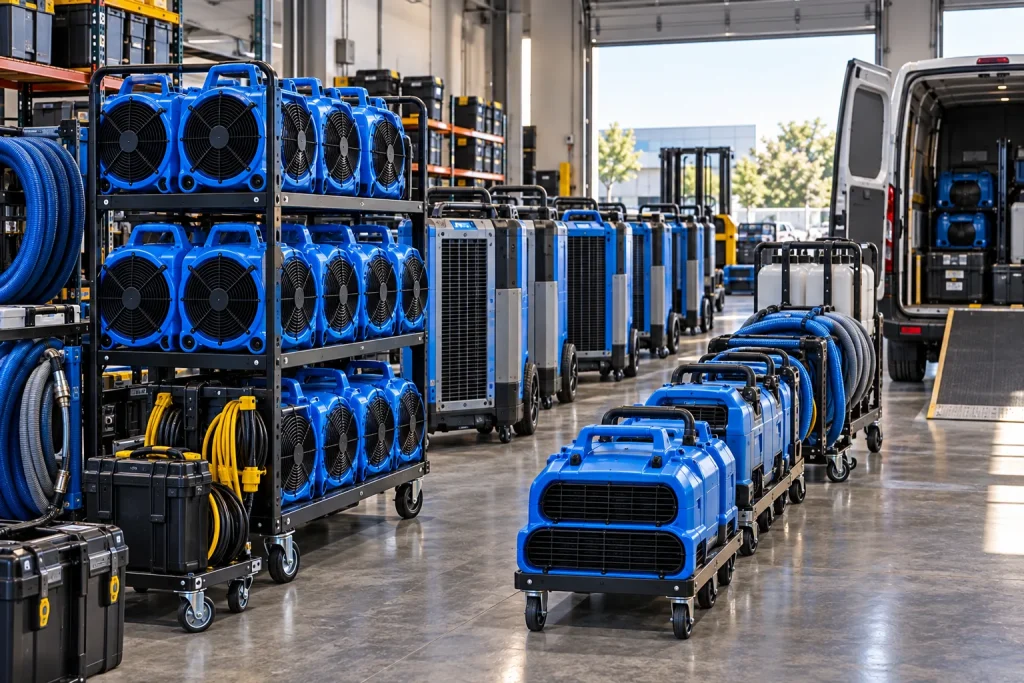
Commercial water extraction is the most visible part of any water damage response. Trucks roll up, hoses snake inside, and strong machines pull gallons of water off the floor. It looks like the hard part is done. In truth, extraction is only the beginning. Once the standing water is gone, plenty of moisture still hides in walls, floors, ceilings, and contents. If that moisture stays, it leads to mold, odors, swelling, and costly repairs. This guide explains what extraction does, what it cannot do, and what must happen next.
Property managers, facility teams, and business owners can use it to understand the full drying process.
What Commercial Water Extraction Does
Extraction removes liquid water quickly. Crews use several tools, depending on the space:
- Truck-mounted units for large volumes
- Portable units for tight or upper-floor areas
- Submersible pumps for deep water in basements or pits
- Weighted tools that squeeze water from carpet and pad
- Squeegees and floor scrubbers for concrete slabs
Fast removal is critical. In fact, pulling water out with a machine is far quicker than drying it out of materials with air later. One gallon left on the floor can take a full day of equipment time to evaporate.
Why Speed Matters
Every hour water sits, it spreads. It wicks up drywall, seeps under flooring, and soaks into furniture. Clean water can also turn dirty as it picks up dust and germs. So the faster commercial water extraction starts, the less damage remains for drying.
Speed also protects your budget. Materials that dry quickly can often stay in place. By contrast, materials that stay wet for days usually must be torn out and replaced.
What Extraction Cannot Do
However, extraction only removes water you can see and reach. It cannot remove:
- Water absorbed into drywall and wood
- Moisture trapped inside wall cavities
- Water under vinyl, tile, or laminate flooring
- Moisture deep in concrete slabs
- Humidity in the air
Left alone, this hidden moisture causes most long-term problems. That is why the next steps matter so much.
The Science of Wet Materials
To understand why extraction is not enough, think about how materials hold water. Porous items, like drywall and carpet pad, pull water inside through tiny gaps. Meanwhile, dense items, like concrete and hardwood, absorb water slowly but also release it slowly. In both cases, the water inside cannot be sucked out with a hose. Instead, it must evaporate into the air, and then dehumidifiers must capture it.
After Commercial Water Extraction: Moisture Mapping
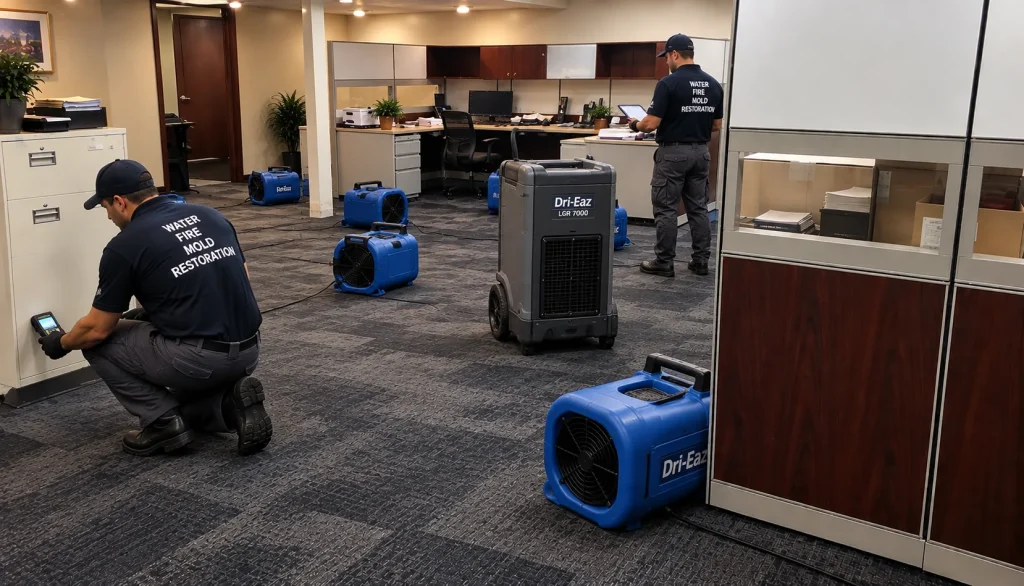
After extraction, technicians map moisture. They use pin and pinless meters, thermal cameras, and humidity gauges. Then they record readings on a floor plan and compare them with dry reference areas.
This map shows exactly where water traveled. Often, it reveals moisture far beyond the visible wet area. Our moisture mapping guide shows how it works.
Removing Unsalvageable Materials
Some materials cannot dry well enough. For example, wet carpet pad usually must go. In the same way, swollen particleboard, soaked insulation, and dirty drywall also come out. Removing them speeds drying and prevents mold. Good crews remove only what they must, which keeps costs down.
Structural Drying
Next comes drying. Technicians aim air movers low along walls and floors. At the same time, dehumidifiers pull moisture from the air, so materials can release more water. In some cases, crews also force air into wall cavities or under floors.
Drying usually takes several days. During that time, technicians check readings daily and move equipment as areas dry. Our structural drying page explains the science.
Monitoring and Verification
Drying is not done until readings prove it. Technicians compare wet areas with dry reference readings. Once materials reach their drying goals, the equipment comes out. This daily log also supports your insurance claim.
Commercial Water Extraction for Different Floors
Each floor type needs a slightly different approach:
- Carpet: Extract and dry, or remove it if the water was dirty.
- Concrete: Squeegee and extract, then dry the slab, which can take time.
- Vinyl and tile: Water can hide underneath, so check closely.
- Wood: Dry it slowly to limit cupping and warping.
- Raised access floors: Water can pool below, near cables.
Commercial Water Extraction With Contaminated Water
When water comes from sewage or floods, crews take extra steps. First, they wear protective gear and seal off the area. Next, they pump the water into tanks and dispose of it properly. After that, porous items usually come out, and every surface gets cleaned and sanitized. The IICRC sets the industry standards for these jobs.
Choosing the Right Equipment for the Job
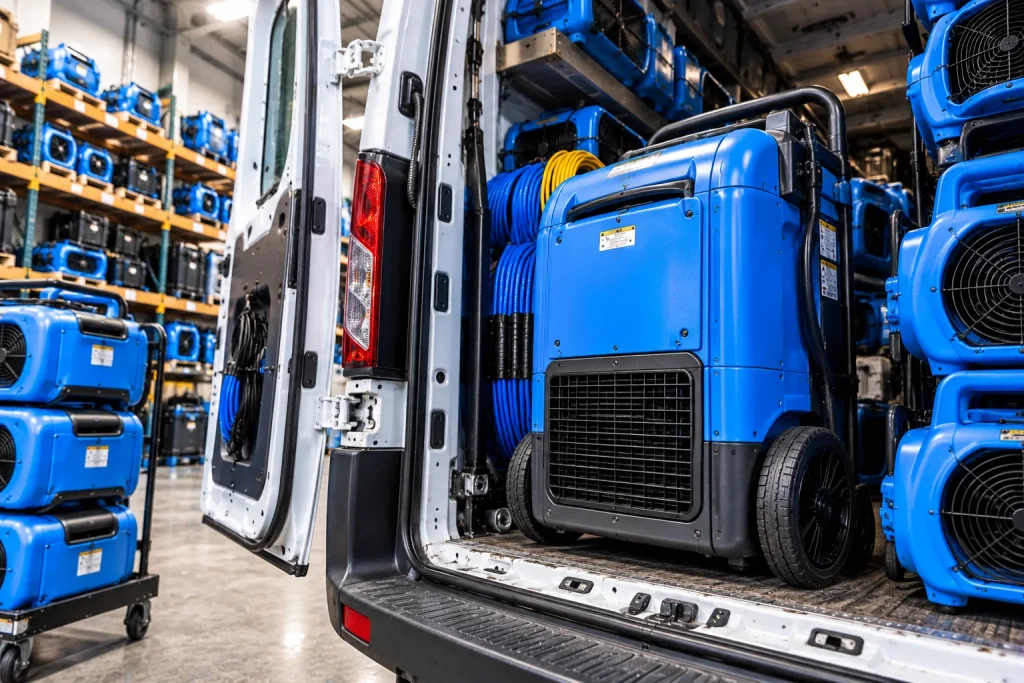
Not every loss needs the same gear. For example, a flooded lobby on the ground floor is a good fit for a truck-mounted unit. The truck stays outside, and only the hoses come in. On the other hand, a leak on the tenth floor may be too far for hoses to reach. In that case, crews bring portable units up in the elevator.
Water depth matters too. If the water is more than an inch or two deep, pumps usually go in first. Then, once the level drops, crews switch to extractors and squeegees. Similarly, thick carpet with a soaked pad may need a weighted tool that a technician rides across the floor. That tool presses the carpet down and pulls out far more water than a hand wand.
Finally, crews think about noise and power. Some buildings stay open during the work. So the team may pick quieter units, run cords from a set panel, or schedule the loudest tasks after hours. In short, good planning keeps the job moving without shutting down the whole building.
Common Mistakes After Extraction
- Stopping work once the floor looks dry
- Skipping moisture mapping
- Using box fans instead of professional equipment
- Closing up walls before they are fully dry
- Ignoring humidity levels
- Turning off drying equipment at night to save power
Each mistake can lead to mold, odor, or failed repairs later. Unfortunately, these problems often show up weeks after the crew leaves.
How to Prepare for a Fast Response
You can help crews start faster. First, keep a building map that shows shutoff valves and electrical panels. Second, save the phone number of a restoration company in your emergency plan. Third, clear a path for hoses and equipment to reach the wet area. Finally, have someone on site who can unlock doors and answer questions.
How Long Does the Whole Process Take?
Commercial water extraction often takes only a few hours. Drying usually takes several more days. Repairs come after that. In short, extraction is fast, but full recovery takes longer.
Of course, many things can change that timeline. For instance, dense materials like concrete and hardwood dry slowly. Likewise, cold or humid weather can slow the process. On the bright side, a crew that starts fast and checks readings every day can often trim days off the job. Ask your contractor for a daily update, so you always know where things stand.
FAQ on Commercial Water Extraction
Is commercial water extraction enough on its own?
No. Extraction removes standing water, while drying removes the hidden moisture that remains.
How fast should extraction start?
As soon as possible, ideally within a few hours of the loss.
Can my staff handle commercial water extraction with shop vacuums?
For a small, clean spill, maybe. For anything larger, professional gear removes far more water and lowers the risk of mold.
Start Recovery the Right Way
Extraction is the first step, not the last. Visit our emergency response page, or call our team for fast help.
Related Reading
- Commercial Moisture Mapping — finding water behind walls and under floors.
- The First 24 Hours of Cleanup — what happens on day one and why speed matters.
- Commercial Water Damage Restoration — the full process from emergency response to final repairs.
- Hidden Commercial Water Damage — why visible damage is rarely the full damage.
- Dry Does Not Mean Ready — when a building is actually safe to reoccupy.
- Commercial Restoration Sequencing — why the order of recovery can matter more than speed.