Guides on how commercial property losses actually unfold — what downtime costs, which building systems control the recovery, and when a property is genuinely ready to reoccupy.
Home/Blog/Hail and Roof Leaks in Dallas: When Storm Damage Becomes Interior Water Damage
Hail and Roof Leaks in Dallas: When Storm Damage Becomes Interior Water Damage
Published November 3, 2026 · Commercial Water Damage Restoration Team · Restoration Process & Sequencing
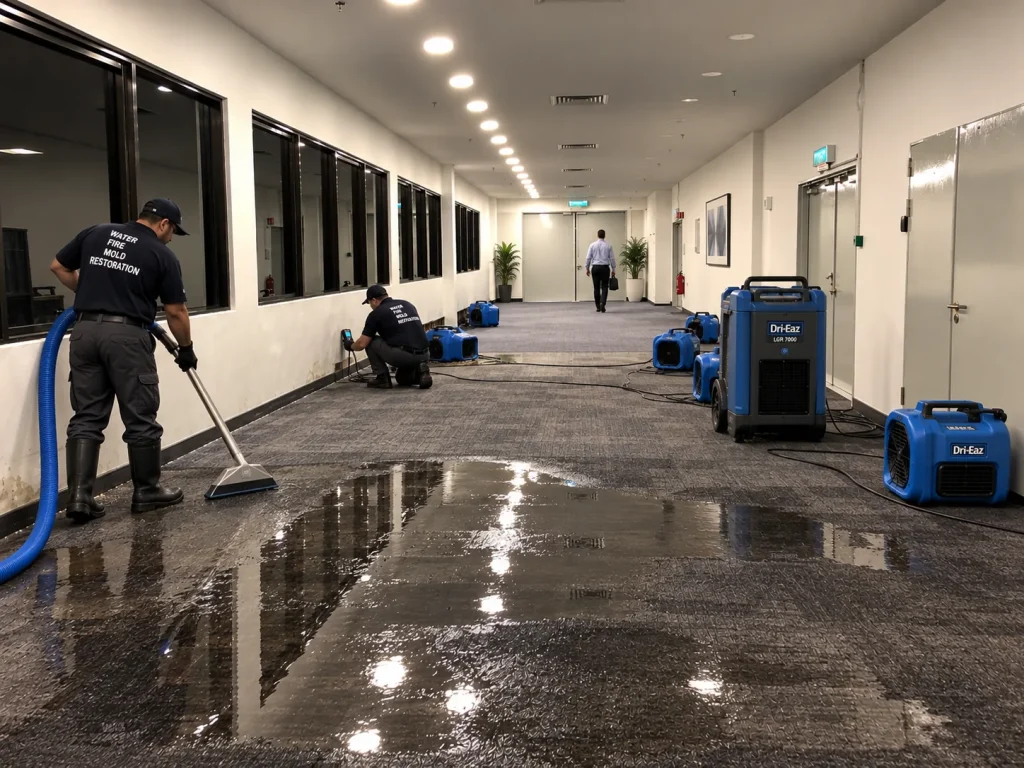
Retail cleanup has to protect merchandise and keep shoppers safe at the same time.
When a hail storm crosses Dallas, the damage people see first is on cars and roofs. The damage that costs the most often shows up later, inside the building. Punctured membranes, cracked skylights and damaged rooftop units let water into insulation, ceilings and walls, sometimes for weeks before anyone notices a stain.
This guide explains how roof damage turns into interior water damage and how to handle both at the same time.
How Water Gets Inside
Punctures and fractures in the roof membrane from large hail
Damaged flashing at walls, curbs and penetrations
Cracked skylights and damaged rooftop units
Clogged drains that let water back up under flashing
Wind that lifts edges and peels back membrane
Water often travels along the deck or insulation before it drips, so the stain inside may be far from the actual hole in the roof.
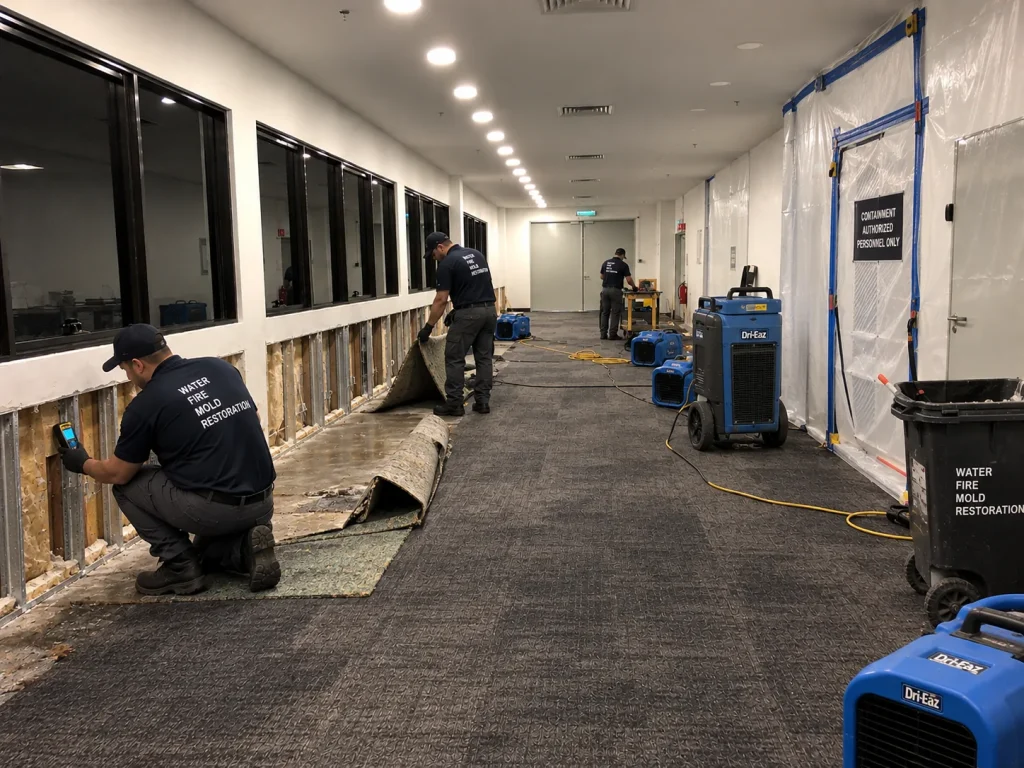
Barriers and hidden equipment let parts of the store stay open during drying.
When Water Comes Through the Ceiling
Protect people and equipment. Move people, computers and inventory away from the leak. Watch for sagging ceiling tiles, which can fall.
Contain the water. Use buckets and plastic to catch drips and protect floors.
Check electrical safety. Keep water away from light fixtures and outlets. Turn off affected circuits if it is safe.
Call for a temporary roof repair. A tarp or patch stops more water from getting in.
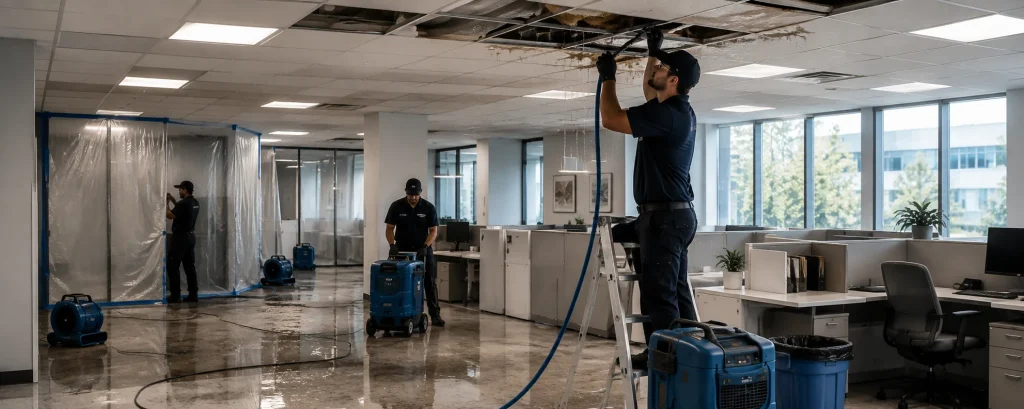
Call for drying. Wet ceiling tiles, insulation and drywall need to be removed or dried quickly to prevent mold.
Fast, tidy recovery helps a store reopen and win back its customers.
Roof Repair and Restoration Go Together
Drying the inside does not help if the roof keeps leaking, and fixing the roof does not dry the insulation inside. The two jobs need to be coordinated: temporary roof protection first, then interior extraction and drying, then permanent roof repair or replacement, then interior repairs.
Documenting a Storm Claim
Record the date of the storm
Photograph roof damage and interior damage separately
Keep moisture logs from the drying process
Keep receipts for temporary repairs
Don’t Ignore Small Stains
A small ceiling stain after a storm can mean wet insulation over a large area. Moisture mapping can find the extent of the water before mold or deck damage develops.