Guides on how commercial property losses actually unfold — what downtime costs, which building systems control the recovery, and when a property is genuinely ready to reoccupy.
Home/Blog/When Flash Flooding Reaches a Las Vegas Commercial Loading Dock
When Flash Flooding Reaches a Las Vegas Commercial Loading Dock
Published November 18, 2026 · Commercial Water Damage Restoration Team · Restoration Process & Sequencing
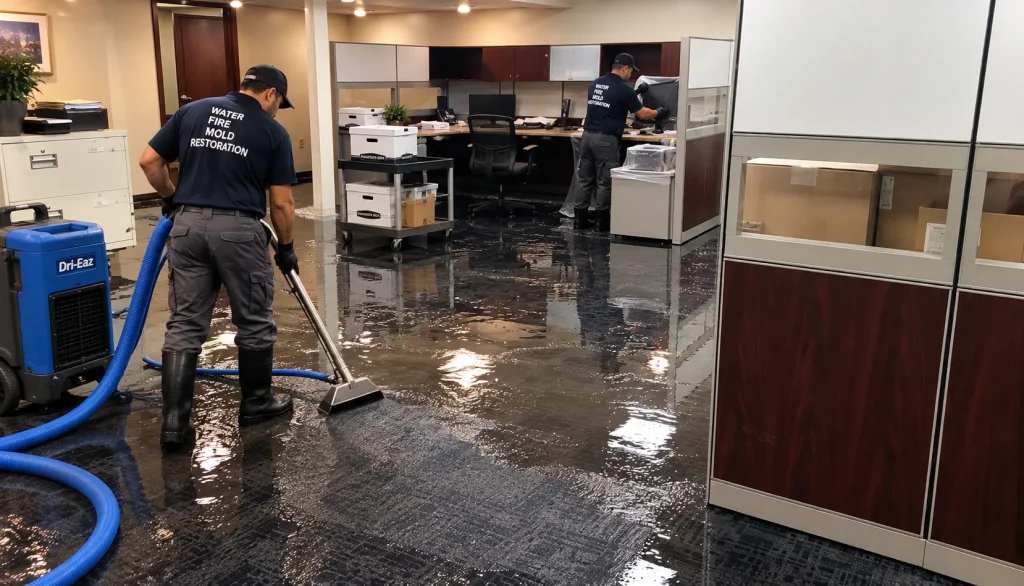
Retail cleanup has to protect merchandise and keep shoppers safe at the same time.
Written for: facility and warehouse managers with recessed or grade-level loading docks in Las Vegas. The decision: whether the dock and the building behind it are safe to use after the water drops.
Short answer: Treat floodwater as contaminated. Keep people out of standing water at the dock until the power to dock equipment is off and the depth is known, then clean and dry the dock and any interior area the water reached before normal use.
Example scenario (hypothetical): A summer storm drops heavy rain in a short time. Runoff from the parking lot fills a recessed loading dock well and flows under the dock doors into the first 20 feet of the warehouse.
Safety First
Keep people and forklifts out of standing water in the dock well.
Shut off power to dock levelers, door operators and any equipment in the water, following lockout/tagout.
Do not drive trucks into a flooded dock well.
Photograph the water level at the dock and inside the building.
Once the water drops, check the dock drain. A blocked drain is often why the well filled.
The Las Vegas Detail That Changes the Plan
Las Vegas gets little rain most of the year, but summer monsoon storms can bring intense rain and flash flooding in a short time. Recessed docks collect runoff from large paved areas. The National Weather Service Las Vegas office issues flash flood watches and warnings, which dock supervisors can use to move product and trucks before water arrives.
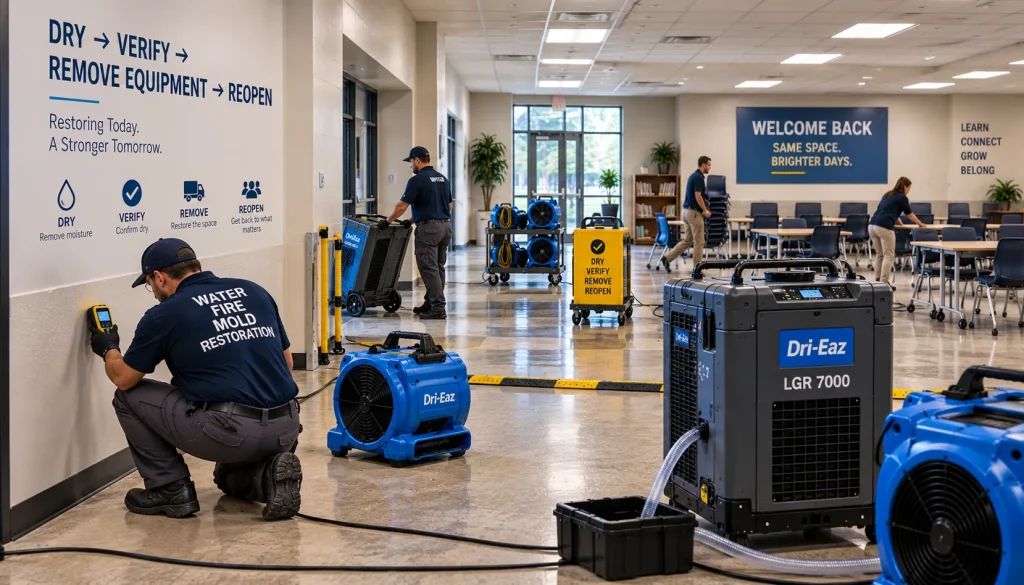
Barriers and hidden equipment let parts of the store stay open during drying.
The Tradeoff: Clean Water Rules Do Not Apply
Floodwater that crossed a parking lot carries oil, debris and other contaminants. Porous materials it touched, such as cardboard, drywall at the base of interior walls and carpet in dock offices, usually need removal rather than drying. Sealed concrete and metal can be cleaned and dried.
Material touched by floodwater
Usually
Sealed concrete floor
Clean, sanitize and dry
Cartons and pallets
Discard or inspect by product rules
Drywall at wall base in dock office
Remove above the water line
Dock leveler pit and equipment
Clean, dry and inspect before use
From the Field
Facility teams most often miss the dock leveler pit. Water and debris sit in the pit under the leveler plate where no one looks. Crews clean the pit and have the equipment checked before the first truck is loaded.
Fast, tidy recovery helps a store reopen and win back its customers.
Tool: Monsoon Season Dock Checklist
Clear the dock drain and grate before the season and after every storm
Know the shutoff for dock equipment power
Keep floor-level product back from the dock doors on storm days
Watch National Weather Service flash flood alerts
Keep a dock flood photo log template ready
Next Step
Save this checklist for your dock team before monsoon season. If water is inside now, call with the depth, the area affected and whether it reached stored product.