Guides on how commercial property losses actually unfold — what downtime costs, which building systems control the recovery, and when a property is genuinely ready to reoccupy.
Home/Blog/Commercial Water Damage Restoration in Phoenix After a Monsoon Storm
Commercial Water Damage Restoration in Phoenix After a Monsoon Storm
Published November 19, 2026 · Commercial Water Damage Restoration Team · Restoration Process & Sequencing
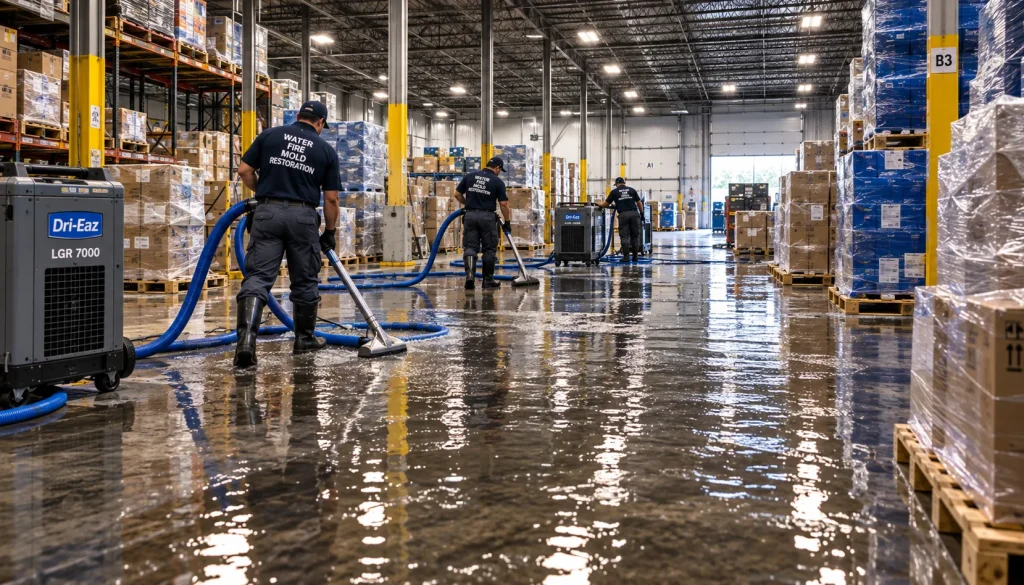
Retail cleanup has to protect merchandise and keep shoppers safe at the same time.
Written for: property managers and facility managers of Phoenix commercial buildings. The decision: what to fix first after a monsoon storm: the roof, the water inside, or the tenants.
Short answer: Make the building safe, stop more water from entering (roof drains, openings, doors), then remove water and start drying the same day. Tenant updates go out in the first hour, even before the plan is final.
Example scenario (hypothetical): A late-afternoon monsoon storm brings strong wind, blowing dust and a short burst of heavy rain to a two-story office building in central Phoenix. A roof drain clogs with debris, and water comes through ceilings in three suites on the second floor.
The First Hour
Keep people away from sagging ceilings and wet electrical equipment.
Once the storm passes and it is safe, have the roof drains and scuppers cleared.
Put tarps and buckets under active drips and move equipment and files.
Photograph each wet area and the roof condition.
Call for extraction and drying, and send a short update to affected tenants.
The Phoenix Detail That Changes the Plan
The National Weather Service Phoenix office treats summer as monsoon season, when storms can bring strong wind, dust and intense rain in a short time. Dust and debris blown onto flat roofs are a common reason drains clog. In Phoenix, check roof drains after dust storms, not just after rain.
Barriers and hidden equipment let parts of the store stay open during drying.
The Tradeoff: Fast Drying Versus Hidden Water
Phoenix heat and low humidity help drying, but water that came through a roof usually soaked insulation above the ceiling and the top of walls. Those areas dry slowly and are easy to miss.
Where water went
Usually
Carpet and floor surface
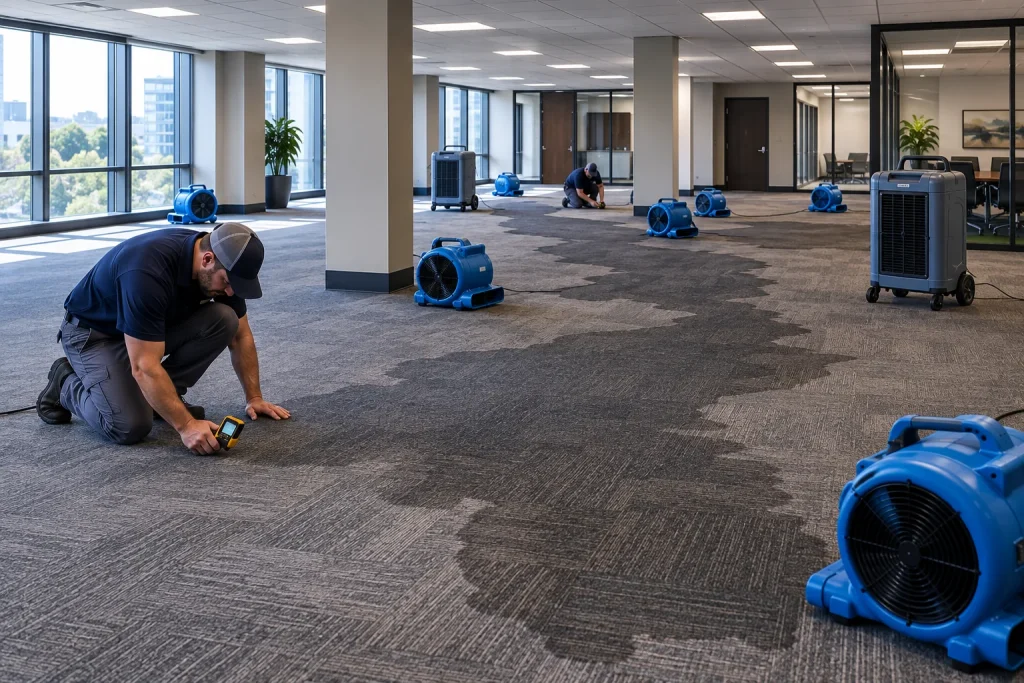
Extract and dry in place if clean
Ceiling tiles
Replace saturated or stained tiles
Batt insulation above the ceiling
Remove if soaked; it holds water
Top of walls under the leak
Readings; may need small openings
From the Field
The common miss after a monsoon leak is the roof itself. Crews dry the inside, but the roof damage that let water in is not repaired before the next storm, which may be days away. Get a roofer on the schedule the same day as the drying crew.
Fast, tidy recovery helps a store reopen and win back its customers.
Tool: Monsoon Season Building Checklist
Clear roof drains and scuppers before the season and after dust storms
Check rooftop unit curbs and flashing
Keep tarps, buckets and wet vacs on site
Know who to call for roofing and restoration
Watch National Weather Service Phoenix alerts
Next Step
Save this checklist for your maintenance team. If water is coming in now, call with the suites affected and roof access details.
The property address and the entrance the crew should use
Where the water came from and whether it has been stopped
Which floors, suites or rooms are wet, and roughly how large the area is
Whether the water is clean, gray or sewage
Who can approve work on site, and the insurance carrier if known