
Water emergency? Our commercial crews respond 24/7.
Home / Repair / California / San Francisco, CA
Commercial Water Damage
- 24/7 Response
- Extraction
- Structural Drying
- Restoration
What happens when you call
24/7 dispatch
Call any hour. Crews mobilize for commercial losses, including nights and weekends.
Extraction & drying
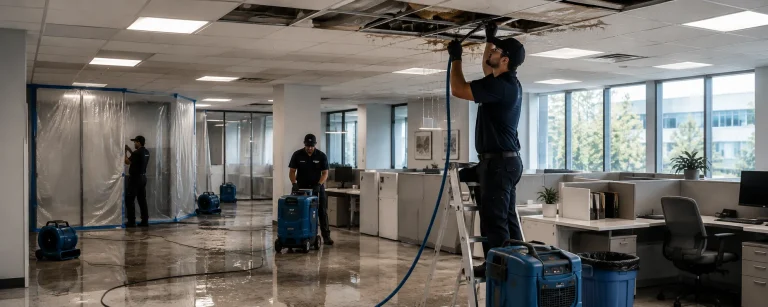
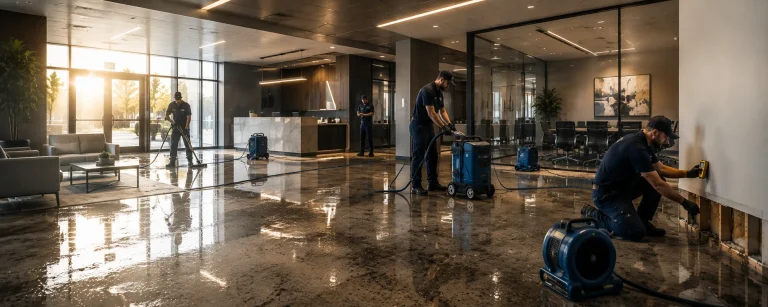
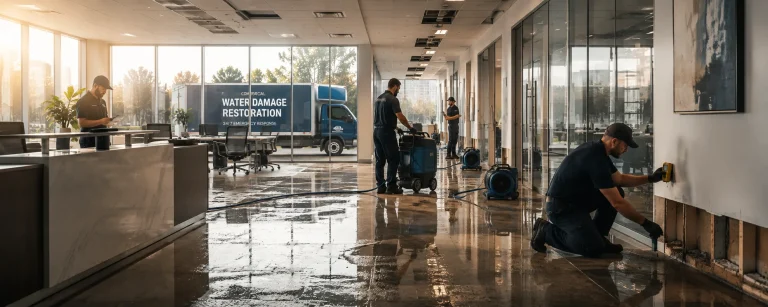
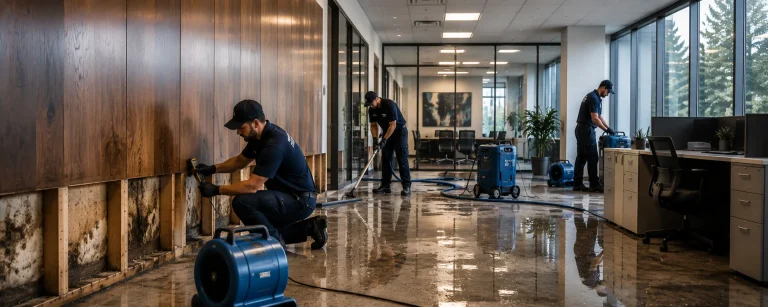
Standing water removed, then structural drying with monitored moisture readings.
Insurance-ready records
Readings, photos and scope notes documented for your carrier from day one.
San Francisco, CA
Commercial Water Damage in San Francisco Requires Protecting High-Rise Commercial Buildings, Historic Architecture, and Some of California’s Most Valuable Real Estate
San Francisco is one of the most complex commercial property markets in the United States. Downtown office towers, historic commercial buildings, financial institutions, healthcare campuses, life science facilities, hotels, mixed-use developments, and technology companies operate within one of the country’s densest urban environments.
Water damage in San Francisco is rarely just a maintenance issue. High property values, sophisticated building systems, seismic upgrades, and tenant expectations require restoration strategies that protect business continuity while preserving valuable commercial assets. In many cases, restoring existing building systems provides significantly greater long-term value than replacing them.
Commercial Water Damage provides educational resources that help facility managers, property managers, building owners, developers, and commercial contractors better understand commercial water damage throughout San Francisco and the surrounding Bay Area.
Restoration Has Become More Valuable Than Replacement
Commercial construction throughout San Francisco has become increasingly sophisticated.
Many commercial properties include:
- High-performance curtain wall systems
- Smart building automation
- Premium office interiors
- Advanced HVAC infrastructure
- Financial technology systems
- Modern electrical infrastructure
- Seismic building improvements
- Custom tenant improvements
Replacing these systems after a significant water event often requires specialized contractors, lengthy construction schedules, complex permitting, and substantial investment.
For many commercial property owners, restoration has become the preferred strategy because it preserves valuable infrastructure while minimizing downtime and protecting long-term property value.
Dense Urban Construction Creates Unique Water Damage Challenges
San Francisco commercial properties face risks that extend well beyond weather.
Common causes of water damage include:
- Roof leaks
- Burst plumbing lines
- Fire sprinkler discharges
- HVAC condensate failures
- Mechanical equipment leaks
- Drainage system backups
- Water supply failures
- Building envelope failures
- Overflowing plumbing fixtures
- Localized storm-related water intrusion
In multi-story buildings, water frequently travels through several occupied floors before the source is discovered.
Water Can Travel Throughout the Building
Commercial water damage often spreads far beyond the original leak.
Moisture may migrate through:
- Curtain wall systems
- Concrete floor slabs
- Structural steel
- Elevator shafts
- Ceiling plenums
- Mechanical rooms
- Electrical infrastructure
- Multi-tenant office spaces
Because many San Francisco buildings include multiple tenants and complex mechanical systems, identifying hidden moisture early is essential for limiting disruption and reducing repair costs.
Historic Buildings and Modern Towers Require Different Recovery Strategies
San Francisco’s commercial building inventory is remarkably diverse.
Recovery planning often involves:
- Downtown office towers
- Historic commercial buildings
- Financial institutions
- Healthcare campuses
- Life science facilities
- Hotels
- Mixed-use developments
- Technology offices
Each property presents unique structural characteristics, occupancy requirements, and operational priorities that influence restoration planning.
Business Continuity Is Essential
Many San Francisco businesses cannot afford prolonged operational interruptions.
Recovery planning often includes:
- Temporary workspaces
- Safe tenant access
- Equipment protection
- Phased restoration
- Overnight scheduling
- Weekend work
- Occupant communication
- Business continuity planning
Keeping tenants and businesses operating whenever practical helps protect revenue while maintaining long-term property value.
Modern Restoration Protects Valuable Commercial Assets
Today’s commercial restoration strategies emphasize preserving building systems whenever appropriate.
Recovery efforts often include:
- Moisture mapping
- Structural drying
- Industrial dehumidification
- Material preservation
- Controlled demolition
- Building system protection
- Targeted reconstruction
- Long-term asset management
Rather than replacing every affected material, restoration planning focuses on protecting sophisticated commercial investments while reducing recovery timelines.
Questions San Francisco Property Owners Frequently Ask
Commercial recovery often requires balancing immediate repairs with long-term building performance.
Important questions often include:
- How far has moisture migrated throughout the building?
- Which building systems require immediate attention?
- Can tenants continue occupying the property?
- Can valuable materials and finishes be restored instead of replaced?
- How will insurance documentation support the project?
- What improvements should be incorporated during reconstruction?
- How can future water intrusion be reduced?
- What strategy best protects long-term property value?
- How will project communication be managed?
Addressing these questions early often results in a more organized and efficient recovery.
Preparing Commercial Buildings for Future Water Events
Many San Francisco property owners strengthen their facilities following restoration projects.
Potential improvements include:
- Roof maintenance programs
- Building envelope inspections
- Plumbing inspections
- Water detection technology
- HVAC maintenance
- Preventive waterproofing improvements
- Emergency response planning
- Long-term capital improvement strategies
Preparing before the next plumbing failure, roof leak, or storm event helps reduce operational disruptions while protecting valuable commercial assets.
Why Commercial Water Damage Focuses on San Francisco
San Francisco combines financial services, healthcare, biotechnology, hospitality, technology, historic architecture, and some of the nation’s highest-value commercial real estate into one of the country’s most demanding property management environments.
Commercial Water Damage provides educational resources that help facility managers, property managers, building owners, developers, and commercial contractors better understand moisture migration, water mitigation, restoration planning, repair strategies, insurance coordination, and long-term building performance.
Whether responding to a roof leak in the Financial District, water intrusion affecting a high-rise office tower, a plumbing failure inside a healthcare campus, flooding at a mixed-use development near Mission Bay, or moisture damage within a historic commercial building along Market Street, informed planning helps reduce downtime, preserve valuable assets, and support a faster, more efficient commercial recovery.
Commercial Water Damage Across Greater San Francisco
Commercial properties across the San Francisco region share many of the same water damage risks, but each market has its own building stock, climate exposure, and priorities. Explore our local guides:
- Fremont, CA — advanced manufacturing, research facilities, and distribution centers
- Oakland, CA — port logistics, downtown offices, healthcare, and historic commercial buildings
- San Jose, CA — Silicon Valley campuses, data centers, semiconductor, and downtown offices
- South San Francisco, CA — biotech and life sciences campuses, SFO-area logistics, and bayfront commercial property
- Walnut Creek, CA — downtown retail, BART-adjacent office towers, and medical centers in Contra Costa County
Water Emergency?
Our commercial response team is available 24/7 for water extraction, structural drying and restoration.
Our Services
Talk To A Specialist
Need help with a water loss right now?
Call our commercial team for extraction, drying and restoration planning built around your building and your operations.