Water emergency? Our commercial crews respond 24/7.
Commercial Water Damage
- 24/7 Response
- Extraction
- Structural Drying
- Restoration
What happens when you call
24/7 dispatch
Call any hour. Crews mobilize for commercial losses, including nights and weekends.
Extraction & drying
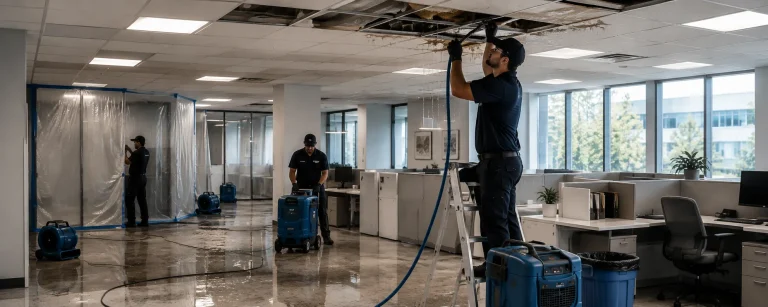
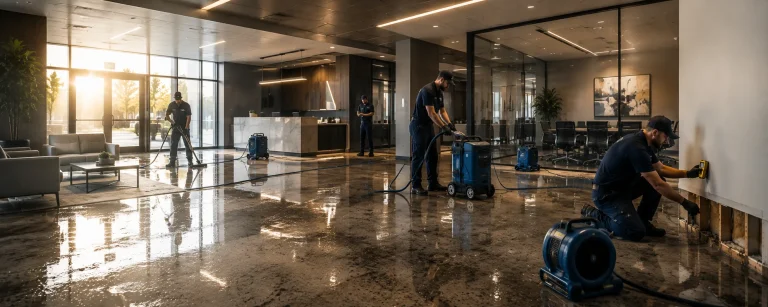
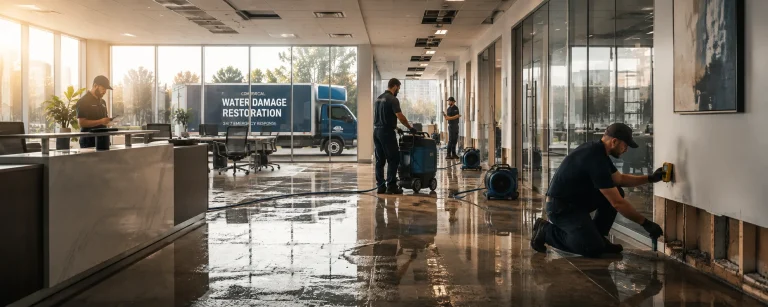
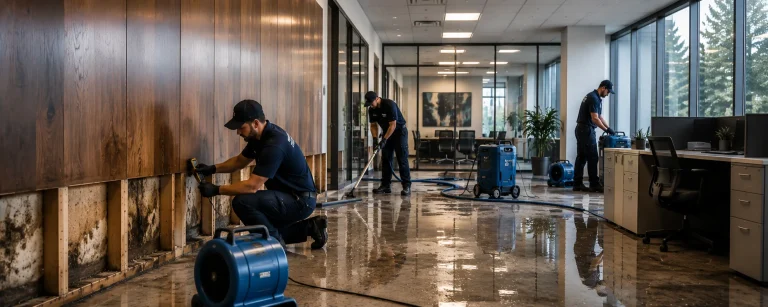
Standing water removed, then structural drying with monitored moisture readings.
Insurance-ready records
Readings, photos and scope notes documented for your carrier from day one.
Sugar Land, TX
Commercial Water Damage in Sugar Land Requires Protecting Corporate Campuses, Medical Facilities, and High-Value Commercial Investments
Sugar Land has evolved into one of the most desirable commercial markets in Texas. Located in Fort Bend County, the city is known for master-planned development, Class A office campuses, healthcare systems, engineering firms, life science companies, financial institutions, and upscale retail and mixed-use properties. Businesses invest heavily in their facilities, making long-term building preservation an increasingly important part of commercial property management.
Commercial water damage in Sugar Land is no longer simply about replacing damaged drywall or flooring. Modern commercial buildings contain sophisticated mechanical systems, premium tenant improvements, advanced technology, and specialized infrastructure that often make restoration a more valuable long-term investment than complete replacement.
Commercial Water Damage provides educational resources that help facility managers, property managers, building owners, developers, architects, engineers, and commercial contractors better understand commercial water damage throughout Sugar Land and Fort Bend County.
Commercial Buildings Continue to Increase in Value
As commercial construction has become more advanced, the cost of replacement has risen significantly.
Many Sugar Land commercial properties include:
- Intelligent building automation
- High-efficiency HVAC systems
- Premium executive interiors
- Medical office infrastructure
- Specialized engineering workspaces
- Advanced electrical systems
- Energy-efficient building envelopes
- High-end tenant improvements
Replacing these systems after a significant water loss can require months of planning, multiple specialty trades, material procurement, and substantial capital expenditures.
In many situations, restoring existing building systems offers a faster and more cost-effective path back to full operation.
Water Damage Happens Even in Well-Maintained Buildings
While Gulf Coast weather creates periodic storm risks, many commercial water losses begin inside the building.
Common causes include:
- Plumbing failures
- Fire sprinkler activations
- HVAC condensate overflows
- Mechanical equipment failures
- Roof leaks
- Water supply line breaks
- Drainage backups
- Heavy rainfall
- Tropical systems
- Hurricane-related wind and water intrusion
Many of the largest commercial losses begin with a relatively small leak that remains unnoticed long enough for moisture to migrate throughout the structure.
Moisture Often Travels Far Beyond the Visible Damage
Water follows gravity, structural pathways, and building assemblies.
Moisture may spread through:
- Concrete slabs
- Structural steel
- Wall cavities
- Ceiling plenums
- Mechanical chases
- Electrical rooms
- Elevator shafts
- Multi-tenant office suites
Professional moisture mapping helps identify hidden moisture before reconstruction begins, reducing unnecessary demolition while ensuring affected materials are properly evaluated.
Sugar Land’s Commercial Environment Requires Specialized Recovery Planning
Commercial restoration projects commonly involve:
- Corporate headquarters
- Medical office buildings
- Healthcare campuses
- Engineering firms
- Financial institutions
- Professional office parks
- Retail developments
- Mixed-use commercial centers
Each property has different operational priorities, occupancy levels, regulatory requirements, and tenant expectations that influence the restoration strategy.
Business Continuity Often Becomes the Highest Priority
For many organizations, every day of downtime creates financial consequences.
Recovery planning may include:
- Occupied-building restoration
- Temporary workspaces
- Phased construction schedules
- Equipment protection
- Data and technology preservation
- Overnight restoration
- Weekend work
- Tenant coordination
Keeping businesses operational while restoration progresses often reduces disruption, protects customer relationships, and minimizes revenue loss.
Modern Restoration Focuses on Preservation
Today’s commercial restoration strategies prioritize preserving valuable building components whenever appropriate.
Recovery efforts frequently include:
- Moisture mapping
- Structural drying
- Industrial dehumidification
- Selective demolition
- Material preservation
- Building system protection
- Targeted reconstruction
- Long-term moisture management
The objective is no longer simply replacing damaged materials. The objective is restoring the commercial asset while protecting the owner’s long-term investment.
Questions Sugar Land Property Owners Frequently Ask
Commercial recovery often begins with important strategic questions.
These commonly include:
- How extensive is the hidden moisture?
- Which materials can realistically be restored?
- Can tenants safely remain in the building?
- What documentation should be collected for insurance?
- How should reconstruction be phased?
- Which building systems require further evaluation?
- What improvements reduce future water losses?
- How can restoration increase long-term property performance?
- Which approach creates the best return on investment?
These conversations often shape both the current restoration project and future capital planning.
Preparing Commercial Buildings for Future Water Events
Many Sugar Land property owners use restoration projects as opportunities to strengthen their facilities.
Potential improvements include:
- Roof maintenance programs
- Building envelope inspections
- Water detection technology
- Plumbing evaluations
- Preventive HVAC maintenance
- Stormwater management improvements
- Emergency response planning
- Long-term capital improvement strategies
Preparing before the next plumbing failure, tropical storm, or major rainfall event helps reduce future operational disruptions while protecting valuable commercial investments.
Why Commercial Water Damage Focuses on Sugar Land
Sugar Land represents one of Texas’ premier master-planned commercial environments, where healthcare, engineering, finance, corporate headquarters, and professional services operate from sophisticated, high-value buildings. As commercial construction becomes increasingly complex and property values continue to rise, restoration has become an essential strategy for preserving these investments rather than automatically replacing them.
Commercial Water Damage provides educational resources that help facility managers, property managers, building owners, developers, architects, engineers, and commercial contractors better understand repair versus replacement decisions, moisture migration, structural drying, insurance coordination, restoration planning, and long-term commercial building performance.
Whether responding to a plumbing failure inside a corporate headquarters, tropical storm-related water intrusion at a medical office building, a sprinkler discharge affecting a Class A office campus, or hidden moisture inside a mixed-use commercial development, informed planning helps reduce downtime, preserve valuable assets, and support a faster, more resilient commercial recovery throughout Sugar Land.
Commercial Water Damage Across Greater Houston
Sugar Land is part of the greater Houston commercial market. For the regional picture, read our Houston commercial water damage guide, or compare nearby markets:
- Baytown, TX — refining and petrochemical complexes, logistics, and Galveston Bay commercial property
- Katy, TX — I-10 energy corridor offices, retail, hospitals, and distribution centers
- Pasadena, TX — Houston Ship Channel industry, petrochemical support facilities, and warehouses
- The Woodlands, TX — corporate campuses, energy headquarters, healthcare, and Class A office space
Water Emergency?
Our commercial response team is available 24/7 for water extraction, structural drying and restoration.
Our Services
Talk To A Specialist
Need help with a water loss right now?
Call our commercial team for extraction, drying and restoration planning built around your building and your operations.