Water emergency? Our commercial crews respond 24/7.
Home / Water Extraction
Commercial Water Extraction
- 24/7 Response
- Extraction
- Structural Drying
- Restoration
What happens when you call
24/7 dispatch
Call any hour. Crews mobilize for commercial losses, including nights and weekends.
Extraction & drying
Standing water removed, then structural drying with monitored moisture readings.
Insurance-ready records
Readings, photos and scope notes documented for your carrier from day one.
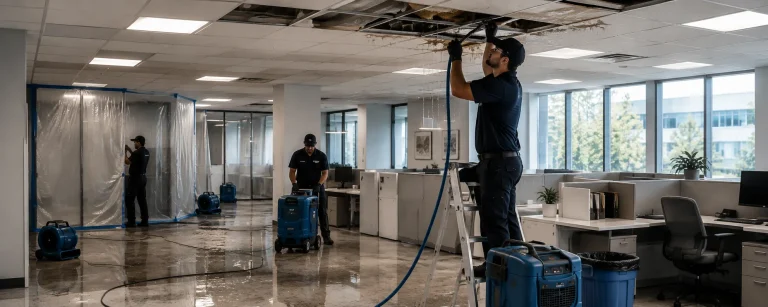
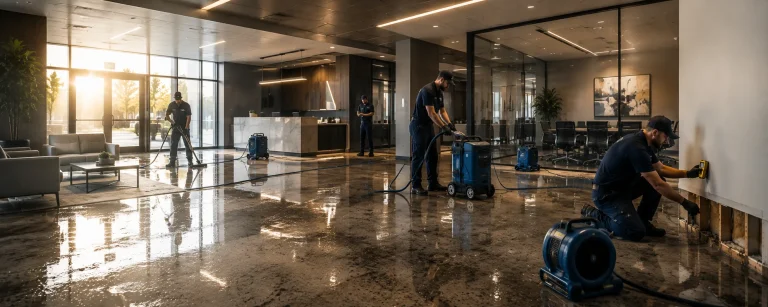
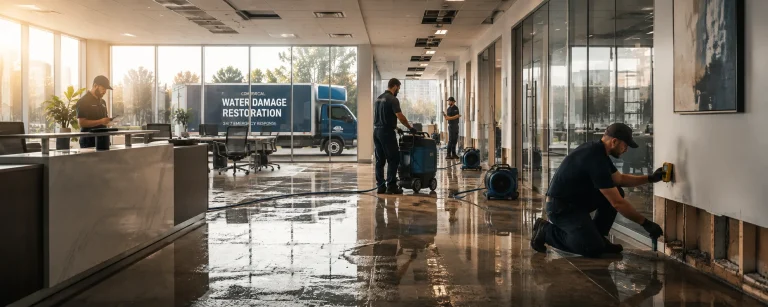
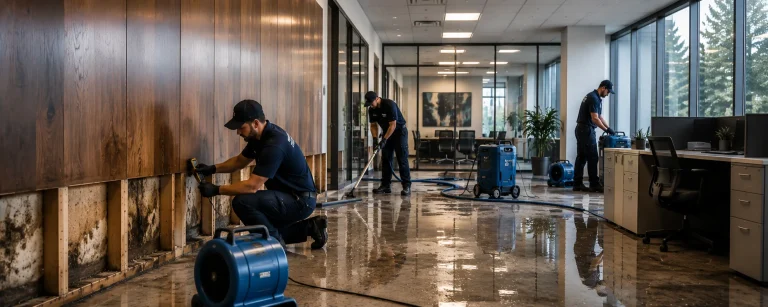
Water extraction is often the first and most time-sensitive step in commercial water damage restoration. Whether the loss is caused by a burst pipe, roof leak, sprinkler discharge, flooding, sewer backup, or mechanical equipment failure, removing standing water quickly helps reduce secondary damage, stabilize building materials, and begin the recovery process. The speed and organization of water extraction can influence everything from business interruption and tenant satisfaction to insurance documentation and long-term repair costs.
Unlike residential projects, commercial water extraction frequently occurs in occupied buildings where businesses, employees, customers, patients, students, or residents continue using portions of the property. Restoration teams often work alongside facility personnel, property managers, engineers, and contractors to remove water while minimizing disruption to daily operations.
Why Water Extraction Matters
Standing water can affect much more than the visible floor surface.
Water may spread through:
- Carpet and flooring systems
- Wall cavities
- Insulation
- Ceiling assemblies
- Mechanical rooms
- Electrical spaces
- Elevator pits
- Server rooms
- Storage areas
- Tenant improvements
- Removing water quickly helps reduce the amount of demolition that may eventually be required.
The sooner extraction begins, the sooner structural drying, moisture monitoring, and restoration can move forward.
The Building Owner’s Perspective
Building owners often evaluate water extraction as part of protecting a long-term investment.
Common priorities include:
— Preserving property value
— Limiting structural damage
— Reducing reconstruction costs
— Protecting occupied space
— Minimizing tenant disruption
— Avoiding future deterioration
— Maintaining lease income
— Supporting long-term building performance
Owners frequently ask whether fast extraction today can reduce larger repair costs tomorrow.
The Property Manager’s Perspective
Property managers are usually responsible for coordinating the emergency response while communicating with multiple stakeholders.
Responsibilities often include:
- Contacting restoration vendors
- Updating tenants
- Managing contractor access
- Coordinating after-hours work
- Documenting affected areas
- Scheduling inspections
- Communicating with ownership
- Supporting insurance documentation
The goal is restoring operations while maintaining confidence among tenants and ownership.
The Facility Manager’s Perspective
Facility managers focus on how water affects building operations.
Primary concerns often include:
- Electrical safety
- Mechanical equipment
- HVAC systems
- Fire protection equipment
- Elevators
- Utility systems
- Occupant safety
- Equipment protection
- Drying progress
- Building functionality
Extraction is often only one part of a larger operational recovery plan that restores building systems safely and efficiently.
Insurance and Documentation
Water extraction is frequently one of the earliest documented phases of a commercial insurance claim.
Documentation may include:
- Photographs
- Water source identification
- Moisture readings
- Extraction logs
- Equipment placement
- Damaged material inventories
- Drying records
- Daily progress reports
- Emergency response timelines
Accurate documentation helps establish the condition of the property while supporting communication between restoration contractors, adjusters, consultants, and ownership.
Commercial Water Extraction Equipment
Every water loss is different, requiring equipment appropriate for the size and conditions of the building.
Common extraction methods include:
- Truck-mounted extraction systems
- Portable extractors
- High-capacity pumps
- Wet vacuums
- Flood pumping equipment
- Specialized extraction tools
- Floor mat extraction systems
- Crawlspace pumping
- Containment systems
- Temporary power equipment
Equipment selection depends on the volume of water, accessibility, building occupancy, and affected materials.
Commercial Properties That Require Water Extraction
Water extraction services support nearly every commercial property type.
Typical projects include:
- Office buildings
- Medical facilities
- Hospitals
- Hotels
- Warehouses
- Distribution centers
- Manufacturing plants
- Restaurants
- Retail centers
- Educational campuses
- Government buildings
- Apartment communities
- Industrial facilities
Each building presents different operational priorities, occupancy requirements, and restoration challenges.
Beyond Standing Water
Extraction is only the beginning of the restoration process.
Following water removal, projects commonly continue with:
— Moisture mapping
— Structural drying
— Thermal imaging
— Humidity monitoring
— Material evaluation
— Controlled demolition
— Cleaning and sanitization
— Reconstruction planning
Removing visible water without properly drying the structure may leave hidden moisture inside walls, flooring, insulation, or structural assemblies.
Avoiding Common Delays
Several factors can increase restoration costs or extend recovery timelines.
Avoid:
✕ Waiting several days before beginning extraction
✕ Assuming standing water is the only damage
✕ Ignoring moisture beneath flooring systems
✕ Delaying inspections of mechanical or electrical spaces
✕ Reoccupying affected areas before drying is complete
Early action often improves restoration efficiency while reducing secondary damage.
Supporting Long-Term Building Performance
Commercial water extraction is more than an emergency service—it is the foundation of the entire restoration process. Fast water removal, coordinated communication, accurate documentation, and professional moisture management help protect building systems, reduce business interruption, and support insurance recovery. Whether responding to a burst pipe in an office tower, flooding in a warehouse, a sprinkler discharge in a hospital, or storm-related water intrusion at a retail center, effective water extraction helps commercial property owners, facility managers, asset managers, tenants, and insurance professionals move from emergency response toward long-term recovery with greater confidence.
Water Emergency?
Our commercial response team is available 24/7 for water extraction, structural drying and restoration.
Our Services
Talk To A Specialist
Need help with a water loss right now?
Call our commercial team for extraction, drying and restoration planning built around your building and your operations.