Building Drying Services Protect Commercial Properties After Water Damage
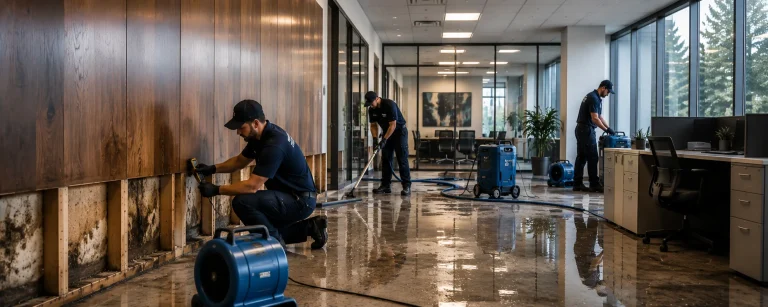
Removing standing water is only the beginning of the recovery process.
Moisture often remains trapped inside walls, concrete, insulation, flooring systems, ceiling assemblies, and structural components long after visible water has been removed. Professional building drying services are designed to reduce hidden moisture, protect building materials, and prepare commercial properties for restoration and repairs.
Commercial Water Damage Repair provides educational resources that help facility managers, property managers, building owners, developers, and general contractors better understand commercial drying strategies and long-term building recovery.
Why Proper Building Drying Matters
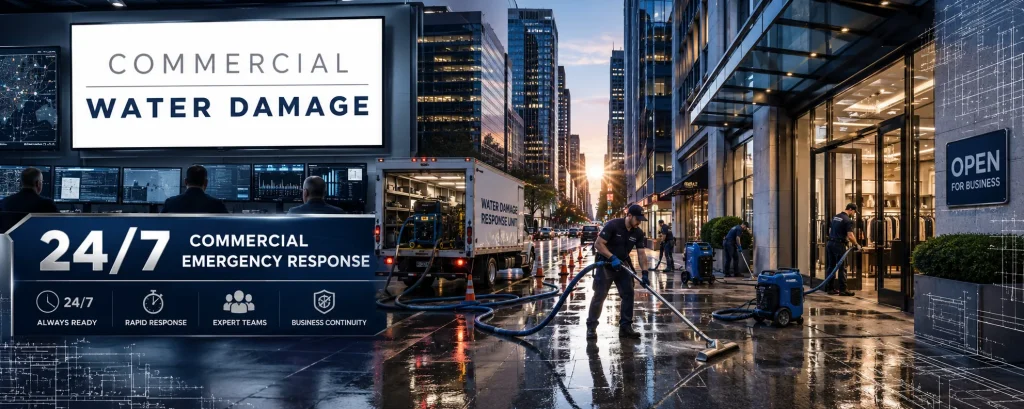
Buildings rarely dry on their own.
Without a structured drying plan, moisture may continue affecting structural components, interior finishes, and building systems long after the initial water loss.
Proper drying helps reduce:
- Structural deterioration
- Material replacement
- Mold concerns
- Project delays
- Tenant disruption
- Operational downtime
- Future maintenance costs
- Long-term property risk
Drying is one of the most important phases of any commercial water damage project.
Commercial Buildings Dry Differently
Every commercial property presents unique drying challenges.
Factors that influence the drying process include:
- Building size
- Construction materials
- Concrete thickness
- Ceiling height
- HVAC systems
- Occupancy
- Humidity levels
- Weather conditions
- Building age
These variables help determine how drying strategies are planned and monitored.
Moisture Can Remain Hidden
Visible surfaces may appear dry while moisture remains trapped inside the structure.
Areas commonly evaluated include:
- Wall cavities
- Ceiling plenums
- Floor assemblies
- Structural framing
- Insulation
- Concrete slabs
- Mechanical rooms
- Utility chases
Identifying hidden moisture is often one of the most important parts of the drying process.
Building Drying Is More Than Placing Fans
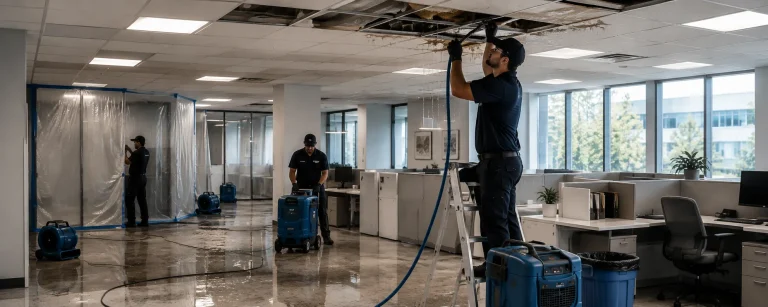
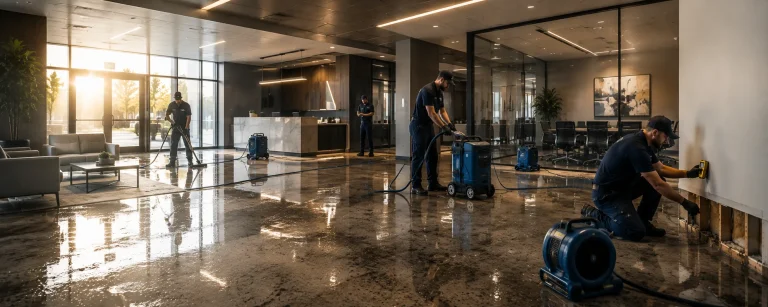
Commercial drying typically involves a coordinated approach rather than simply setting up equipment.
Drying plans may include:
- Moisture mapping
- Commercial dehumidification
- Air movement
- Humidity monitoring
- Daily moisture readings
- Thermal imaging
- Equipment adjustments
- Drying verification
The goal is to return building materials to appropriate moisture levels before repairs begin.
Occupied Buildings Require Additional Planning
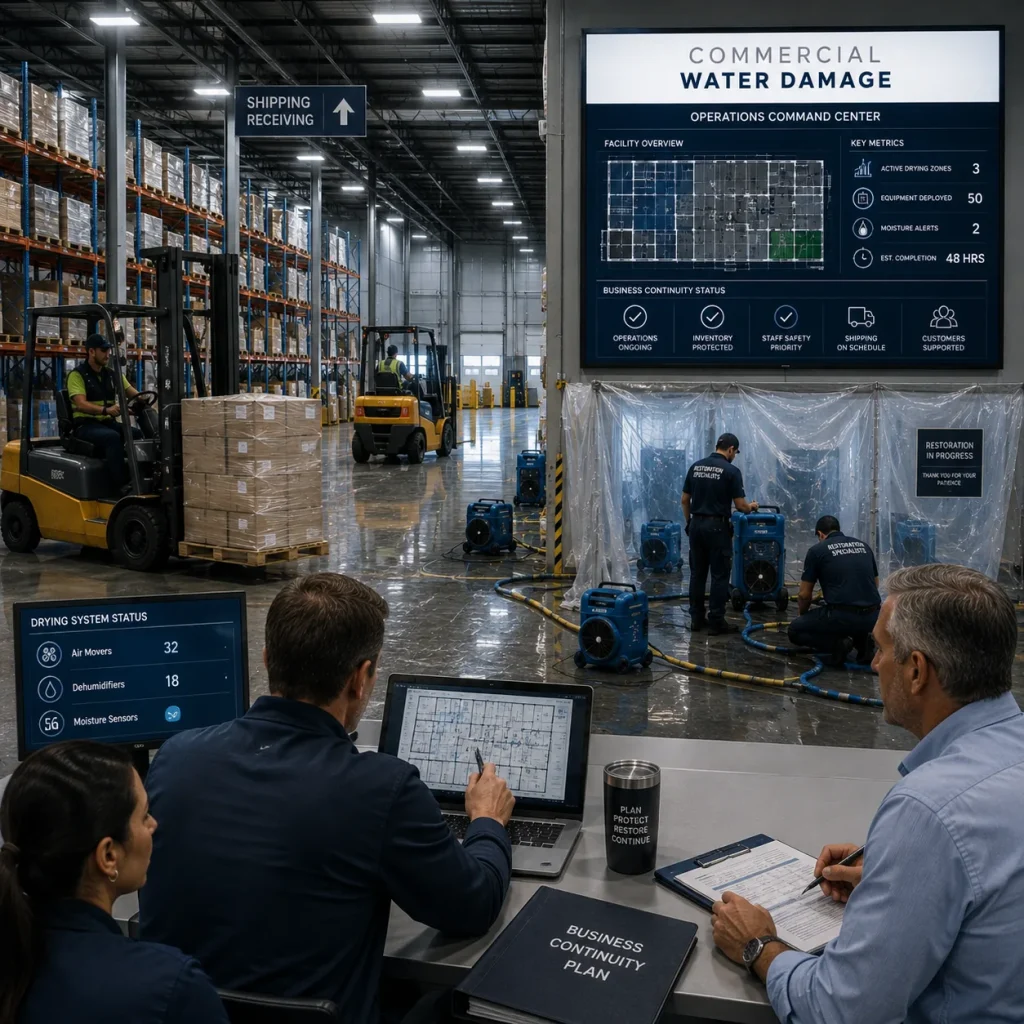
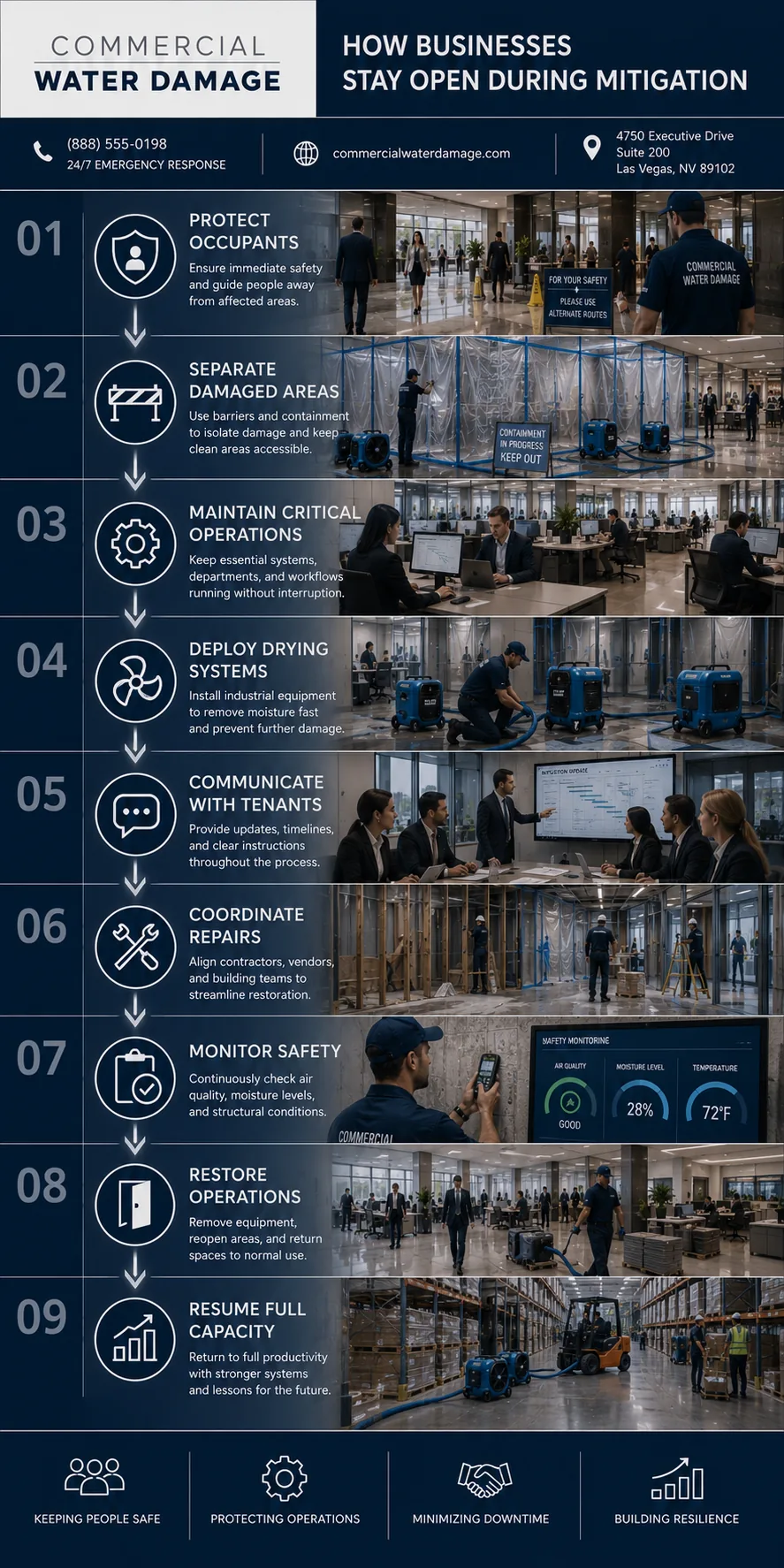
Many commercial buildings remain open while drying takes place.
Planning may include:
- Maintaining safe walkways
- Equipment placement
- Noise management
- Temporary work zones
- Tenant communication
- After-hours monitoring
- Building security
- Business continuity planning
Careful coordination helps minimize disruption while supporting effective drying.
Large Commercial Drying Projects
Major water losses often require drying across multiple areas of a property.
Projects may involve:
- Multi-story buildings
- Several tenant suites
- Mechanical spaces
- Common areas
- Warehouse floors
- Office environments
- Healthcare facilities
- Retail operations
Large drying projects often require ongoing monitoring as conditions change throughout the recovery process.
Monitoring Progress Throughout Drying
Commercial drying is measured, not estimated.
Documentation commonly includes:
- Moisture meter readings
- Relative humidity measurements
- Temperature monitoring
- Daily drying reports
- Equipment adjustments
- Progress photographs
- Drying verification
- Insurance documentation
Monitoring allows project teams to determine when building materials have reached acceptable moisture levels.
Questions Commercial Property Owners Should Ask
During the drying process, consider discussing:
- How is hidden moisture being identified?
- What equipment is being used?
- How often are moisture readings recorded?
- When will drying be verified?
- Can portions of the building remain occupied?
- How are tenants being informed?
- When can reconstruction safely begin?
- What documentation will be provided?
These conversations help property owners better understand project progress and expectations.
Drying Creates the Foundation for Repairs
Before reconstruction begins, commercial buildings should be properly evaluated to help ensure moisture has been effectively addressed.
After drying is complete, projects often continue with:
- Restoration
- Building repairs
- Interior reconstruction
- Flooring installation
- Ceiling replacement
- Painting and finishes
- Final inspections
- Preventive maintenance planning
Proper drying helps improve the quality and longevity of every phase that follows.
Why Commercial Water Damage Focuses on Building Drying Services
Commercial building drying involves much more than operating drying equipment.
Commercial Water Damage provides educational resources that help commercial property owners understand structural drying, moisture management, restoration planning, business continuity, insurance coordination, and long-term building performance.
Whether drying a single office suite or a large commercial facility following a major water loss, informed planning helps reduce downtime, protect valuable assets, and support a safer, more efficient recovery.