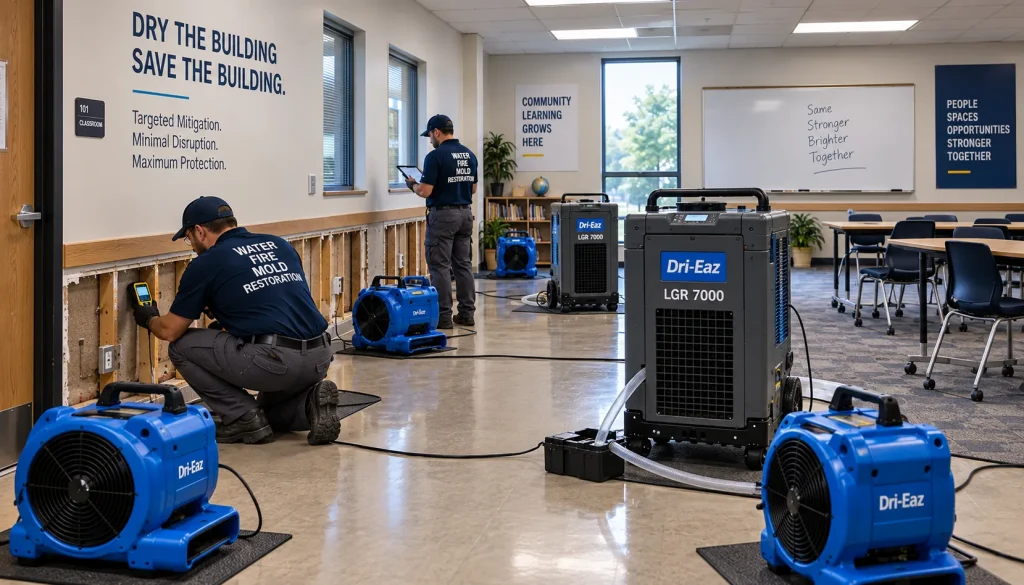
Commercial water damage restoration is a long chain of steps, not a single event. It starts the moment someone spots water where it should not be, and it ends only when the building is clean, dry, rebuilt, and back in full use. In between come emergency calls, extraction, drying, cleaning, demolition, and repairs. Each step depends on the one before it. When the chain holds together, a business recovers quickly. When it breaks, small losses turn into long closures. This guide walks through the whole process in order, so owners and managers know what to expect.
Owners and managers can treat it as a roadmap from the first phone call to the final walkthrough.
Why Commercial Restoration Is Different
Water damage in a home is stressful. In a commercial building, it is also a business problem. Every hour of downtime can cost sales, production, or rent. Meanwhile, tenants, customers, and employees may still be in the building.
Commercial properties are also larger and more complex, so the work is too. They have elevators, fire systems, server rooms, and big HVAC units. Water can travel through ceilings and walls across several floors. As a result, commercial water damage restoration needs bigger crews, more equipment, and tighter coordination than most residential jobs.
Step 1: The Emergency Call
First, everything starts with a call. A good restoration company answers around the clock and asks quick questions. Where is the water coming from? Is it still flowing? How large is the area? Is there power near the water? Are people in the building?
As a result, these answers shape the first response. For example, a burst sprinkler pipe over an occupied office needs a different plan than a slow roof leak in a vacant warehouse.
Step 2: Stop the Source and Make It Safe
Next, before any cleanup, crews stop the source. That may mean shutting off a water main, closing a sprinkler valve, or tarping a damaged roof. Next, the team checks for hazards. Wet electrical systems, slippery floors, and sagging ceilings all pose risks.
Safety comes first for everyone. The OSHA flood safety guidance outlines many of the hazards crews watch for after water events.
Step 3: Classify the Water in Commercial Water Damage Restoration
Of course, not all water is the same. Restoration pros classify it by how clean it is. For example, a burst supply pipe usually brings clean water, the lowest risk. Sink or appliance overflow tends to be gray water with some contamination. Sewage and floods bring black water, the highest risk of all.
In turn, the category affects everything that follows. It decides what can be saved, what must be removed, and what protective gear crews wear. Industry standards from the IICRC guide these decisions.
Step 4: Water Extraction
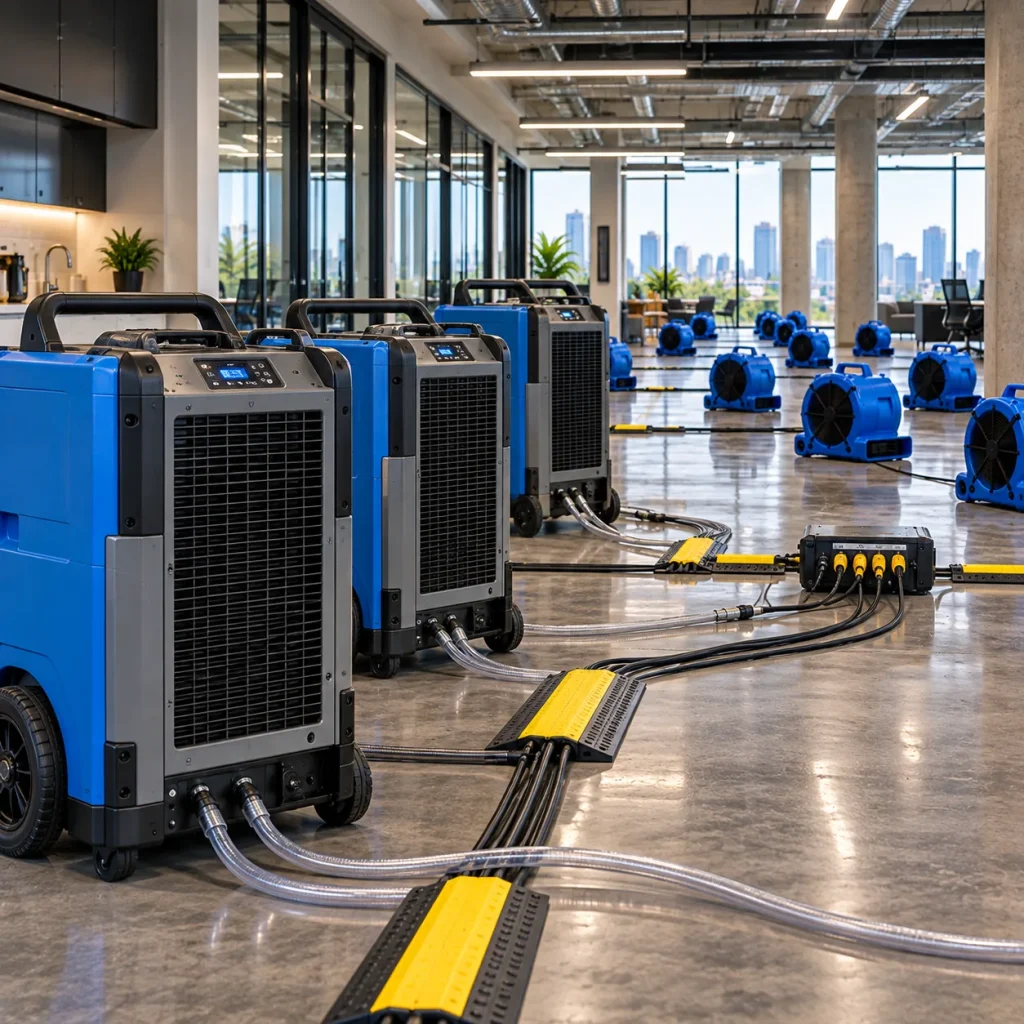
After that, crews remove standing water. They use truck-mounted or portable extractors, submersible pumps, and wands. Fast extraction is critical. The longer water sits, the more it soaks into floors, walls, and contents.
In short, extraction removes most of the water quickly. However, it does not remove the moisture already absorbed into materials. That is why drying comes next. Learn more on our commercial water extraction page.
Step 5: Moisture Mapping
However, water hides. It wicks up drywall, spreads under flooring, and pools inside wall cavities. So technicians map moisture with meters and thermal cameras. They mark wet areas on a floor plan and set drying goals for each material.
After that, this map becomes the guide for the rest of the job. It also provides proof for insurance that the building truly dried.
Step 6: Controlled Demolition During Commercial Water Damage Restoration
Unfortunately, some materials cannot be saved. Wet insulation, swollen particleboard, and contaminated drywall often must come out. Crews remove only what is necessary, a practice called controlled demolition. In many cases, they cut drywall a short distance above the waterline to let wall cavities dry.
Step 7: Structural Drying
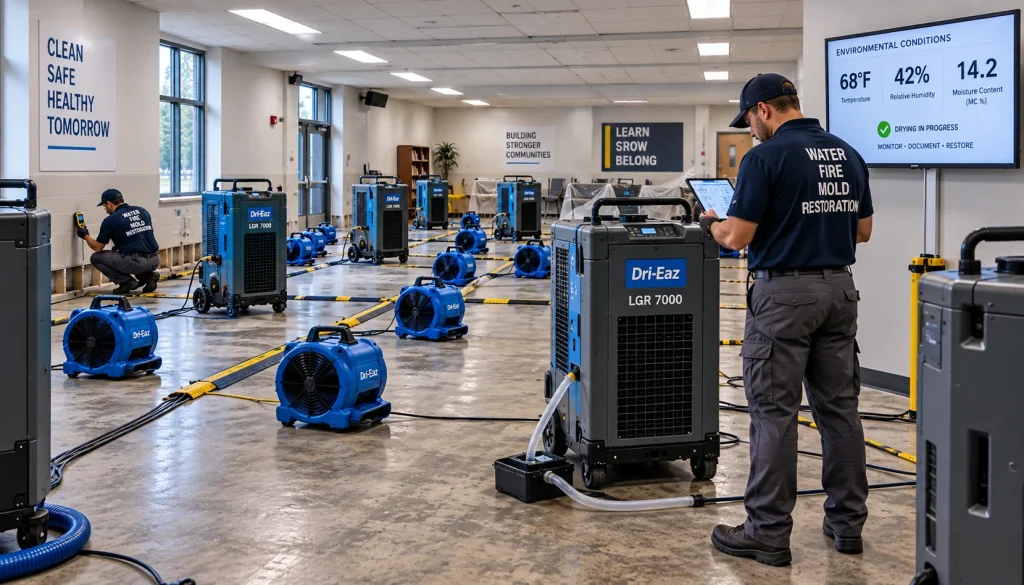
Drying is the heart of commercial water damage restoration. Crews place air movers to push air across wet surfaces. Dehumidifiers pull moisture out of the air. In large spaces, they may use desiccant dehumidifiers or temporary heat.
Then technicians check moisture daily and adjust equipment. Most commercial drying takes several days, depending on materials, temperature, and humidity. Our building drying services page explains this step in more detail.
Step 8: Cleaning and Sanitizing
Then, once materials are dry, crews clean and sanitize surfaces. For clean water losses, this may be simple. For gray or black water, it includes antimicrobial treatment and careful disposal of contaminated items. Air scrubbers may run to improve indoor air quality.
Also, mold prevention is part of this step. Mold can begin to grow within days on damp materials. The EPA mold guide explains why fast drying matters.
Step 9: Repairs and Rebuild
Finally, after drying and cleaning, the rebuild begins. Crews replace drywall, insulation, flooring, ceiling tiles, and trim. They paint, install cabinets, and restore finishes. In larger losses, this phase may need permits, inspections, and general contractor coordination.
Some restoration companies handle both mitigation and rebuild. Others hand off to a separate contractor. Ask about this early, because one team can often move faster.
Who Is on the Commercial Water Damage Restoration Team
Large losses bring many people together. A project manager runs the job and talks with the owner. Technicians handle extraction, drying, and cleaning. Meanwhile, specialists may test for mold or asbestos before walls come down. Licensed trades repair electrical, plumbing, and HVAC systems. Finally, the insurance adjuster reviews the scope and approves payment.
Good communication ties this team together. So ask for one main contact and a short daily update. That way, you always know what happened today and what comes next.
Choosing a Restoration Partner
Not every company is ready for commercial work. Look for a team with large-loss experience, enough equipment for your building, and 24/7 response. In addition, ask about certifications, insurance, and references from similar properties. A partner who has handled offices, warehouses, or stores like yours will move faster and make fewer mistakes.
Step 10: Final Walkthrough and Closeout
Finally, the owner, the restoration team, and sometimes the adjuster walk the space. They confirm that work is complete and the building is ready. The contractor provides moisture logs, photos, and invoices for the insurance file.
How Long Does Commercial Water Damage Restoration Take?
Naturally, timelines vary widely. A small clean-water loss in an office might wrap up in a week or two. A large flood in a warehouse, with contaminated water and major rebuild, can take months. Drying usually takes days, while repairs often take the longest.
Keeping the Business Running
Meanwhile, many businesses stay partly open during restoration. Crews can phase work, build containment walls, and work after hours. Our post on partial occupancy during restoration covers this in depth.
Insurance and Commercial Water Damage Restoration
In addition, insurance usually plays a big role. Document everything from the start: photos, videos, and notes. Keep damaged items until the adjuster sees them, unless they pose a health risk. A restoration company experienced with commercial claims can help organize the paperwork.
FAQ on Commercial Water Damage Restoration
How fast should commercial water damage restoration start?
As soon as possible. Ideally, crews arrive within hours to stop damage from spreading.
Can contents be saved?
Often, yes, especially after clean water losses. Items soaked by sewage or floodwater are harder to save.
Get Help Fast
Quick action protects your building and your business. Visit our restoration services page, or contact our team for emergency response.
Related Reading
- The First 24 Hours of Cleanup — what happens on day one and why speed matters.
- Building Water Damage Repair Scope — the factors that set the size of a repair.
- Commercial Water Extraction — why removing standing water is only the first step.
- Commercial Moisture Mapping — finding water behind walls and under floors.
- Commercial Restoration Sequencing — why the order of recovery can matter more than speed.
- Commercial Restoration Documentation — why the evidence of the work matters as much as the work.