Commercial water damage cleanup moves fastest and matters most in the first 24 hours. Decisions made in that first day shape how much material can be saved, how long the business stays closed, and how much the claim will cost. Wait too long, and water wicks deeper, mold starts to form, and clean water can turn contaminated. Act quickly and in the right order, and most of the damage can be contained. This guide walks through what should happen hour by hour after a commercial water loss.
Keep it handy as a checklist for that critical first day.
Why the First Day Matters So Much
Water spreads quickly. In minutes, it soaks carpet and pad. A few hours later, it wicks up drywall and swells wood. By day two, mold can start to grow on damp materials. Meanwhile, clean water from a broken pipe can pick up bacteria from floors and building materials.
Because of this, fast commercial water damage cleanup saves money. The more water you remove early, the less you have to tear out later.
Hour 0 to 1: Commercial Water Damage Cleanup Starts at the Source
Above all, the first priority is stopping the source. Shut off the water main or the valve feeding the broken pipe. For a sprinkler discharge, close the system valve, but notify the fire department and monitoring company, since the building may lose fire protection. For a roof leak, cover the area or move contents away until a roofer can tarp it.
Every building should have a plan showing where shutoff valves are. If you do not have one, make it now.
Hour 0 to 1: Make the Area Safe
Next, remember that water and electricity are a dangerous mix. If water is near outlets, panels, or equipment, cut power to that area if you can do so safely. Then block off wet floors to prevent slips. Watch ceilings for sagging, which can signal trapped water above.
Also, move people away from the affected area. The OSHA flood guidance lists common hazards to watch for. Safety always comes before cleanup.
Hour 1 to 2: Call for Help and Document
Then call a commercial restoration company and your insurance carrier. Many policies require prompt notice. While you wait, take photos and videos of the water, the source, and damaged items. Note the time the loss started and when it stopped.
Good records make the claim much easier later. Our post on restoration documentation explains why.
Hour 1 to 4: Protect Contents and Equipment
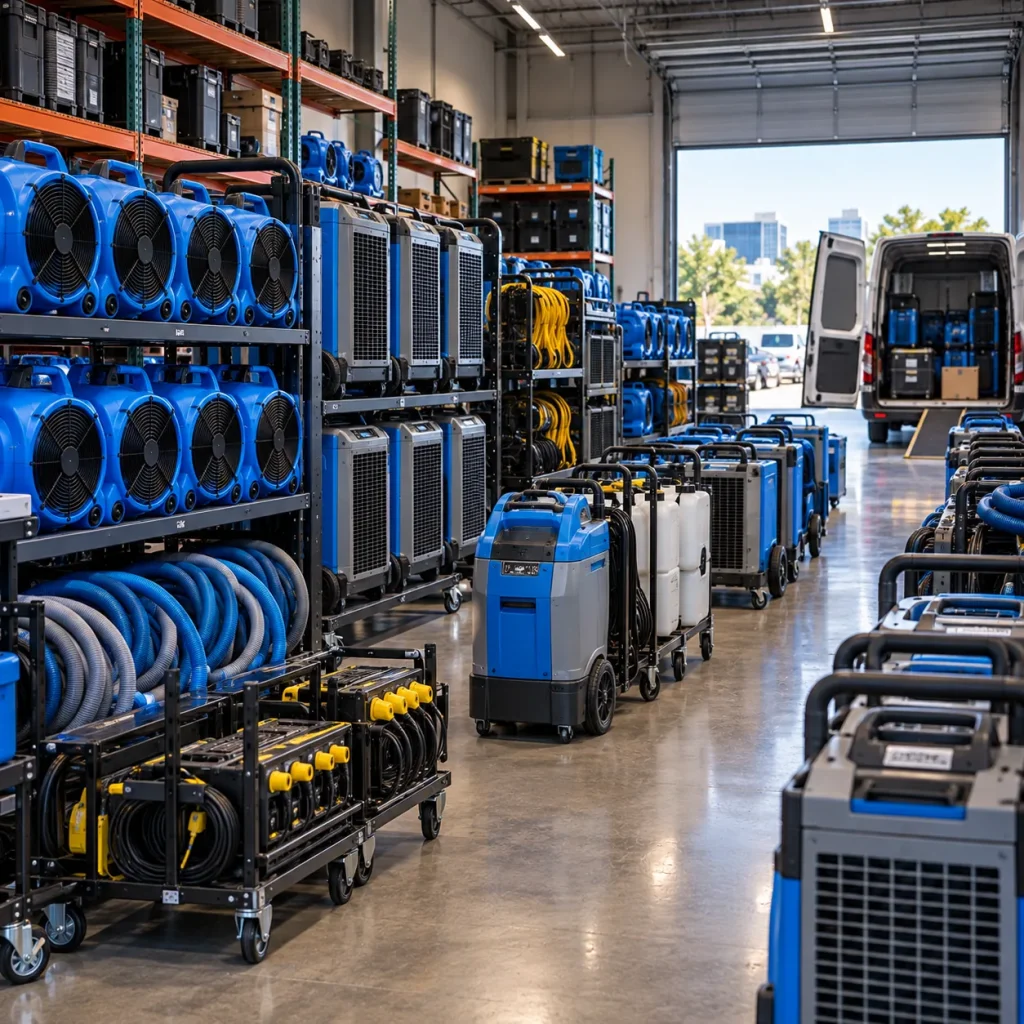
Meanwhile, while crews are on the way, move what you safely can. Lift files, boxes, and electronics off wet floors. Place aluminum foil or wood blocks under furniture legs to stop staining. Cover sensitive equipment with plastic if water is dripping from above.
However, do not move heavy equipment or anything that might shock you. Leave that to the professionals.
Hour 2 to 6: Crews Arrive and Assess
When the restoration team arrives, they begin commercial water damage cleanup with an assessment. They confirm the source is stopped, check for hazards, and classify the water. Clean, gray, and black water each need a different approach.
They also take initial moisture readings and walk the area with the property manager. Together, they decide where to start, which areas are most urgent, and how to keep the business running.
Hour 2 to 8: Extraction in Commercial Water Damage Cleanup
After that, extraction begins. Crews use powerful pumps and extractors to pull standing water from floors and carpet. Fast extraction is the most effective way to limit damage. In fact, removing water quickly can cut drying time dramatically.
Learn more on our emergency water extraction page.
Hour 4 to 12: Moisture Mapping
Once standing water is gone, technicians map hidden moisture. They use meters and thermal cameras to find water in walls, under floors, and above ceilings. They mark the wet areas on a floor plan.
This map guides the drying plan. It also shows how far the water spread, which is often farther than it looks.
Hour 6 to 18: Remove What Cannot Be Saved
Unfortunately, some materials need to go right away. Wet carpet pad, soaked insulation, and contaminated drywall often cannot be dried in place. Crews remove them to speed drying and prevent mold. For contaminated water, they remove porous materials more aggressively.
Hour 8 to 24: Set Up Drying Equipment
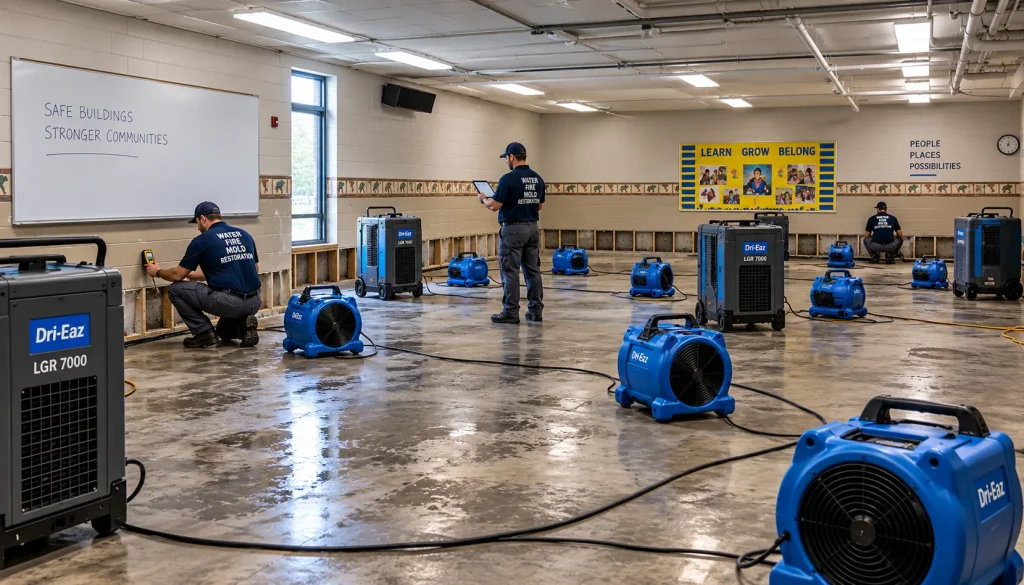
Finally, by the end of the first day, drying should be underway. Crews place air movers to move air across wet surfaces. Dehumidifiers pull moisture from the air. In large or cold spaces, they may add heat or desiccant dehumidifiers.
They also set drying goals for each material and plan daily moisture checks. Drying usually continues for several days after the first 24 hours.
Commercial Water Damage Cleanup and Business Operations
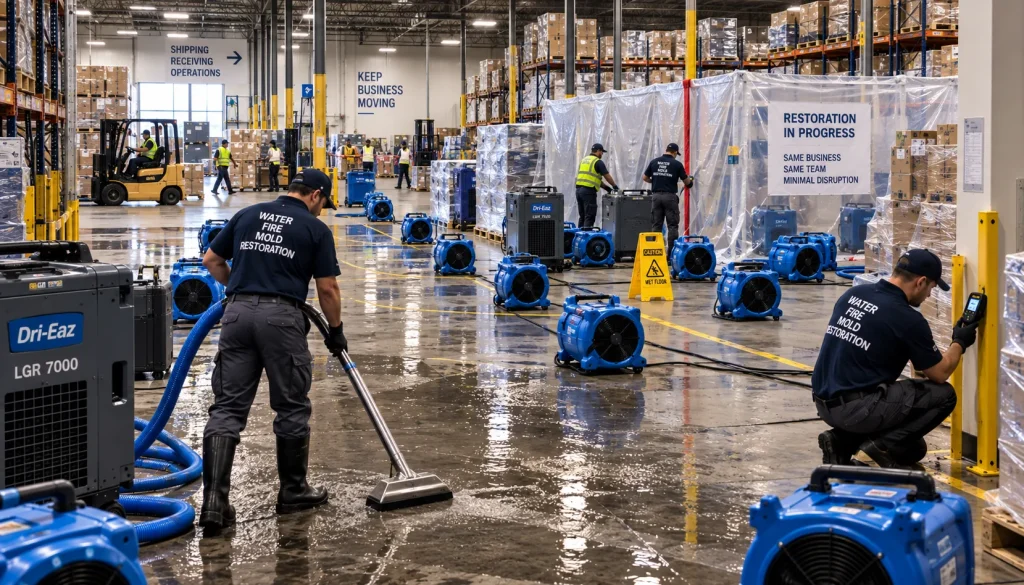
During the first day, the business must also decide how to operate. Can staff work in unaffected areas? Do customers need another entrance? Should some work move off-site? Restoration crews can build containment walls and work after hours to limit disruption. Our business continuity page offers more ideas.
Common Commercial Water Damage Cleanup Mistakes
- Waiting to call for help
- Using household fans instead of professional equipment
- Walking through contaminated water without protection
- Throwing away damaged items before the adjuster sees them
- Turning HVAC on without checking for contamination
Commercial Water Damage Cleanup After Hours
Many losses happen at night or on weekends, when nobody is watching. A sprinkler head may break on Saturday and run until Monday. So plan ahead. Install water sensors in high-risk areas. Post emergency contacts where security staff can see them. Also, make sure someone knows how to shut off the water main. These steps can cut a weekend disaster down to a small cleanup.
What to Expect on Day Two and Beyond
The first 24 hours set the stage, but the work continues. On day two, technicians check moisture readings and move equipment as areas dry. Over the next few days, they keep adjusting until each material reaches its goal. Then crews pull the equipment, clean up, and hand the space over for repairs. Our post on when a building is ready to reoccupy explains the final checks.
Contaminated Water Changes the Plan
If the water came from sewage, a drain backup, or outside flooding, the rules change. Staff should not touch it. Crews wear protective gear and remove porous materials more aggressively. In addition, they sanitize every surface the water reached. Because of these steps, commercial water damage cleanup after a black-water loss takes longer and costs more. Our sewage cleanup page explains the extra precautions.
A First-24-Hours Checklist
- Stop the water source.
- Make the area safe.
- Call a restoration company and your insurer.
- Photograph and document everything.
- Protect contents and equipment.
- Begin extraction.
- Map moisture.
- Remove unsalvageable materials.
- Start professional drying.
FAQ on Commercial Water Damage Cleanup
How soon should commercial water damage cleanup start?
Immediately. Every hour of delay lets water spread further.
Can we clean it up ourselves?
Small spills, maybe. For anything larger, professional equipment and moisture mapping are essential.
Be Ready Before It Happens
The first day sets the course for recovery. Visit our cleanup services page, or call our emergency team now.
Related Reading
- Commercial Water Damage Restoration — the full process from emergency response to final repairs.
- Commercial Water Extraction — why removing standing water is only the first step.
- Commercial Moisture Mapping — finding water behind walls and under floors.
- Hidden Commercial Water Damage — why visible damage is rarely the full damage.
- Commercial Restoration Documentation — why the evidence of the work matters as much as the work.
- Commercial Restoration Downtime — why business interruption can cost more than the damage.