
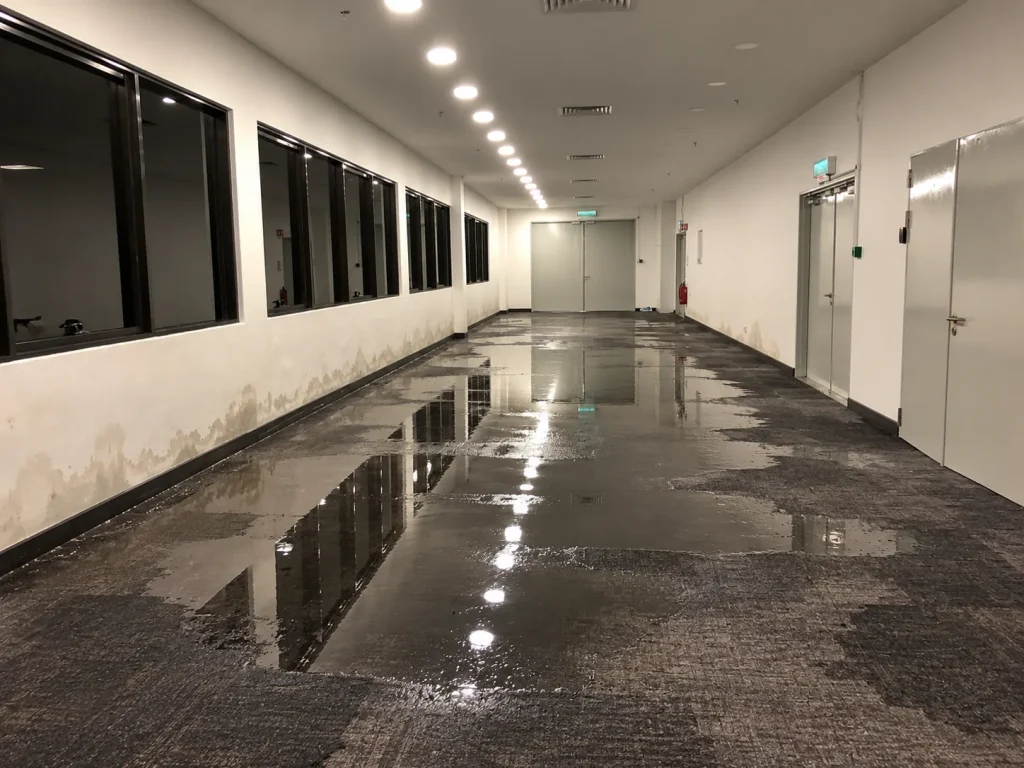
Office water damage repair rarely happens in an empty building. Employees still need desks, meeting rooms still need booking, and clients still walk through the lobby. Meanwhile, crews must remove wet materials, run loud drying gear, and keep dust and odors away from working staff. Doing both at once takes planning. This guide explains how to coordinate cleanup in an occupied office, so work keeps moving while the building recovers.
This guide is for office managers, property managers, and anyone who has to plan the first day and every day after.
Why Occupied Offices Are Harder to Repair
In an empty building, crews can work anywhere, anytime. However, in an occupied office, they must work around people. Noise, dust, cords, and closed areas all affect staff. On top of that, offices hold computers, files, and furniture that need protection.
Shared systems add another layer. Air ducts, ceiling cavities, and power circuits connect many rooms. So a problem in one suite can spread to others. For these reasons, office water damage repair needs a clear plan from the start.
Common Causes of Office Leaks
- Burst supply lines under sinks and in break rooms
- Leaking water heaters and ice makers
- Overflowing restrooms
- HVAC condensate lines that clog and spill
- Roof and window leaks during storms
- Fire sprinkler leaks
Many of these start small. Yet, if they run overnight or over a weekend, they can soak several suites before anyone notices.
Step 1: Stop the Water and Protect People
First, shut off the water. Then cut power to wet outlets and equipment. Next, mark wet floors and block off any unsafe areas. If the ceiling sags, keep people out from under it, since wet ceiling tiles can fall.
Office Water Damage Repair Starts With Computers and Files
Next, move electronics and paper records away from the water. Unplug computers before you move them. Then place wet files in a cool, dry area, or freeze them if they are very important. Some document recovery firms can dry frozen files later.
Also contact your IT team early. They may need to move servers, reroute network traffic, or set up temporary workstations.
Step 3: Map the Damage
Then technicians find out where the water went. They use meters and thermal cameras to check walls, floors, and ceilings. In offices, water often spreads under cubicle walls and along carpet tiles. As a result, the wet area is usually bigger than it looks. Our moisture detection page explains this step.
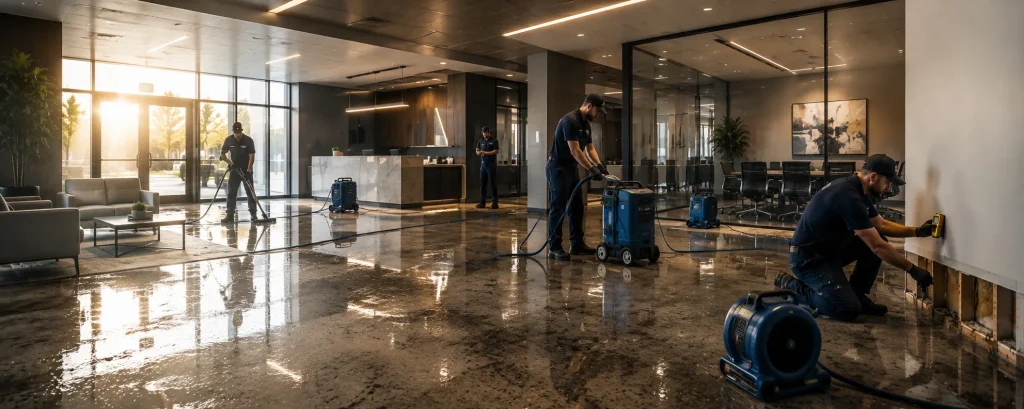
Office Water Damage Repair: Planning Work Zones
Once the damage is mapped, the team splits the office into zones. Each zone gets a status:
- Active work: Closed to staff while crews remove materials.
- Drying: Closed or limited while equipment runs.
- Clear: Open for normal work.
Then the team moves staff out of active zones. Some people may shift to other floors, conference rooms, or home. In addition, crews set up barriers and signs so everyone knows where not to go.
Controlling Dust, Noise, and Odors
Staff comfort matters during office water damage repair. Here are common steps:
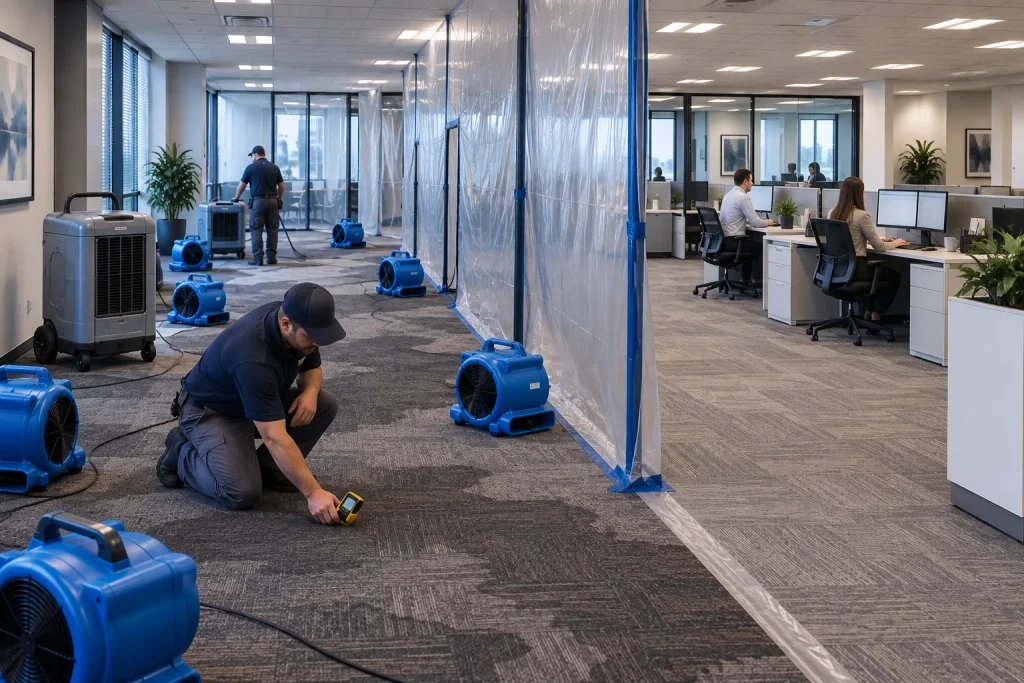
- Containment walls: Plastic barriers keep dust inside work zones.
- Air scrubbers: These machines filter the air and reduce odors.
- Quiet hours: Loud tasks happen early, late, or on weekends.
- Cord paths: Crews tape down cords to prevent trips.
- Clean walkways: Floor protection keeps dirt out of open areas.
Also check the HVAC system. If ducts pass through wet areas, crews may seal vents so damp, dusty air does not spread.
Step 4: Remove Wet Materials
Some materials must come out. For example, soaked carpet pad, swollen baseboards, and wet ceiling tiles often go first. Likewise, drywall may need a flood cut, which removes the bottom few feet of the wall. Crews remove only what they must, then bag it and carry it out through a back route.
Step 5: Dry the Space
Next, crews place air movers and dehumidifiers. Drying often runs around the clock for several days. Each morning, a technician reviews the meter numbers and shifts units as needed. Our drying services page covers the gear involved.
Drying gear is loud, so placement matters. When possible, crews put the noisiest units in closed rooms and run hoses or ducts to wet areas.
Communication During Office Water Damage Repair
Clear updates prevent confusion. Send a short daily email to staff. Include which areas are closed, where to work instead, and when things should change. Also name one contact person for questions.
If other tenants share the building, keep them informed too. A leak in your suite may affect their space, their parking, or their elevators. For shared buildings, see our guide to working in a partly occupied building.
Scheduling Office Water Damage Repair Around the Workweek
Timing makes a big difference in an occupied office. For example, Monday mornings and month-end close are poor times for loud tear-out. So ask department heads about their busiest days. Then build the crew schedule around them.
Many teams use a simple weekly plan. Demolition and debris removal happen at night or on weekends. Meanwhile, drying gear runs during the day behind closed doors. Finally, painting and flooring happen after hours, so fumes clear before staff arrive. In this way, office water damage repair moves forward without derailing key deadlines.
Also plan for meetings. If a large conference room is closed, book backup rooms right away. Likewise, warn front desk staff about any closed entrances, so visitors are not confused when they arrive.
Health and Safety for Staff
Clean water from a supply line is a low health risk. Dirty water from a restroom or a flood is not. In that case, keep staff well away from the area until crews clean and sanitize it. Also watch for musty smells, which may mean hidden mold. The EPA mold guide explains health concerns for workplaces.
Step 6: Rebuild and Return
After drying, crews rebuild. They install new drywall, paint, carpet, and ceiling tiles. Often, this work happens at night or on weekends to limit disruption. Finally, the team cleans the space, removes barriers, and moves staff back in. Our post on reoccupancy readiness explains why dry does not always mean ready.
Office Water Damage Repair and Insurance
Keep records from day one. Save photos, moisture logs, invoices, and lists of damaged items. Also track extra costs, such as temporary space or overtime. Many policies cover these costs under business income or extra expense coverage. So review your policy early and share records with the adjuster.
Preventing Future Office Leaks
- Inspect supply lines and water heaters each year.
- Install leak sensors under sinks and near ice makers.
- Clean HVAC condensate lines on a set schedule.
- Know where shutoff valves are on each floor.
- Post an emergency contact list in every break room.
FAQ on Office Water Damage Repair
Can staff stay in the building during office water damage repair?
Often, yes. Work zones, containment, and quiet hours let many offices stay open.
How long does it take?
Small clean-water leaks may take a week. Larger or dirty-water losses can take several weeks.
Who pays for temporary office space?
It depends on your policy. Extra expense coverage often helps.
Keep Your Office Working
With good planning, office water damage repair does not have to stop your business. Visit our office services page, or reach our team today.
Related Reading
- Retail Water Damage Restoration — planning cleanup around customers and inventory.
- Commercial Moisture Mapping — finding water behind walls and under floors.
- The First 24 Hours of Cleanup — what happens on day one and why speed matters.
- Partial Occupancy During Restoration — keeping the business operating during repairs.
- Dry Does Not Mean Ready — when a building is actually safe to reoccupy.
- Commercial Restoration Downtime — why business interruption can cost more than the damage.