Retail water damage restoration has to work around two things every store depends on: customers and inventory. A leak in a sales floor can soak merchandise, close aisles, and drive shoppers away. At the same time, every day the doors stay closed means lost sales. The goal is to protect stock, keep people safe, and reopen as fast as possible. This guide explains how to plan cleanup in a retail space, from the first hour to the grand reopening.
Store managers, retail property owners, and regional operations teams can use it to plan ahead.
Why Retail Spaces Need a Special Plan
Stores are built for shoppers, not for cleanup. Merchandise sits on low shelves, display tables, and the floor. Fitting rooms, stockrooms, and checkout areas all sit close together. In addition, many stores share walls and ceilings with neighbors in a strip center or mall.
Customers add another layer. Wet floors, cords, and loud machines are safety risks. Odors and visible damage also hurt the brand. For these reasons, retail water damage restoration needs a plan that protects both shoppers and sales.
Common Causes of Retail Water Damage
- Roof leaks over sales floors and stockrooms
- Burst pipes in restrooms and back rooms
- Fire sprinkler leaks, often from bumped heads
- Leaks from a neighboring tenant
- Storm water at the front entrance
- Refrigeration and ice machine leaks in food stores
Some of these happen after hours. As a result, staff may find the damage only when they open the store.
Step 1: Stop the Water and Close Unsafe Areas
First, shut off the water and cut power to wet areas. Then close any aisles or rooms with standing water. Use signs, cones, and caution tape. If the damage is widespread, close the store until it is safe.
Step 2: Protect the Merchandise
Next, move dry stock away from the water. Then sort wet items into groups:
- Undamaged: Return to the floor or stockroom.
- Wet but saleable after cleaning: Set aside for drying or cleaning.
- Damaged: Hold for the adjuster to inspect.
Before you move anything, take photos and record SKUs and counts. This record supports your insurance claim. Also, never sell items that touched dirty water. Food, cosmetics, and children’s goods need extra care.
Step 3: Extract and Map
Then crews remove standing water. In stores, that often means carpet in fitting rooms, tile on sales floors, and concrete in stockrooms. After that, technicians map moisture in walls, fixtures, and floors. Water can hide behind slatwall, under checkout counters, and inside display bases. Our extraction services page covers this step.
Retail Water Damage Restoration While the Store Stays Open
Many stores can stay open during part of the work. Here is how:
- Close sections, not the store: Wall off damaged areas with clean barriers.
- Work after hours: Run the loudest tasks overnight.
- Hide the gear: Place drying equipment behind barriers when possible.
- Keep paths clear: Route cords and hoses away from shoppers.
- Control odors: Use air scrubbers to keep the air fresh.
Barriers can also look tidy. Some stores use printed wraps that say “Pardon our progress.” That way, the work looks planned instead of messy.
Step 4: Tear Out Damaged Materials
Not everything can stay. For instance, wet carpet pad, swollen MDF fixtures, and soaked drywall often come out. Likewise, ceiling tiles with stains usually need replacing. Crews carry debris out through the back door, so shoppers do not see it.
Step 5: Dry the Space
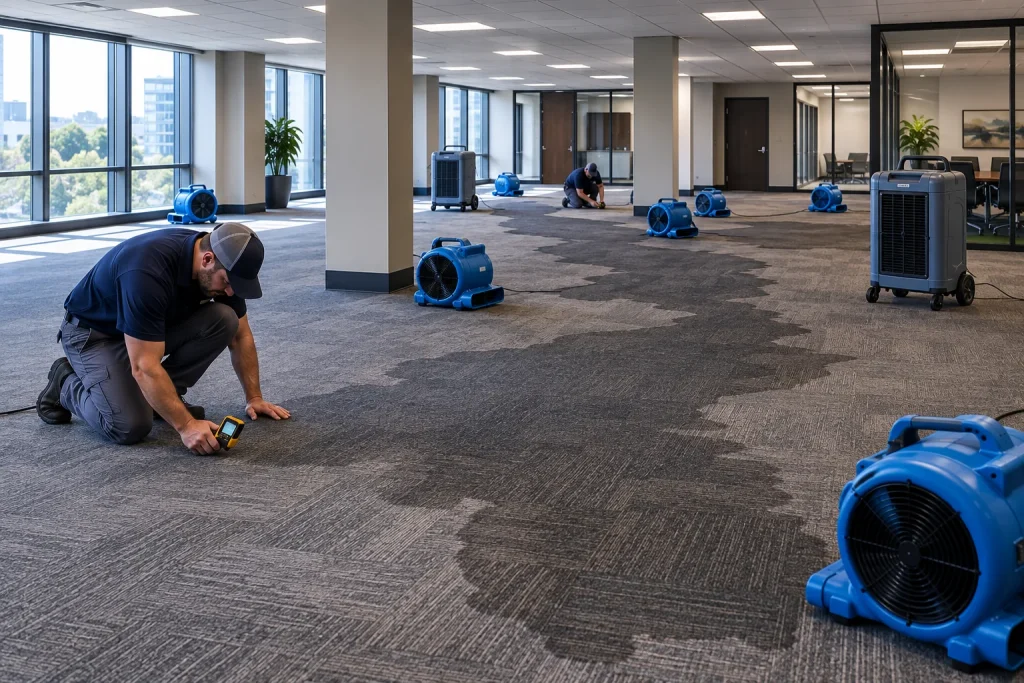
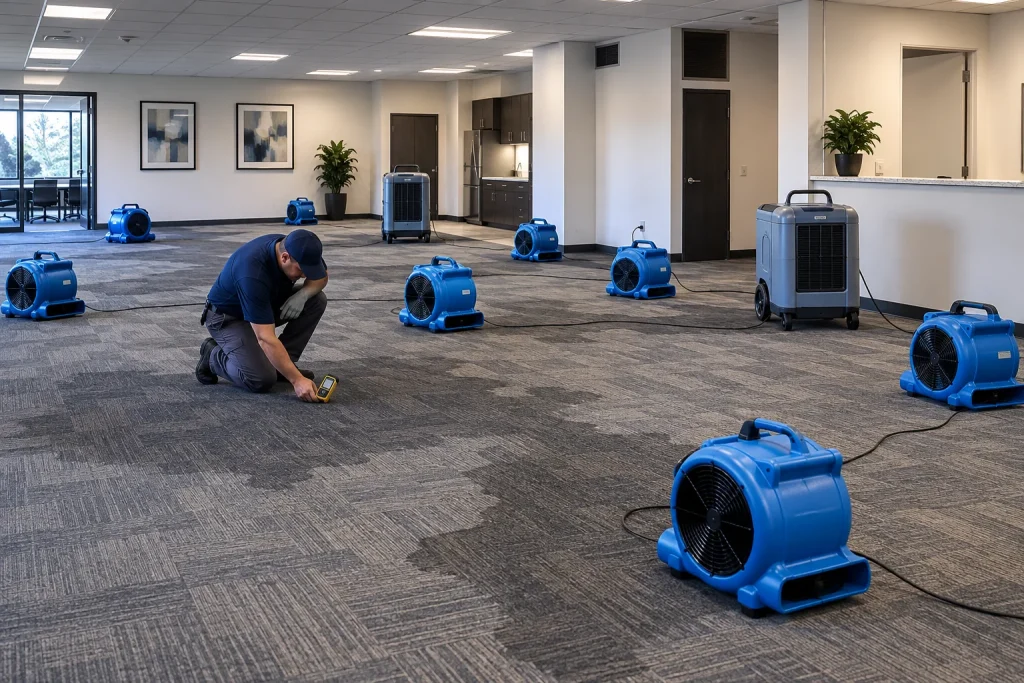
Next, air movers and dehumidifiers run until materials are dry. Technicians check readings daily. In most stores, drying takes three to five days. Our structural drying page explains the process.
Fixtures and Displays in Retail Water Damage Restoration
Store fixtures cost money and take time to replace. Metal shelving usually cleans up well. However, particleboard and MDF often swell and cannot be saved. Glass cases and lighted displays need an electrician’s check before use. So list every fixture, note its condition, and order replacements early, since lead times can be long.
Retail Water Damage Restoration in Shared Buildings
In malls and strip centers, water often crosses tenant lines. A leak next door can soak your stockroom. Similarly, your leak may reach a neighbor. So call the landlord right away. Then share photos and plans with nearby tenants. Clear roles help decide who pays for what. Our post on pre-loss conditions explains why early records matter.
Retail Water Damage Restoration for Seasonal Stock
Timing can make a loss much worse. For example, a leak in November may soak holiday stock that the store cannot easily replace. Similarly, a flood before back-to-school season can wipe out the busiest weeks of the year. So retail water damage restoration should treat seasonal goods as a top priority.
First, move seasonal stock to a dry, secure place. Next, call your buyers and vendors right away. Some suppliers can rush replacement orders, especially if they know the reason. Meanwhile, keep a careful list of every lost item and its cost. That way, the claim reflects the true value of goods that were meant to sell at peak prices.
In addition, think about online sales. If the store must close, shoppers may still buy from your website. Shifting some stock to online orders can protect revenue while the floor is repaired.
Talking to Customers
Honest updates build trust. Post signs at the entrance that explain what is closed and when it will reopen. Update your website and social pages. Also train staff to answer simple questions. If you must close, share the reopening date as soon as you know it.
Some stores turn the moment into a positive. For example, they plan a small reopening event or a short sale. That gives shoppers a reason to come back.
Step 6: Rebuild and Reopen
After drying, crews rebuild walls, ceilings, floors, and fixtures. Often, they work at night to limit disruption. Then the team cleans every surface, restocks shelves, and resets displays. Finally, walk the store with your contractor before you reopen. Our post on downtime and lost income explains how each closed day adds up.
Retail Water Damage Restoration and Insurance
Retail claims often include building damage, stock losses, and lost sales. Keep detailed records of all three. Save receipts for cleanup, temporary staff, and rush shipping. Also track daily sales before and after the loss. Many policies cover lost income, so this data matters. The Ready.gov business guide offers planning tips for small stores.
Preventing the Next Loss
- Inspect roofs and drains before rainy seasons.
- Store stock on shelves, not on the floor.
- Install leak sensors in stockrooms and restrooms.
- Guard sprinkler heads in stockrooms from carts and ladders.
- Train staff to find and close shutoff valves.
FAQ on Retail Water Damage Restoration
Can my store stay open during retail water damage restoration?
Often, yes. Sections can close while the rest of the store keeps selling.
What should I do with wet merchandise?
Photograph it, log it, and keep it until the adjuster has seen it. Do not sell anything that touched dirty water.
How fast can a store reopen?
Small clean-water losses may reopen in days. Larger losses can take weeks.
Reopen Your Store Faster
Good planning protects your stock and your shoppers. Visit our retail services page, or call our response team today.
Related Reading
- Office Water Damage Repair — coordinating cleanup in an occupied building.
- Warehouse Water Damage Repair — protecting inventory, equipment, and shipping.
- Commercial Water Extraction — why removing standing water is only the first step.
- Partial Occupancy During Restoration — keeping the business operating during repairs.
- Commercial Restoration Downtime — why business interruption can cost more than the damage.
- Pre-Loss Building Conditions — establishing what existed before the damage.