
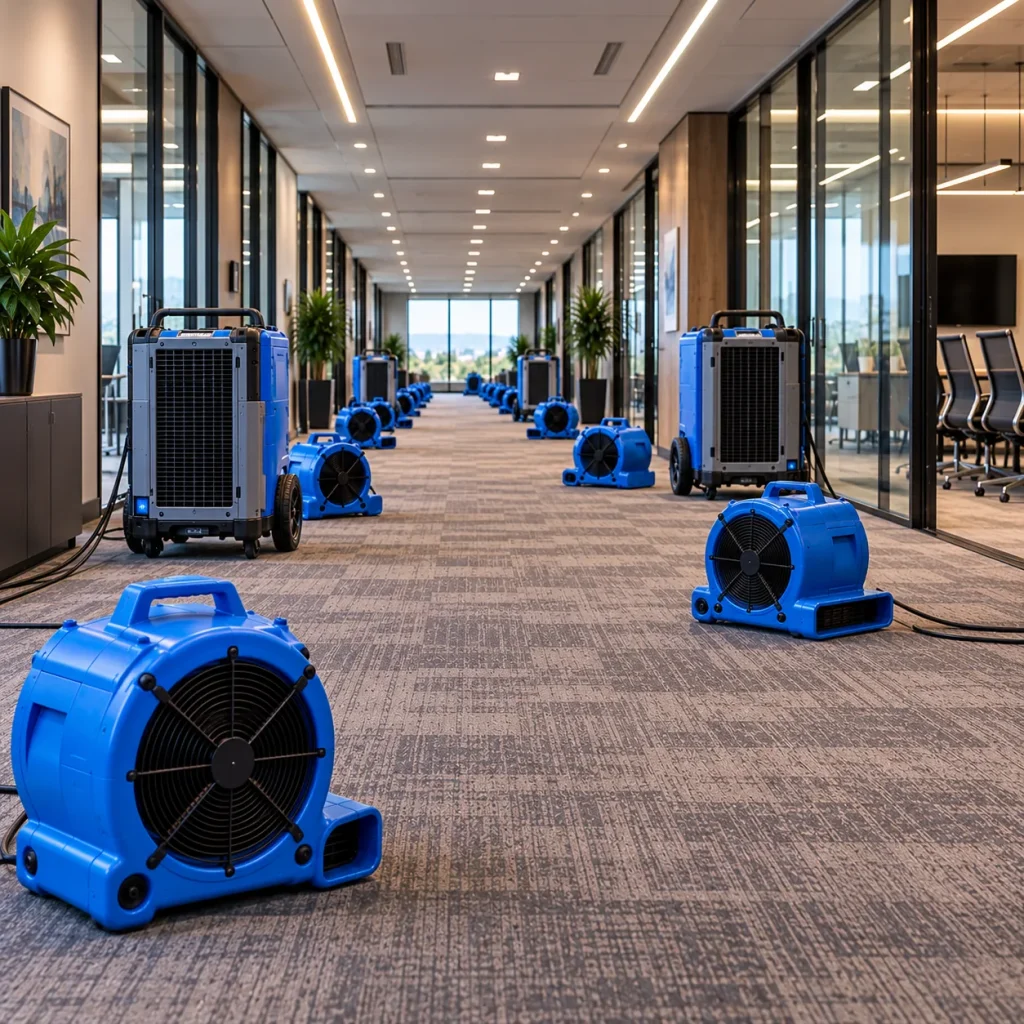
Warehouse water damage repair comes with a clock that keeps ticking. While crews dry the floor, trucks still need loading, orders still need shipping, and customers still expect deliveries. On top of that, warehouses hold huge amounts of stock on pallets and racks, and much of it sits right on the concrete where water collects first. A good recovery plan protects products, equipment, and shipping schedules all at once. This guide explains how to do that, step by step.
Warehouse managers, distribution center operators, and property owners can use these ideas to recover faster and lose less.
Why Warehouses Face Unique Risks
Warehouses are big, open, and busy. A single sprinkler head or roof leak can spread water across thousands of square feet. Meanwhile, sealed concrete does not absorb water quickly, so the water spreads out instead of soaking in.
Inventory is the biggest exposure. Cardboard boxes wick water from the floor. Wood pallets soak it up like a sponge. Paper goods, food, electronics, and textiles can be ruined within hours. In addition, forklifts, conveyors, and charging stations all sit at floor level. As a result, warehouse water damage repair must move fast and protect contents from the very start.
Common Causes of Warehouse Water Damage Repair
Knowing the source helps you plan the response. The most common causes include:
- Fire sprinkler leaks from damaged heads, frozen pipes, or forklift strikes
- Roof leaks from aging membranes, clogged drains, or storm damage
- Burst supply lines in restrooms, break rooms, and offices
- Dock flooding when heavy rain overwhelms trench drains
- Groundwater that seeps through slab cracks in low areas
Each source brings its own risks. For example, sprinkler water is often stale and dirty after sitting in the pipes for years. Similarly, dock flooding usually carries mud, oil, and debris from the yard.
Step 1: Stop the Source and Secure the Site
First, stop the water. If a sprinkler system activated, call the fire department and your alarm company before you shut the valve. After all, the building may lose fire protection while the system is off. Many insurers also require a fire watch during that time.
Next, make the area safe. Shut off power to wet equipment and charging stations. Then mark wet floors and keep forklifts away from standing water, since wet concrete is very slick under hard rubber tires.
Step 2: Triage the Inventory
Inventory triage comes early. Teams sort stock into three groups:
- Dry and safe: Move it away from the wet zone.
- Wet but salvageable: Separate it for drying or cleaning.
- Total loss: Set it aside for the adjuster to inspect.
Before moving anything, take photos. Then record lot numbers, SKUs, and quantities. This record is key for insurance and for any product recalls. In fact, a clear inventory log can save weeks of back and forth with the adjuster.
Step 3: Protect High-Value and Sensitive Items
Some items need special care. Electronics, medicine, food, and paper goods are especially sensitive. For example, food that touches floodwater usually cannot be sold. Likewise, electronics may need professional cleaning before anyone tests them. So identify these items right away and move them first.
Also check stock on the bottom rack level. Even if the boxes look dry, the bottoms may have wicked water. Lift a few pallets and look underneath before you clear them.
Step 4: Extract Standing Water
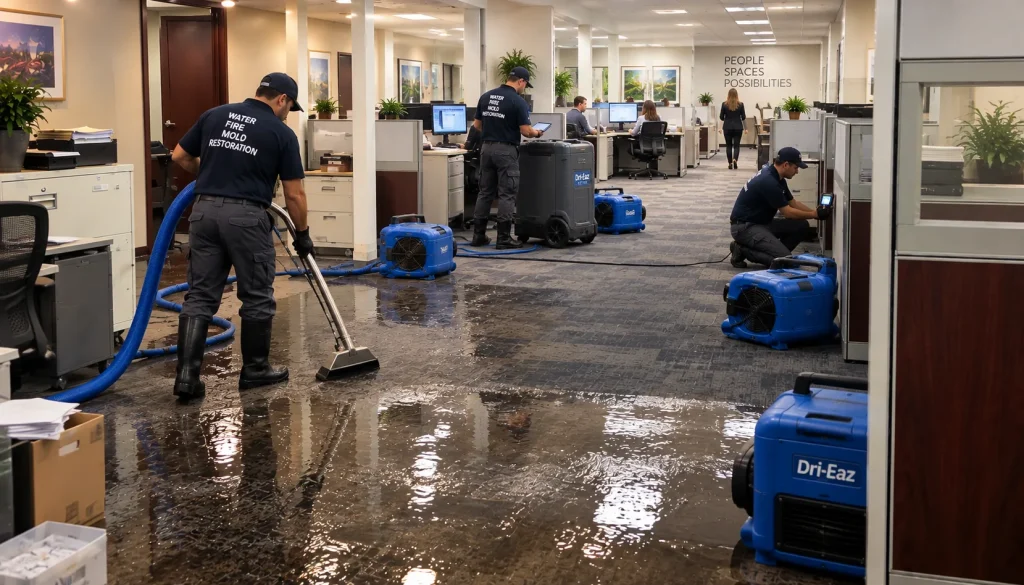
Next, crews pull water off the floor. On large slabs, they often use squeegees, ride-on floor scrubbers, and big extractors. Fast removal keeps water from wicking into pallets and racks. Learn more on our water removal services page.
Step 5: Dry the Building
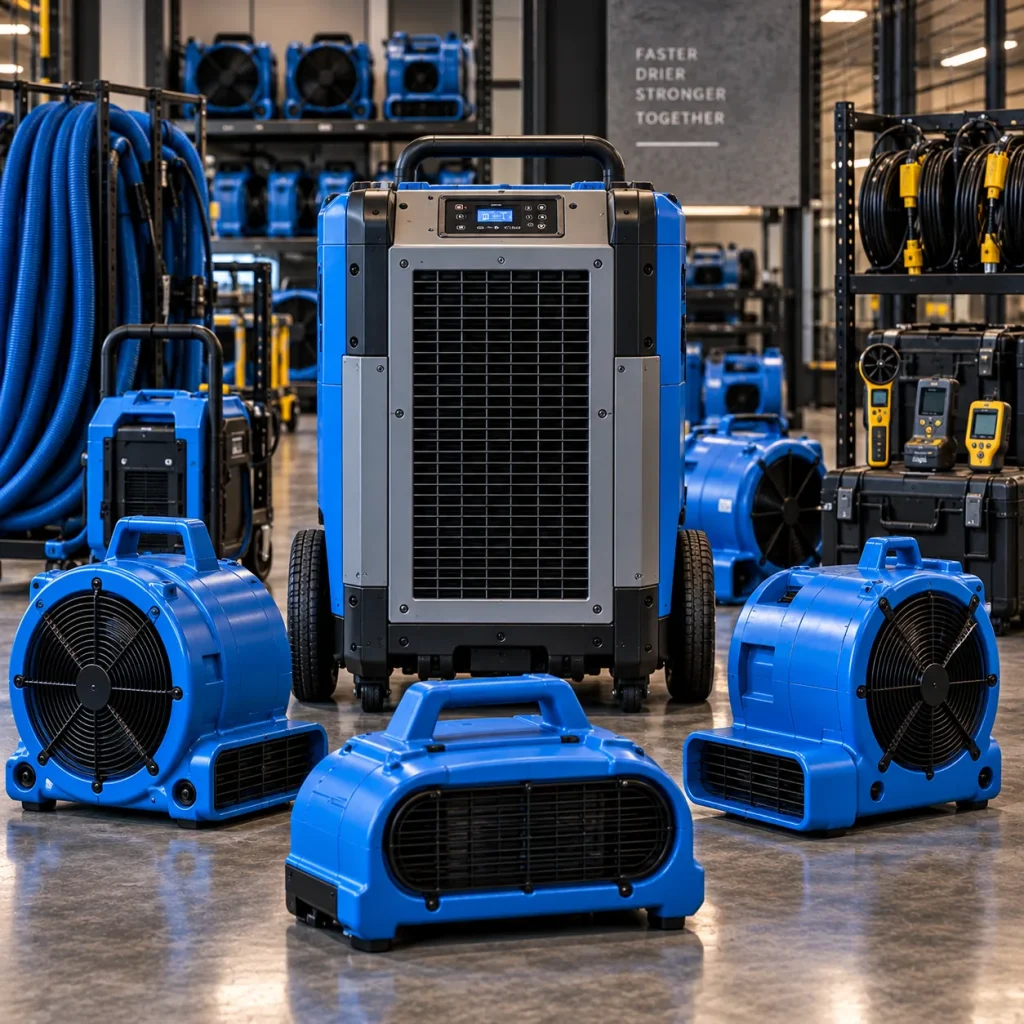
Warehouses have high ceilings and a huge volume of air. That makes drying very different from an office. Crews may use large desiccant dehumidifiers, high-velocity air movers, and temporary heat. They also check walls, office areas, and insulated panels for hidden moisture.
Moisture mapping guides the whole process. It shows where water spread and when each area is dry. Our building drying services page explains the equipment involved.
Warehouse Water Damage Repair and Shipping Operations
Keeping orders moving is often the biggest challenge. Here are proven strategies:
- Zone the work: Dry one section while shipping runs from another.
- Reroute traffic: Mark new forklift paths around wet areas.
- Use other docks: Shift loading to unaffected doors.
- Work after hours: Schedule heavy cleanup during off-shifts.
- Use overflow space: Move stock to another building or trailer storage.
Clear communication also helps. If shipments will be late, tell customers and carriers early. In most cases, an honest heads-up keeps the relationship strong.
Updating Your Warehouse Management System
Damaged stock must come out of your inventory system fast. Otherwise, pickers may chase items that no longer exist. To prevent this, place wet goods on hold in your system. Then create new bin locations for any stock you moved. As a result, orders route only to good inventory.
Protecting Equipment
Forklifts, pallet jacks, conveyors, and charging stations may need inspection. Water can harm batteries, motors, and wiring. So do not restart equipment until a qualified technician checks it. Similarly, have an electrician inspect any wet panels or outlets before you restore power.
Racking and Structural Checks
Water can weaken rack bases and anchors over time, especially if it sits for days. In addition, heavy water on a flat roof can stress the structure. After a major event, have racks and roofs inspected before you return to full use.
Contaminated Water in Warehouses
Floodwater and sewage carry germs and chemicals. If dirty water entered the building, crews must clean and sanitize floors, racks, and walls. In that case, many porous items will need disposal. Workers should also wear gloves, boots, and other protective gear. The OSHA flood safety page lists common hazards.
Insurance Records for Warehouse Water Damage Repair
Warehouse losses often involve large stock claims and lost income. Keep detailed records of damaged goods, cleanup costs, overtime, and lost sales. Also save carrier invoices for any rerouted freight. Our insurance process guide explains what adjusters look for.
Preventing the Next Loss
- Store inventory on pallets, not right on the floor.
- Keep high-value goods off the bottom rack level.
- Inspect sprinkler systems and roof drains on a set schedule.
- Install water sensors in low spots and near docks.
- Train staff on shutoff valve locations.
- Save a restoration firm’s number in your emergency plan.
Above all, practice your plan. A short drill each year shows staff where to go and what to move first.
Warehouse Water Damage Repair Timeline
Timelines depend on size and water type. Small clean-water losses may dry in a few days. On the other hand, large floods with dirty water and stock losses can take weeks. Still, zoned work often lets shipping continue throughout the job.
FAQ on Warehouse Water Damage Repair
Can we keep shipping during warehouse water damage repair?
Often, yes. Zoning, rerouting, and after-hours work keep docks moving while crews dry the wet areas.
Should we throw away wet inventory?
Not until the adjuster sees it, unless it poses a health risk. Document everything first.
Who pays for warehouse water damage repair?
Usually the property policy covers the building, while a business policy covers stock and lost income. However, terms vary, so review your coverage early.
Keep Your Warehouse Moving
Fast, organized recovery protects your stock and your customers. Visit our warehouse services page, or call our response team now.
Related Reading
- Industrial Water Remediation — planning cleanup around equipment and production.
- Commercial Water Extraction — why removing standing water is only the first step.
- Retail Water Damage Restoration — planning cleanup around customers and inventory.
- Commercial Restoration Downtime — why business interruption can cost more than the damage.
- Operational Choke Points — small damage that can shut down an entire property.
- Partial Occupancy During Restoration — keeping the business operating during repairs.