
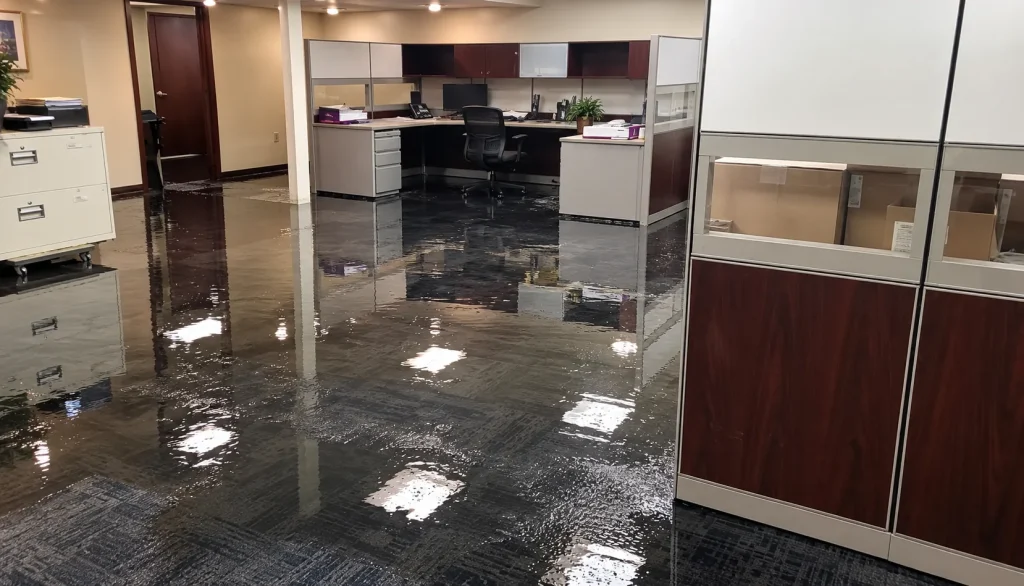
Healthcare facility water damage creates risks that go far beyond wet floors. Hospitals, surgery centers, clinics, dialysis units, and long-term care homes serve people who may be weak or sick. Dust, mold, and bacteria can harm them. Meanwhile, care cannot stop. Patients still need treatment, and staff still need to work. So restoration has to bend around patient care right from the start. Here is how restoration teams keep patients safe while they dry and repair healthcare spaces.
Facility directors, infection preventionists, environmental services leaders, and clinic managers will find practical steps below.
Why Healthcare Spaces Are Different
In an office, a little dust is a nuisance. In a hospital, it can be dangerous. Some patients get sick more easily. Mold or germs stirred up by work can harm them. In addition, healthcare spaces hold sensitive equipment, sterile supplies, and patient records. So every step of restoration must consider infection control, safety, and continuity of care.
Common Sources of Water Damage in Healthcare Buildings
Healthcare facilities use water everywhere. For example, common sources include:
- Burst or leaking supply pipes in walls and ceilings
- Sterilizer, ice machine, and dialysis water lines
- Roof leaks during heavy storms
- Fire sprinkler discharges
- Overflowing sinks, tubs, and toilets
- Failed HVAC condensate drains
Fast reporting by staff keeps small leaks from becoming big losses.
Step 1: Keep Patients Safe
Begin by relocating patients away from wet areas. If water reaches a patient room or treatment area, shift care to a safe space. Block off hallways with signs and barriers. Then check for electrical hazards near medical equipment. Safety always comes before cleanup.
Why Speed Matters
Time is not on your side. Mold can start to grow in a day or two. Wet walls get weak. Bad smells set in. So call for help right away. Get the water out fast. Start drying the same day. A quick start keeps the job small and keeps patients safe.
Step 2: Infection Control Risk Assessment
Many healthcare facilities complete an infection control risk assessment before any repair work. It looks at the kind of work and the patients close by. Then it sets how much protection the job needs. For example, work near an oncology unit needs stricter controls than work in an administrative office. The restoration team must follow this plan closely.
Healthcare Facility Water Damage and Containment
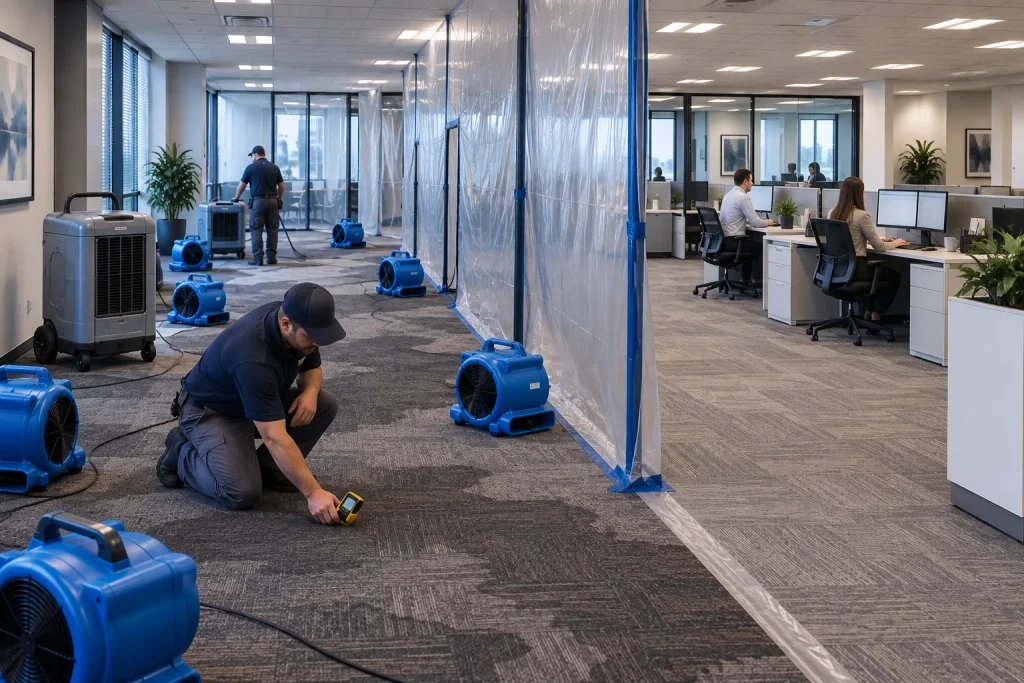
Containment keeps dust and spores away from patients. Typical measures include:
- Sealed plastic or rigid barriers around the work area
- Negative air machines with HEPA filters
- Sticky mats at entry points
- Clean gowns and shoe covers for workers leaving the area
- Covered carts for removing debris
These steps are the backbone of healthcare facility water damage restoration.
Step 3: Remove Water and Wet Materials
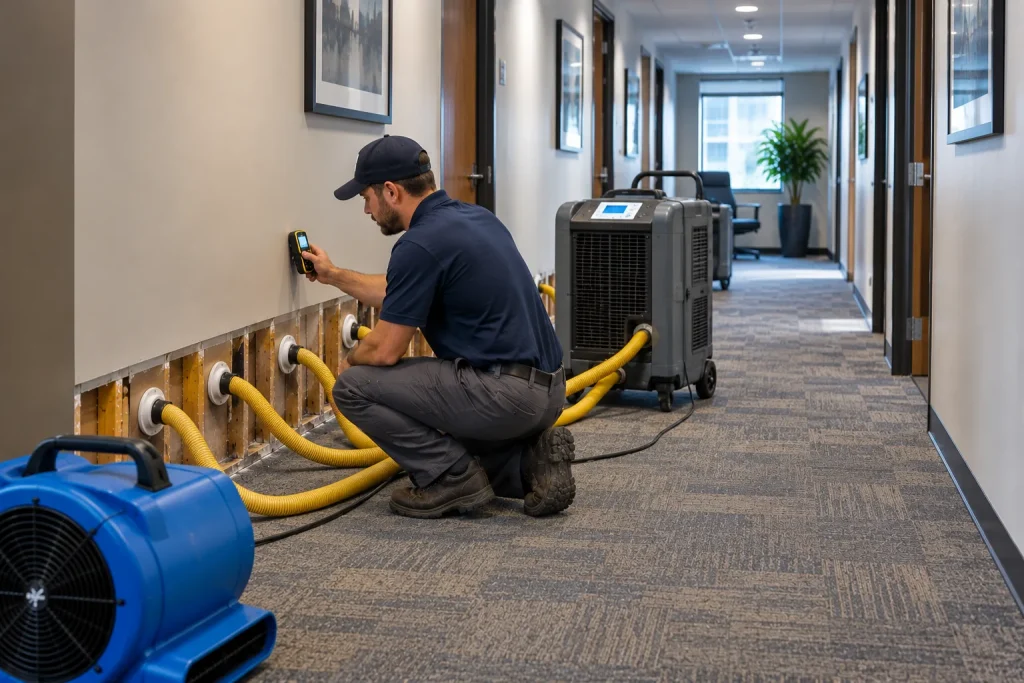
Next, crews pull out standing water fast. They remove wet ceiling tiles, insulation, and drywall that cannot dry in place. All of this work happens inside containment. Debris leaves in sealed bags through approved routes. The faster crews remove water, the lower the risk of mold growth.
Step 4: Drying Healthcare Facility Water Damage
Drying in healthcare spaces requires extra care. Air movers can stir up dust. So crews keep equipment inside containment and use HEPA air scrubbers. Dehumidifiers draw water vapor out of the room, and techs log readings daily. For deeper guidance, see the American Society for Health Care Engineering, which shares best practices for hospital building projects.
Planning Around Patient Care
Patient care schedules guide the work. Restoration teams often meet daily with clinical managers to plan. Options include:
- Night shifts in outpatient clinics
- Shifting procedures to dry rooms
- Doing one wing at a time
- Using quieter equipment near patient rooms
- Scheduling loud demolition between procedures
Clear communication keeps care running safely.
Healthcare Facility Water Damage in Sensitive Areas
Some areas need extra care. For instance, operating rooms have strict rules for air and cleanliness. Pharmacies must protect drug storage. Labs may hold samples that need constant temperatures. Imaging rooms have special shielding. So each sensitive area should have its own plan, approved by facility and clinical leaders.
Equipment and Supplies
Staff should never power up wet medical equipment. Instead, the biomedical engineering team should inspect it. Many devices need cleaning, drying, and testing before use. In addition, the facility usually discards sterile supplies that touched water. Document each item for insurance.
Talking With Patients and Families
Patients notice when work is going on. So tell them what is happening. Keep it short and calm. For example, say which hall is closed and why. Also, tell them how to get to their visit. Post signs at each door. In addition, train front desk staff to answer simple questions. As a result, people feel safe and cared for.
HVAC and Air Pressure
Healthcare buildings rely on HVAC systems to control air pressure and filtration. Water can damage ducts, coils, and filters. So engineers should inspect the HVAC system early. In addition, any changes to airflow during restoration must protect pressure relationships between rooms. This is especially important near isolation rooms and operating suites.
Verifying Healthcare Facility Water Damage Repairs
Before patients return, the space must be verified. Moisture readings must meet drying goals. Surfaces must be cleaned to healthcare standards. In some cases, air quality testing confirms the space is safe. The infection prevention team usually gives the final approval. Only then should care resume in that area.
Healthcare Facility Water Damage Documentation
In addition, good records protect the facility. Keep photos, moisture logs, containment checklists, and air quality results. These records support insurance claims and show regulators that safety rules were followed. They also help leaders plan for future events.
Preparing for Healthcare Facility Water Damage
Preparation makes response faster. For instance, pre-qualify a restoration contractor with healthcare experience. Store containment supplies on site. Train staff to report leaks right away. Map shutoff valves for every wing. Our page on healthcare water damage repair explains more about planning ahead.
Simple Rules for Staff
Staff are the first line of defense. Keep the rules short and clear. See water? Report it fast. Keep patients away. Do not touch wet cords or plugs. Leave wet ceiling tiles in place. Set wet supplies aside. Wait for the team to say an area is safe. These simple steps protect patients and save time.
Clinics and Small Practices
Not every healthcare space is a big hospital. Small clinics, dental offices, and urgent care centers also face water damage. They may not have a large facility team. So they need a clear plan. First, keep a list of who to call. Next, know where the water shutoff is. Then protect patient files and key equipment. Finally, ask your restoration partner how they handle healthcare facility water damage in small spaces. A small plan still makes a big difference.
Common Mistakes to Avoid
- Starting work before the infection control plan is set
- Running air movers outside containment
- Turning on wet medical equipment
- Keeping sterile supplies that touched water
- Reopening without infection prevention approval
FAQ on Healthcare Facility Water Damage
Can a hospital stay open during restoration?
Usually, yes, with containment, phasing, and close coordination.
What is negative air containment?
It uses filtered fans to keep air and dust flowing into the work area, not out of it.
Who approves reopening after healthcare facility water damage?
Often the infection prevention team, along with facility leaders.
Protect Patients During Recovery
The right plan keeps care safe and repairs on track. Read about partial occupancy during restoration, or talk to our healthcare response team today.
Related Reading
- Commercial Sewage Backup Cleanup — managing contamination safely.
- Commercial Structural Drying — how contractors prove a building is dry.
- Partial Occupancy During Restoration — keeping the business operating during repairs.
- Dry Does Not Mean Ready — when a building is actually safe to reoccupy.
- Commercial Restoration Downtime — why business interruption can cost more than the damage.
- Commercial Restoration Documentation — why the evidence of the work matters.