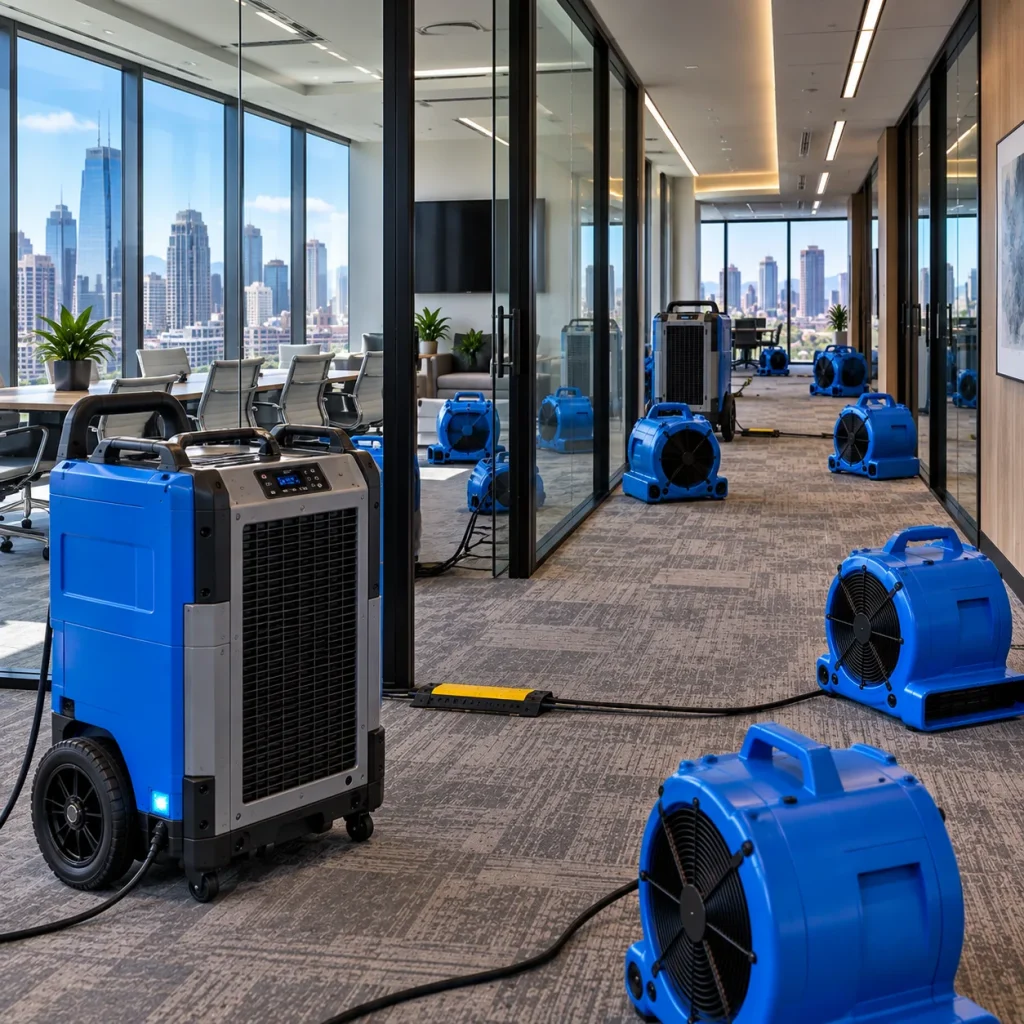
Commercial structural drying is finished only when the numbers say so. A floor can look dry hours after a leak. Walls can feel dry to the touch. Yet water may still sit inside drywall, wood, insulation, and concrete. If crews pull their equipment too soon, that hidden water turns into mold, warped floors, and failed finishes weeks later. So professional contractors do not guess. They measure, record, and verify. This guide explains how they prove a commercial building is truly dry.
Facility managers, owners, adjusters, and tenants can use it to understand what “dry” really means and what proof to ask for.
Why “Looks Dry” Is Not Good Enough
Building materials hold water in ways the eye cannot see. For example, drywall wicks water upward. Likewise, wood framing soaks it into its fibers. Concrete slabs absorb it and release it slowly over days or weeks. Meanwhile, the surface may dry quickly in moving air. As a result, a room can look finished while the structure is still wet. Only instruments can tell the difference.
The Goal of Commercial Structural Drying
The aim is simple. In short, each wet material must return to its normal moisture level. That level is called the drying goal. Once every material meets its goal, drying is complete. Until then, the job is not done. Clear goals keep everyone honest, from the technician to the insurance adjuster.
Step 1: Find a Dry Reference
Every building is different. Therefore, contractors start by measuring materials in an unaffected area. For example, they test drywall in a dry office down the hall. They test wood framing and flooring away from the leak. These readings show what “normal” looks like in that building. They become the targets for the wet areas.
Step 2: Map the Wet Areas
Next, technicians trace how far water spread. For this, they use moisture meters, thermal cameras, and probes. They mark readings on a floor plan. The result is a moisture map. It shows which walls, floors, and ceilings are wet and how wet they are. This map guides where equipment goes and which materials must be removed.
Step 3: Commercial Structural Drying Goals by Material
Different materials have different goals. After all, drywall, wood, carpet pad, and concrete all hold moisture differently. So the technician records a separate goal for each one, based on the dry reference. These goals go into the drying log. They become the finish line for commercial structural drying.
The Tools That Prove a Building Is Dry
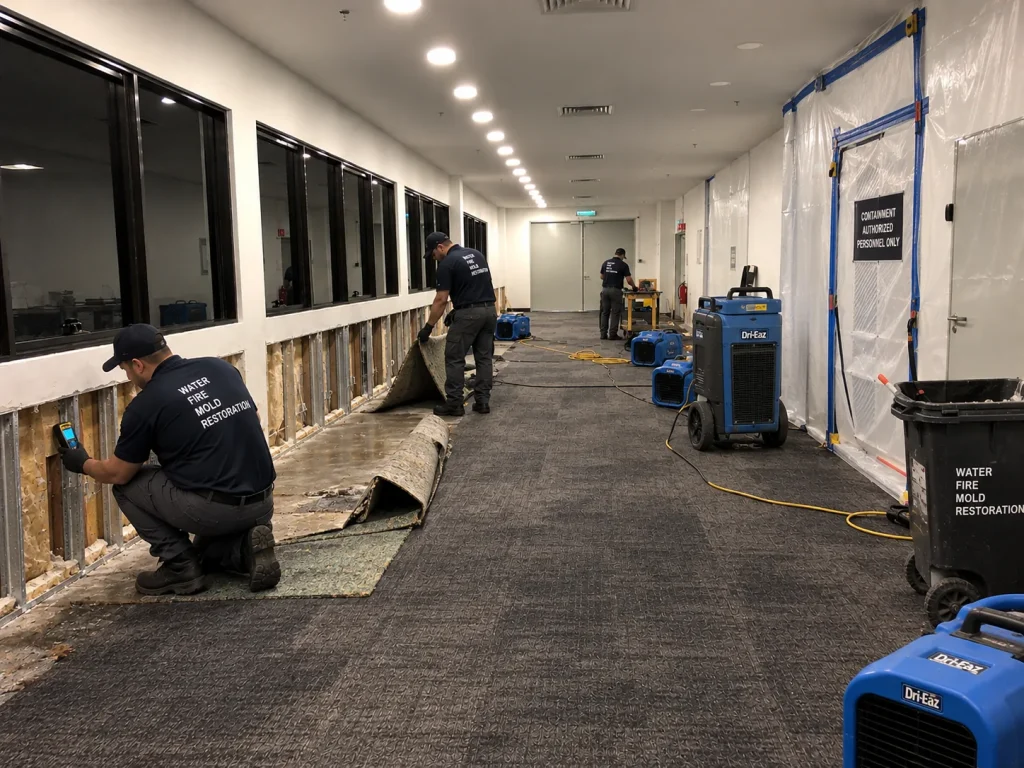
Contractors rely on several instruments:
- Pin meters push into wood and drywall to read moisture inside
- Pinless meters scan surfaces without making holes
- Thermal cameras show cool patches that may hide water
- Thermo-hygrometers measure temperature and humidity in the air
- Concrete tests check slabs before new flooring goes down
Thermal images are helpful, but they only suggest moisture. Therefore, a meter reading must confirm it.
Watching the Air, Not Just the Walls
Drying depends on the air in the room. In short, warm, dry air pulls moisture out of materials. Humid air slows everything down. So technicians measure the air every day. They track temperature, relative humidity, and a value called grains per pound, which shows how much water the air holds. If the numbers stall, they adjust dehumidifiers, heat, or airflow. Groups like ASHRAE publish the science behind these air measurements.
Daily Monitoring During Commercial Structural Drying
Drying is not a set-and-forget job. Instead, technicians return each day to take new readings at the same marked points. They compare them with yesterday’s numbers and with the drying goals. Then they move air movers, add equipment, or open more wall cavities as needed. These daily visits keep drying on track.
Commercial Structural Drying Logs
Every reading, in turn, goes into a drying log. A good log shows the date, the location, the material, the reading, and the goal. It also lists equipment on site and air conditions. Over time, the log tells a clear story: wet, drying, dry. Adjusters rely on these logs to approve claims. Owners rely on them to know the building is safe to rebuild.
Special Cases: Concrete and Dense Materials
Concrete slabs, plaster, and thick wood dry slowly. As a result, surface readings can look fine while the core stays wet. So contractors may drill small test holes or use special probes for slabs. In addition, flooring makers often set moisture limits for their products. Installing flooring before the slab meets those limits can void the warranty. Patience here prevents costly flooring failures.
Wall Cavities and Hidden Spaces
Water often hides inside wall cavities, under cabinets, and above ceilings. So to reach it, crews may bore a row of small holes along the base of the wall and push air into the cavity. In other cases, they remove baseboards or cut drywall. Then they check readings inside the cavity, not just on the surface. This step prevents mold from growing out of sight.
Who Signs Off on Commercial Structural Drying?
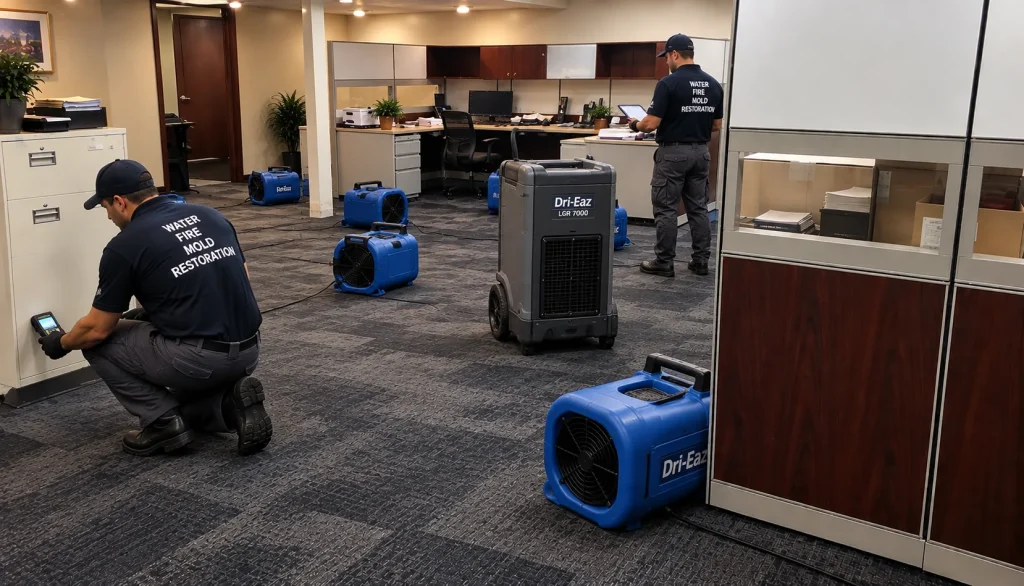
The restoration contractor declares a material dry once readings meet the goal. However, smart owners ask to see the final log. Some adjusters also ask for photos of meters on key spots. In complex losses, an independent consultant may verify the results. Clear sign-off protects everyone before walls are closed.
Commercial Structural Drying in Large Buildings
Big buildings add new challenges. A warehouse, school, or office tower may hold thousands of square feet of wet material. So technicians divide the space into drying zones. Each zone gets its own readings, goals, and equipment. In addition, large spaces may need desiccant dehumidifiers or temporary heat to move enough air. Commercial structural drying at this scale also needs power planning, since dozens of machines can overload circuits. A clear zone map keeps the work organized and the logs easy to follow.
Why a Fast Start Matters
Time works against a wet building. Within a day or two, mold can begin to grow on damp surfaces. Wood starts to swell. Drywall loses strength. So the sooner commercial structural drying begins, the more material crews can save. Fast extraction and early equipment setup often cut the total job time. In turn, they lower the final cost. That is why many owners keep a restoration contractor on call before a loss ever happens.
What Happens After Commercial Structural Drying Ends
Once drying is verified, however, the equipment comes out. Next, the rebuild team can install new drywall, flooring, and finishes. If drying was rushed, these new materials can trap moisture and fail. So the final dry readings are the green light for reconstruction. Learn more about our structural drying services and how they lead into repairs.
Questions to Ask Your Contractor
- Where did you take the dry reference readings?
- Which target number did you set for drywall, wood, and concrete?
- May I review each day’s log?
- Did you check inside wall cavities and under flooring?
- How did you test the concrete slab?
In the end, a professional contractor will answer each question with data.
Common Mistakes to Avoid
- Pulling equipment because surfaces feel dry
- Skipping dry reference readings
- Relying on thermal images without meter checks
- Closing walls before cavities are verified
- Installing flooring on a wet slab
FAQ on Commercial Structural Drying
How long does commercial structural drying take?
Often three to five days, though dense materials and humid weather can stretch it longer.
How do I know my building is really dry?
Ask for the drying log. Every material should meet its drying goal.
Can a thermal camera prove a wall is dry?
No. It can point to suspect areas, but a moisture meter must confirm.
Dry It Right the First Time
Verified drying protects your building and your budget. See our moisture mapping services, or call our commercial drying team today.
Related Reading
- Tracking Hidden Moisture — how drying teams find water you cannot see.
- Commercial Moisture Mapping — finding water behind walls and under floors.
- Mitigation vs. Restoration — which services your building needs.
- Hidden Commercial Water Damage — why visible damage is rarely the full damage.
- Dry Does Not Mean Ready — when a building is actually safe to reoccupy.
- Commercial Restoration Documentation — why the evidence of the work matters.