Commercial water mitigation and restoration are two different jobs, even though many people use the words as if they mean the same thing. Mitigation stops the damage from getting worse. Restoration puts the building back the way it was. Both matter after a leak, flood, or sprinkler discharge. However, they happen at different times. They cost different amounts. Insurers often treat them as separate parts of a claim. So knowing the difference helps you call the right help and avoid delays. This guide explains both.
Property managers, owners, facility teams, and business tenants can use it to plan their response with confidence.
The Short Answer
Mitigation is the emergency phase. It starts right away. Crews remove water, dry the structure, and protect the property. Restoration is the repair phase. It starts once the building is dry. Then crews rebuild walls, floors, and finishes. In simple terms, mitigation saves what can be saved. Then restoration replaces what was lost.
What Commercial Water Mitigation Includes
Commercial water mitigation covers the urgent steps that limit damage. Typical services include:
- Emergency response and site safety checks
- Water extraction with pumps and extractors
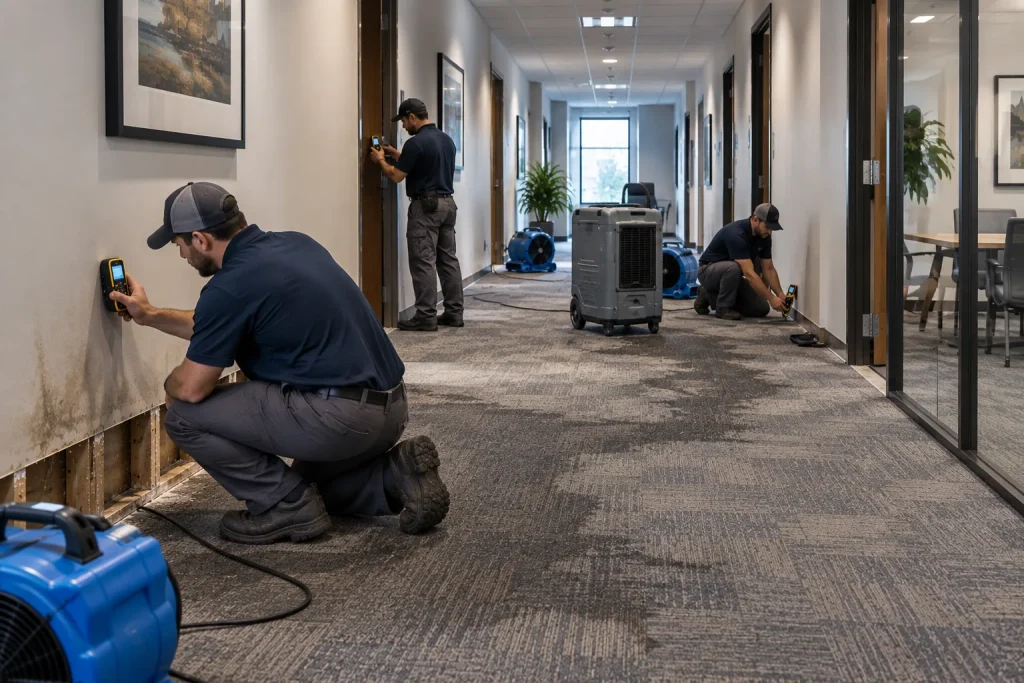
- Moisture mapping with meters and thermal cameras
- Removal of wet materials that cannot be dried
- Drying with air movers and dehumidifiers
- Cleaning and antimicrobial treatment
- Board-up, roof tarps, and temporary protection
- Moving or protecting contents and equipment
The goal is to stop the spread of water and prevent mold.
What Restoration Includes
Restoration covers the rebuild. It begins once moisture readings show the structure is dry. Common tasks include:
- Installing new drywall, insulation, and ceiling tiles
- Replacing flooring, carpet, and base trim
- Painting and finishing walls
- Rebuilding cabinets, counters, and millwork
- Repairing doors, frames, and fixtures
- Final cleaning before reoccupancy
Restoration returns the space to its pre-loss condition or better.
Why Commercial Water Mitigation Must Come First
Order matters. If crews rebuild before the structure is dry, new drywall and flooring can trap moisture. Then mold can grow behind fresh paint. Floors can buckle. As a result, the owner pays twice. So commercial water mitigation always comes first. Restoration should start only after drying is verified.
Who Pays for Each Phase?
In most cases, the property policy pays for both phases of a covered loss. However, tenants may pay to rebuild their own improvements. So check the lease and each policy. Keep mitigation and restoration bills apart. That way, every party sees exactly what it owes.
How Long Each Phase Takes
Mitigation is usually fast. Extraction may take hours. Drying often takes three to five days, though large buildings and dense materials can take longer. Restoration takes more time. A small office repair may take a week or two. A large commercial rebuild can take months. So plan your business continuity around both phases.
Commercial Water Mitigation and Your Insurance Policy
Most policies expect owners to act fast to stop more damage. Insurers call this the duty to mitigate. Fast mitigation helps you meet that duty. In addition, insurers often pay mitigation invoices early, since the work is urgent. Restoration usually follows an agreed scope and estimate. So keep the two phases clearly documented. Photos, moisture logs, and invoices help every claim.
Do You Need One Company or Two?
Some contractors handle both mitigation and restoration. Others focus only on the emergency phase. Using one company can mean fewer handoffs and clearer records. On the other hand, some owners prefer to choose their own general contractor for the rebuild. Either approach can work. The key is clear communication between both teams.
Signs You Need Commercial Water Mitigation Now
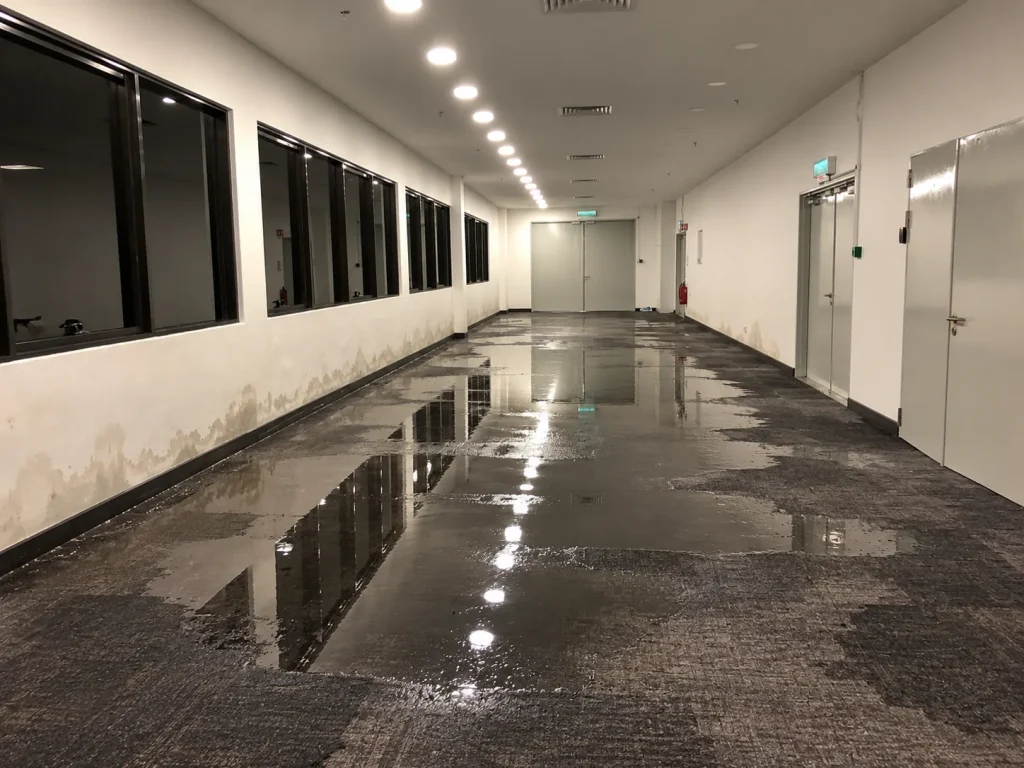
- Standing water on floors
- Wet carpet, ceilings, or walls
- Water still flowing from a pipe or roof
- Musty smells after a leak
- Warped flooring or bubbling paint
If you see any of these, call for help right away. Every hour counts.
Signs You Are Ready for Restoration
Restoration should begin when drying goals are met, contaminated materials are gone, and the space is clean. In addition, the insurance scope should be agreed. Ask your contractor for the final moisture readings before rebuilding starts.
Examples From Real Commercial Losses
Here are a few common scenarios:
- Burst pipe in an office: mitigation dries walls and carpet in days. Then restoration replaces drywall and paint.
- Roof leak in a warehouse: mitigation tarps the roof and dries the slab. Later, restoration fixes the roof and racking.
- Sewage backup in a restaurant: mitigation removes dirty materials and sanitizes. Then restoration rebuilds the kitchen.
A Simple Way to Remember
Think of it like first aid and then surgery. First aid stops the bleeding. Surgery fixes the injury. In the same way, commercial water mitigation stops the damage. Then restoration fixes the building. You need both. But you need them in the right order. So call for mitigation first, every time.
Questions to Ask Your Contractor
A few questions help you stay in control. First, ask which tasks are mitigation and which are restoration. Next, ask when drying will be done. Then ask to see the moisture readings. Also, ask whether one team will handle both phases. Finally, ask how they will keep your business running. Clear answers mean fewer surprises.
Planning for Business Continuity
Mitigation and restoration both affect operations. During mitigation, equipment is loud, and some rooms may close. During restoration, contractors need access and space to work. So plan where staff will work, how customers will reach you, and what services can continue. The Ready.gov business planning tools can help you prepare.
Commercial Water Mitigation for Contents and Equipment
Mitigation also protects what is inside the building. Crews move stock, files, and furniture away from water. They lift equipment off wet floors. In some cases, they pack out contents and store them off site. Electronics go to a specialist for testing. Saving contents early is a big part of commercial water mitigation. In fact, it can cut the total loss more than any other step.
Budgeting for Both Phases
Mitigation costs depend on how much water there is and how long drying takes. Restoration costs depend on what must be rebuilt. Usually, fast mitigation lowers restoration costs. That is because quick drying saves more materials. So acting fast is the best way to control the total bill.
Choosing a Commercial Water Mitigation Partner
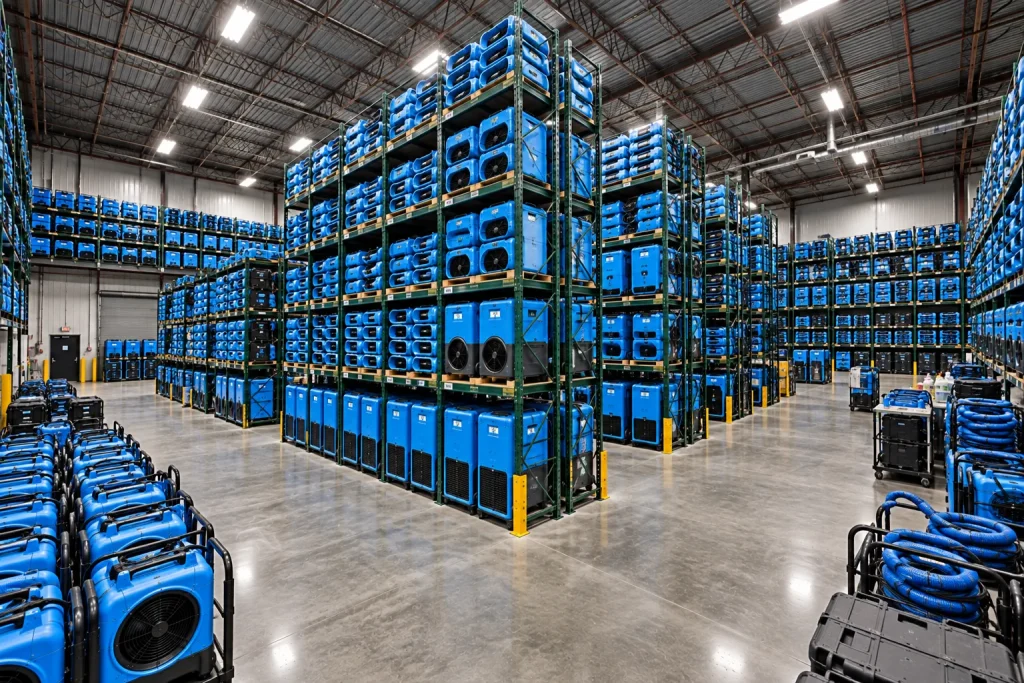
Look for a team that answers day and night. It should have worked in buildings like yours. Its techs should hold industry training. It should also own plenty of gear. In addition, ask how they record moisture readings. Clear records make the handoff to restoration easier. You can read more about our mitigation process on our service page.
Common Mistakes to Avoid
- Starting repairs before drying is verified
- Waiting for insurance approval before stopping the damage
- Mixing mitigation and rebuild invoices without clear records
- Choosing a contractor without commercial experience
- Ignoring hidden moisture behind walls
FAQ on Commercial Water Mitigation
Is mitigation the same as restoration?
No. Mitigation stops and dries the damage. Restoration rebuilds what was lost.
Should I wait for my insurer before starting commercial water mitigation?
Usually not. Most policies expect you to act quickly to prevent more damage.
Can one company handle both phases?
Yes. Many contractors offer both, which can simplify the process.
Get the Right Help at the Right Time
Knowing which service you need saves time and money. Read our guide to restoration vs. repair vs. mitigation, or call our response team now.
Related Reading
- Commercial Structural Drying — how contractors prove a building is dry.
- Reno Water Extraction — what to expect during cleanup.
- Commercial Water Damage Restoration — the full process from emergency to repairs.
- Commercial Restoration Sequencing — why the order of recovery matters.
- Commercial Water Extraction — why removing standing water is only the first step.
- Commercial Restoration Downtime — why business interruption can cost more than the damage.