
Lincoln structural drying is a hunt for water you cannot see. After a pipe bursts, a basement floods, or a spring storm drives rain through a roof, the obvious water gets cleaned up first. But the real risk hides inside walls, under floors, above ceilings, and deep in concrete. If it stays there, it feeds mold, rots wood, and ruins new finishes. So professional drying teams track that hidden moisture step by step until it is gone. This guide explains how they do it in Lincoln’s commercial buildings.
Owners, facility managers, and tenants of offices, shops, schools, clinics, and warehouses across Lincoln and Lancaster County will find it useful.
Why Lincoln Buildings Hide So Much Water
Lincoln sees wide swings in weather. Summers are warm and humid. Winters bring hard freezes, snow, and ice. Spring often brings strong storms and heavy rain. Each season creates its own water risks. For example, frozen pipes burst in January. Ice dams push water under roofing in February. Thunderstorms soak older roofs in May. In addition, many commercial buildings here have basements, where water collects and lingers. The National Weather Service office that serves eastern Nebraska tracks these storms year round.
Where Hidden Moisture Goes
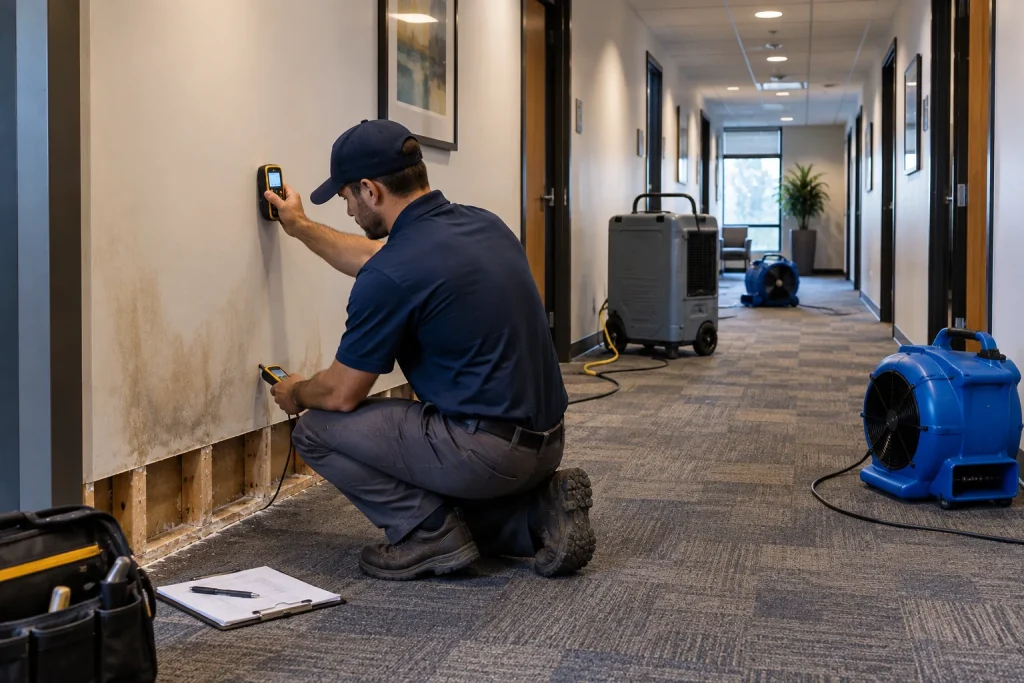
Water follows gravity and gaps. It slips under baseboards, into wall cavities, and beneath vinyl and carpet. From there, it soaks into the bottom plates of walls. Some of it travels along pipes and conduits. Meanwhile, the rest sinks into concrete slabs and block foundation walls. None of this shows on the surface. That is why Lincoln structural drying always starts with a careful search.
The Tools That Find Hidden Water
Drying technicians carry a kit of instruments. Each one plays a part:
- Thermal imaging cameras spot cool areas where water may be evaporating
- Penetrating meters read moisture inside wood and drywall
- Non-penetrating meters scan large areas fast without holes
- Hygrometers measure humidity in rooms and inside wall cavities
- Slab probes and test kits check moisture in concrete
Thermal cameras guide the search. Meters confirm what the camera suggests.
Building a Lincoln Structural Drying Moisture Map
Next, the technician turns readings into a map. They sketch the floor plan and mark each reading at its exact spot. Wet areas get one color. Dry areas get another. They also number each test point, so they can return to the same place every day. This map is the backbone of Lincoln structural drying. It shows where water went and where equipment should go.
Lincoln Structural Drying Inside Walls
Wall cavities are a favorite hiding place. Water wicks up drywall and soaks insulation. To check, technicians may remove baseboards and drill small test holes. Then they read humidity inside the cavity. If it stays high, they may force dry air through the holes. In some cases, they cut out the lower part of the wall. This lets air reach the framing directly.
Lincoln Structural Drying Under Floors and Cabinets
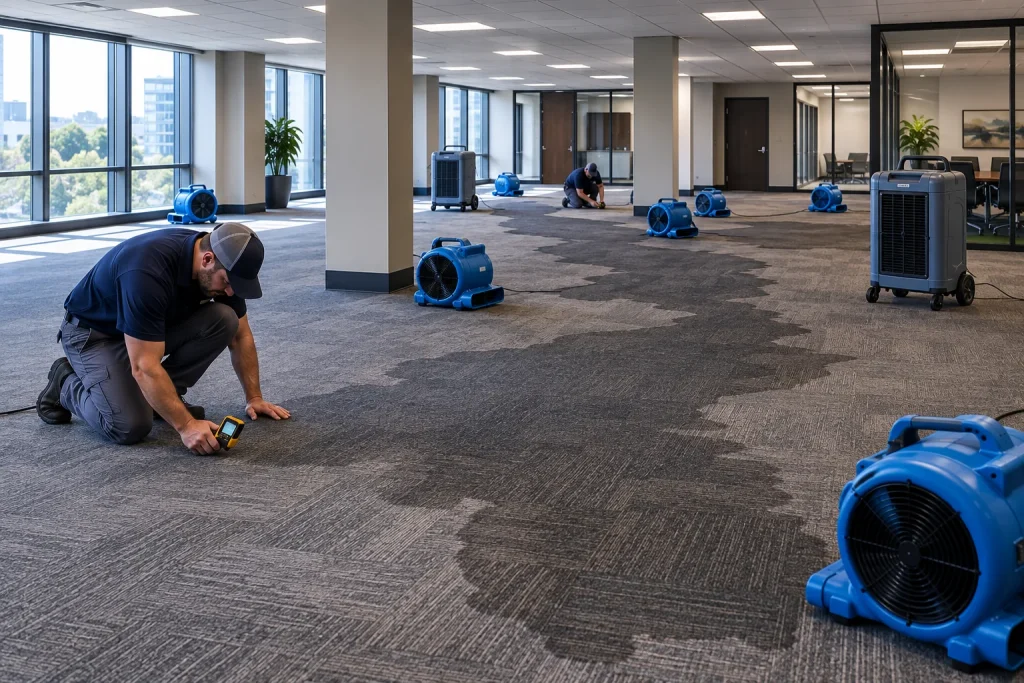
Floors trap water too. Carpet pad holds it like a sponge. Vinyl and laminate seal it underneath. Wood floors cup and swell. So crews lift a few planks or tiles to test the subfloor. Cabinets and built-ins also hide water. Removing toe kicks or bottom panels often reveals wet spots that would otherwise be missed.
Lincoln Structural Drying for Slabs and Basements
Concrete dries very slowly. A slab can feel dry on top while staying wet inside. In Lincoln’s basements, block walls also hold water. So technicians use special probes and tests. They may also check readings over several days to see the trend. Flooring makers often set limits on slab moisture. Meeting those limits before new flooring goes down prevents costly failures.
Tracking Progress Every Day
Lincoln structural drying is not a one-time check. Each day, technicians return to the same numbered points. They record new readings and compare them with the goals. They also measure the air in each room. If one area dries slowly, they add equipment, move air movers, or open more of the wall. The daily log shows the trend clearly.
Wireless Sensors for Lincoln Structural Drying
Many contractors now use wireless sensors. These small devices sit inside wall cavities or near equipment. They send humidity and temperature data to a phone or computer. As a result, the team can watch progress between visits. If something stalls overnight, they know right away. This technology speeds up drying and adds detail to the log.
Lincoln Structural Drying in Winter
Cold weather changes the process. Outdoor air is very dry, but buildings are closed and heated. Heat helps water evaporate, while dehumidifiers pull it from the air. However, crews must balance heat and humidity carefully. Too much heat without moisture removal can push water into other materials. Experienced technicians watch the air numbers closely all winter.
When Is the Building Dry?
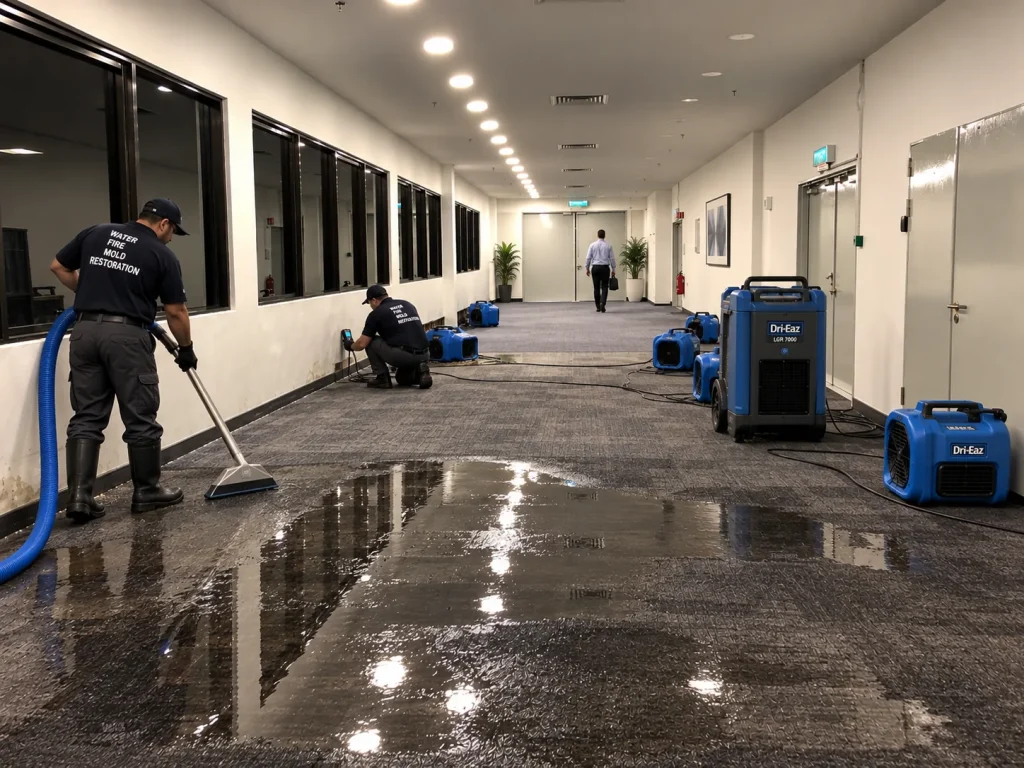
The building is dry when every tracked point meets its drying goal. Those goals come from readings taken in unaffected areas of the same building. Once all points reach their targets, the technician signs off. Then the equipment comes out, and repairs can start. Ask for the final moisture log before any walls are closed.
Schools, Offices, and Warehouses
Each building type hides water in its own way. Schools have long hallways, lockers, and gym floors. Offices have cubicle walls, raised floors, and server rooms. Warehouses have huge slabs, tall racks, and loading docks. So the drying plan must fit the building. For example, a gym floor may need special mats that pull water from under the boards. A warehouse slab may need extra time and big dehumidifiers. Good Lincoln structural drying teams adjust their tools to each space.
Why Tracking Matters for Insurance
Insurers want proof. A detailed moisture map and daily log show exactly where water went and how it was removed. They also justify the equipment and labor on the invoice. In addition, they protect the owner if mold shows up later. Clear records make Lincoln structural drying claims smoother.
Spring Storms and Basement Water
Spring brings heavy rain to Lincoln. Water can seep through basement walls or rise through floor drains. Often, it shows up slowly as damp carpet or a musty smell. So check basements after big storms. Lincoln structural drying in basements may take longer, since concrete holds water so well.
Tips for Building Owners
You can help the process. First, report leaks right away. Next, keep doors to wet rooms closed if the crew asks. Then avoid turning off drying equipment, even if it is loud. Also, keep the heat or air conditioning set as the technician requests. Finally, ask to see the moisture map. Our moisture mapping services page shows how it works.
Common Mistakes to Avoid
- Trusting surface checks instead of meter readings
- Ignoring wall cavities and cabinet bases
- Laying new flooring on a damp slab
- Turning off drying equipment overnight
- Closing walls before the final log is complete
FAQ on Lincoln Structural Drying
How do technicians find water inside walls?
They use thermal cameras to find suspect spots, then confirm with moisture meters and cavity readings.
How long does Lincoln structural drying take?
Most jobs finish within a week, though basements and concrete often need more time.
Why does my contractor drill small holes in the wall?
To measure humidity inside the cavity and help dry air reach the framing.
Find Every Drop of Hidden Water
Careful tracking protects your building from mold and rot. Learn about our structural moisture removal, or schedule a moisture inspection today.
Related Reading
- Commercial Structural Drying — how contractors prove a building is dry.
- Commercial Moisture Mapping — finding water behind walls and under floors.
- Hidden Commercial Water Damage — why visible damage is rarely the full damage.
- Commercial Restoration Documentation — why the evidence of the work matters.
- Dry Does Not Mean Ready — when a building is actually safe to reoccupy.
- Reno Water Extraction — what to expect during cleanup.