
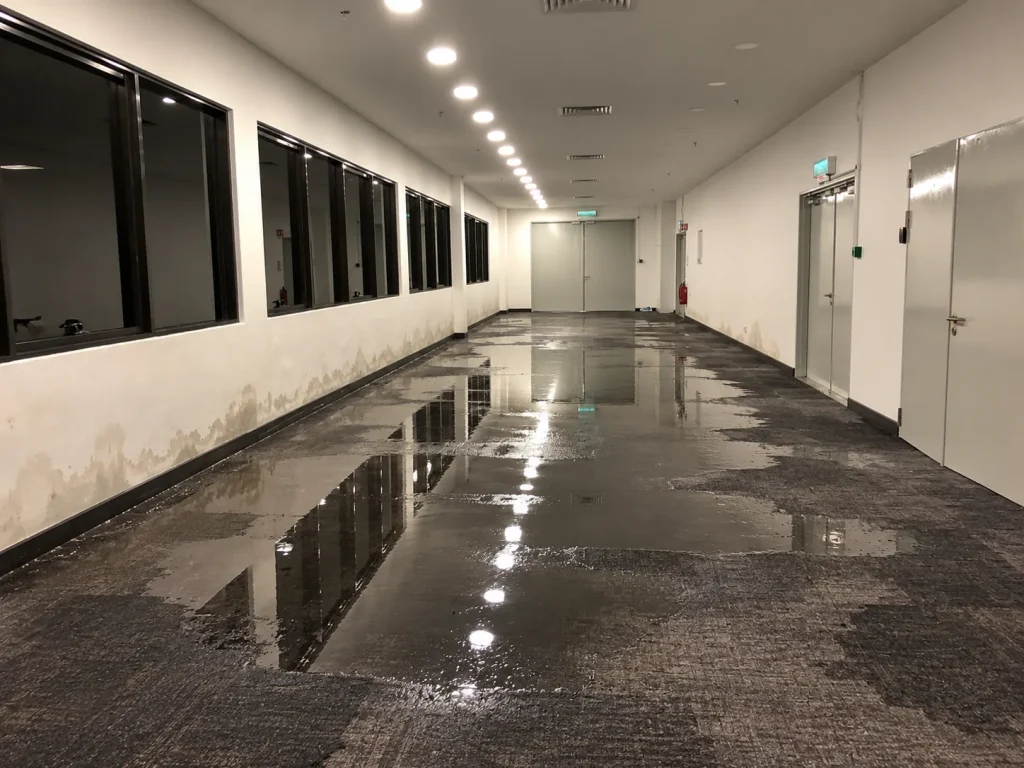
Los Angeles water damage in an occupied building creates a special kind of challenge. The leak needs fast attention, yet tenants still have patients to see, clients to meet, and customers to serve. Closing the building is rarely an option in a city where rent is high and every day of downtime costs real money. So restoration teams must work around people, not instead of them. This guide explains how to coordinate cleanup and drying in an occupied commercial building in Los Angeles.
It is meant for property managers, building engineers, and business owners.
Why Occupied Buildings Need Extra Planning
In an empty space, crews can tear out wet materials, run loud fans day and night, and block hallways as needed. In an occupied building, every step affects someone. For example, drying equipment makes noise, containment walls block paths, and cutting drywall creates dust. Therefore, the restoration plan must balance speed with comfort, safety, and access.
First Response in an Occupied Building
The first hours matter most. Stop the water source, shut off power to wet areas if needed, and move people away from hazards. Next, call a commercial restoration company that has experience in occupied spaces. While you wait, protect electronics, files, and furniture near the wet area. Quick action limits how far the water spreads.
Los Angeles Water Damage Assessment
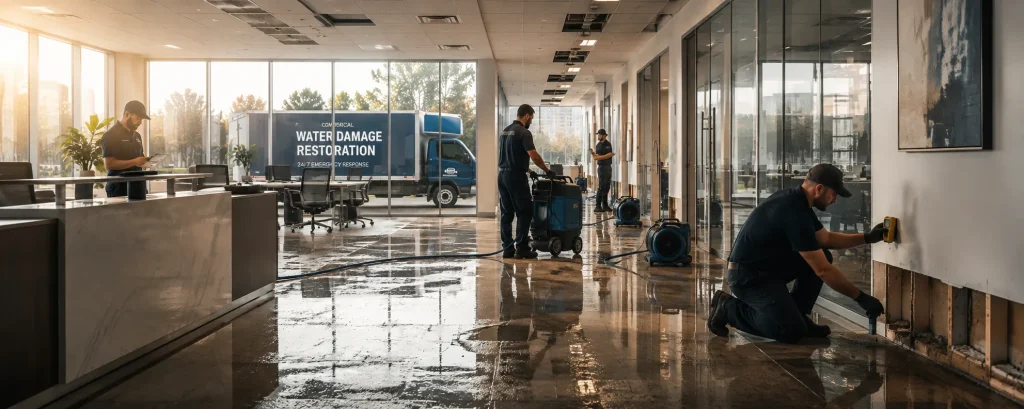
Once crews arrive, they map the damage. They use moisture meters and thermal cameras to find wet walls, floors, and ceilings. In addition, they check whether water traveled into nearby suites or down to lower floors. The result is a clear map of affected areas, which becomes the basis for the work plan and the tenant notices.
Los Angeles Water Damage Containment for Tenants
Containment keeps dust and moisture inside the work area. Crews build plastic barriers with zipper doors, cover vents, and sometimes use air scrubbers that filter the air. In medical offices or clean manufacturing spaces, containment may need extra layers. Good containment lets nearby tenants keep working without breathing dust or seeing the mess.
Scheduling Los Angeles Water Damage Work Around Tenants
Some tasks are loud, like cutting drywall or removing flooring. Others, like running dehumidifiers, are steady but quieter. So crews often schedule demolition early in the morning, in the evening, or on weekends. Meanwhile, drying equipment runs around the clock but can sometimes be swapped for quieter units near occupied offices. Talk with tenants about their busiest hours and plan around them.
Los Angeles Water Damage and Shared Spaces
Lobbies, elevators, restrooms, and corridors serve everyone. When water reaches them, the building feels the impact right away. So crews often treat shared spaces first, using floor protection and signage to keep traffic moving. If an elevator is affected, the building engineer and elevator company must be involved before it returns to service.
Communicating With Tenants
Good communication prevents frustration. Send clear notices that explain what happened, which areas are affected, and what to expect. Update tenants as the plan changes. In addition, give them a single contact person for questions. When tenants know what is going on, they are far more patient with noise and detours.
Protecting Business Operations
Each tenant has different needs. For a law firm, the file room may come first. Clinics often need exam rooms back quickly, while retailers want the storefront open for sales. So the restoration plan should rank work based on business impact, not just water levels. Our article on partial occupancy during restoration explains this approach in more depth.
Mold Prevention in a Mild Climate
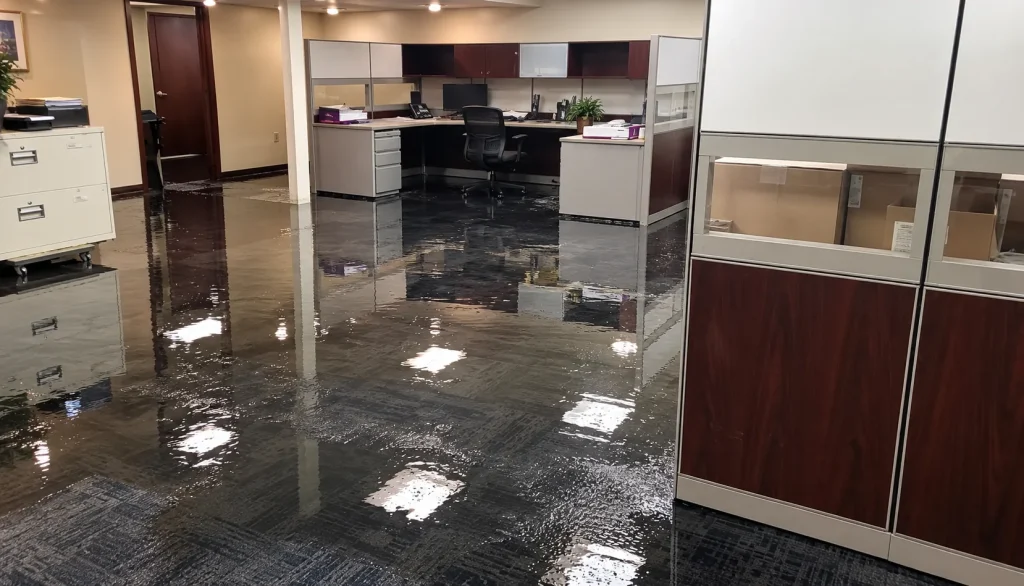
Los Angeles has a mild climate, but that does not stop mold. Wet drywall, carpet pad, and ceiling tiles can grow mold within a few days if they stay damp. So crews remove what cannot be dried and run dehumidifiers to dry the rest. Daily readings track progress. The EPA’s mold guidance explains why fast drying matters.
Los Angeles Water Damage Documentation
In a multi-tenant building, insurance can get complicated. The building owner’s policy may cover the structure, while each tenant’s policy covers their contents and lost income. So document damage by space. Take photos, keep moisture logs, and save receipts. Clear records help each party file the right claim and avoid disputes.
Los Angeles Water Damage Repairs After Drying
Once readings confirm the area is dry, repairs can begin. Again, schedule around tenants. Drywall, paint, flooring, and ceiling work can often happen after hours. In addition, coordinate with building rules on access, elevators, and loading docks. A smooth rebuild keeps the property running and tenants happy.
Quick Tips for Tenants
Tenants can help the job go faster. First, clear desks and floors near the wet area when crews ask. Next, unplug and move small electronics. Then keep doors to work zones closed. Finally, report any new stains, smells, or drips right away. These small steps save time and keep everyone safe.
Elevators and Parking
Water often finds its way to elevator pits and parking levels. Wet pits can shut down elevators for days. So check them early and pump them out fast. In parking garages, block off wet areas and post signs. Keep at least one route open so tenants can still reach their cars.
Working Within Building Rules
Many Los Angeles office towers and medical buildings have strict rules for contractors. These rules may cover work hours, elevator use, loading dock times, insurance certificates, and noise limits. So the restoration company should get the building rules on day one. Following them avoids conflicts with management and keeps the job moving. In addition, some buildings require escorts or badges for crews, which takes time to arrange.
Air Quality Checks
Tenants often worry about the air during restoration. Air scrubbers with HEPA filters help remove dust and spores from work areas. In some cases, building managers order air testing before and after the work to show the space is safe. Sharing these results with tenants builds trust and speeds their return.
After-Hours Emergencies
Leaks often happen at night or on weekends, when buildings are nearly empty. That gives crews a chance to do the most disruptive work before tenants arrive. So a fast night response can save days of disruption. Make sure your building has a clear after-hours contact list and that the restoration company can reach the site quickly.
Preventing the Next Leak
After the job, find out what caused the water. Common culprits include failed supply lines, clogged drains, roof leaks, and HVAC condensate lines. Fixing the root cause and adding leak sensors in risky areas can prevent repeat damage. Regular inspections also catch small issues early.
In addition, share a final summary with each tenant at closeout, including the dates their space was affected and the readings that show it is dry.
Occupied Building Checklist
- Stop the water and make the area safe
- Map affected areas with meters and cameras
- Build containment around work zones
- Schedule loud work at quiet hours
- Treat shared spaces early
- Keep tenants informed daily
- Document damage by tenant space
- Fix the cause before closing out
Keep Your Building Running During Restoration
Careful planning lets Los Angeles water damage restoration happen while tenants keep working. Our LA restoration crew works across the county. When you are ready, request an on-site assessment.
Related Reading
- Boston Office Cleanup — drying offices floor by floor.
- Office Water Damage Repair — cleanup in an occupied building.
- Partial Occupancy During Restoration — keeping the business operating during repairs.
- Commercial Restoration Downtime — why business interruption can cost more than the damage.
- Seattle Leaks and Downtime — keeping the business open.
- Dry Does Not Mean Ready — when a building is actually safe to reoccupy.