
Seattle commercial water damage often starts quietly. A roof seam lets in a little rain every storm, a window frame wicks moisture into a wall, or a pipe in a ceiling drips for weeks before anyone notices. In a city with long rainy seasons and many older buildings, slow leaks are common. Then one day the problem shows up as a sagging ceiling tile, a musty smell, or a shut-down office. This guide explains how to address leaks in Seattle commercial buildings and keep business disruption as low as possible.
Owners, managers, and business operators across the city will find practical steps here.
Why Seattle Buildings Face Frequent Leaks
Seattle’s weather is famous for steady rain from fall through spring. That means rain tests roofs, walls, and windows again and again. In addition, many commercial buildings in Pioneer Square, Capitol Hill, and South Lake Union mix older masonry with newer additions, which creates seams where water can enter. As a result, slow leaks and hidden moisture are a constant risk.
Common Sources of Seattle Commercial Water Damage
The usual suspects include:
- Roof membranes, flashing, and drains
- Window and curtain wall seals
- Below-grade walls in basements and garages
- Plumbing leaks inside walls and ceilings
- HVAC condensate lines and rooftop units
- Fire sprinkler leaks and accidental discharges
Knowing these sources helps owners know where to look first when water appears.
First Steps for Seattle Commercial Water Damage
When you spot water, act quickly. First, find and stop the source if you can. Next, protect people and equipment by moving them away from the wet area. Then catch dripping water with buckets or tarps, and cut power to wet electrical areas if it is safe. Finally, call a commercial restoration company. Fast action keeps a small leak from becoming a large loss.
Finding the True Source
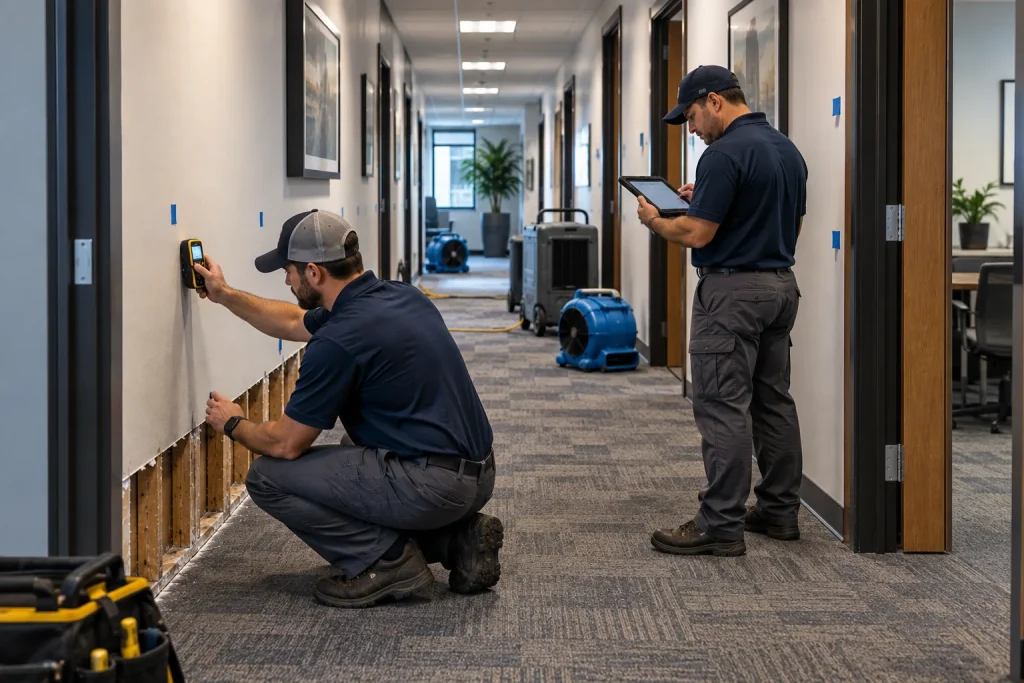
The spot where water shows up is often not where it enters. Rain may enter at a roof seam and travel along framing before dripping through a ceiling far away. So technicians trace the path using moisture meters, thermal cameras, and sometimes water testing. Fixing the real source prevents repeat damage. Otherwise, the same stain may come back with the next storm.
Seattle Commercial Water Damage Drying in a Damp Climate
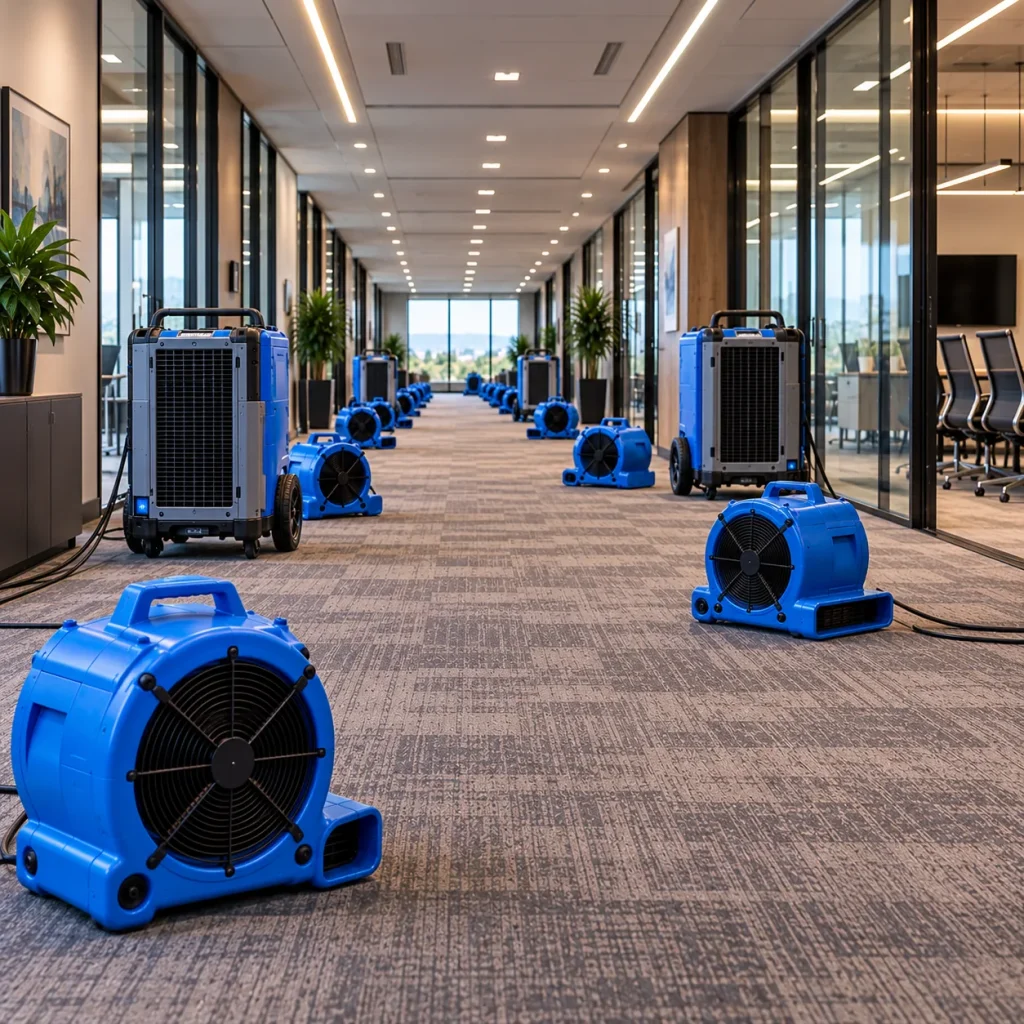
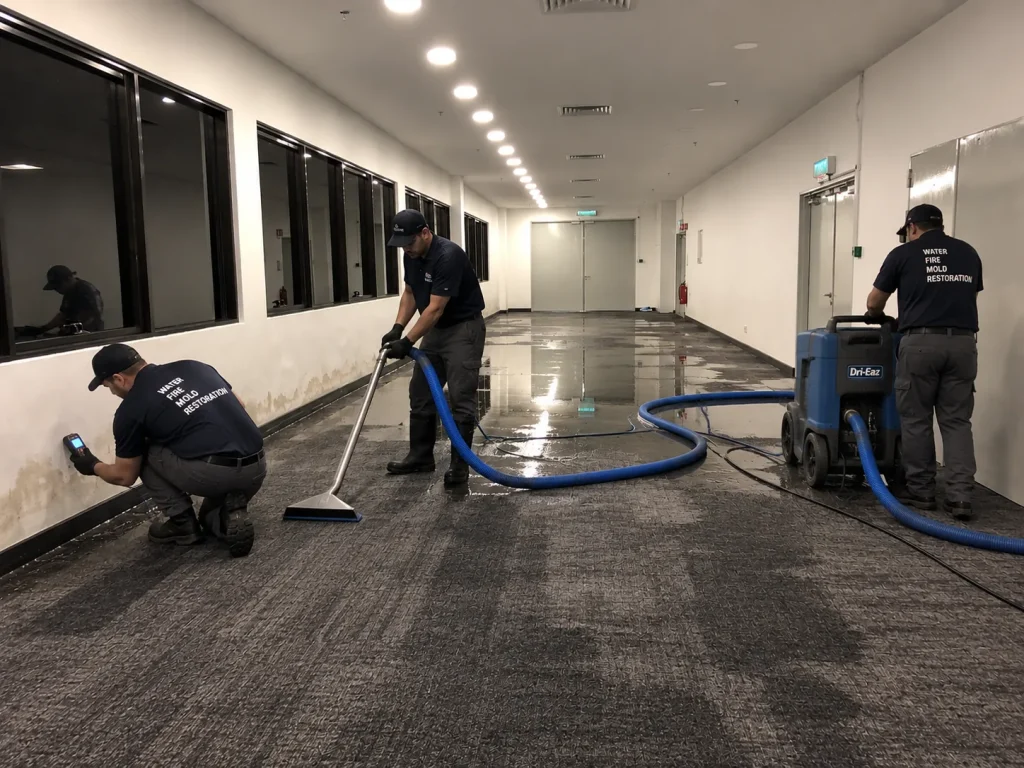
Drying in Seattle takes more than fans. The outdoor air is often cool and damp, so opening windows rarely helps. Instead, crews close up the space and run dehumidifiers to pull water from the air. Sometimes they add heat to speed evaporation. Daily moisture readings track progress, and drying continues until materials match normal levels. Rushing this step can leave moisture that leads to mold.
Limiting Disruption From Seattle Commercial Water Damage
Business disruption often costs more than the repairs. So the restoration plan should protect operations. For example, crews may contain the wet area and let the rest of the office stay open. They may schedule loud work after hours. In addition, they may move a team to another floor or a temporary space while their area dries. Our article on restoration downtime explains why this planning pays off.
Seattle Commercial Water Damage in Retail and Restaurants
Shops and restaurants face special pressure. A wet sales floor or kitchen can close the business for days. Health rules may also apply to food areas. So crews often work overnight, protect inventory, and clean and sanitize affected surfaces quickly. When possible, they dry one section while the rest stays open.
Protecting Tech and Records
Many Seattle businesses depend on servers, network gear, and digital records. A wet server rack can knock a company offline for days. For that reason, cover or move this gear before anything else. Cover equipment with plastic, move portable devices, and call IT staff early. If equipment got wet, have it checked before turning it back on.
Mold Risk After Slow Leaks
Slow leaks are dangerous because they often go unnoticed for weeks. By then, mold may already be growing inside walls or ceilings. So when crews uncover a long-term leak, they check for mold and may need to remove affected materials under containment. The EPA’s mold guidance explains safe cleanup basics.
Seattle Commercial Water Damage and Insurance
Insurance policies often treat sudden leaks differently from long-term seepage. So documentation matters. Note the date you discovered the leak, take photos, and keep moisture readings. In addition, save repair invoices for the source of the leak. Clear records help the claim move faster and reduce disputes.
Roof Repairs in the Rainy Season
Fixing a roof in the middle of a wet Seattle winter is not easy. Crews often need short dry windows to make repairs. In the meantime, temporary patches and tarps keep water out. So owners should plan for both a quick fix and a lasting repair. In addition, a roofer and a restoration company should work together, so the building dries while the roof gets fixed.
Older Masonry and Window Seals
Many older Seattle buildings have brick walls and original windows. Over time, mortar cracks and window seals fail. Rain then soaks into walls and shows up inside as stains or peeling paint. Repointing brick and resealing windows can stop these leaks. Meanwhile, drying the wet walls inside takes patience, since masonry holds water for a long time.
Seattle Commercial Water Damage in Parking Garages
Below-grade garages often take on water during heavy rain. Drains clog, ramps channel runoff, and walls seep. Water in garages can reach storage rooms, elevator pits, and electrical rooms. So check garages after big storms and keep drains clear. Fast pumping and drying limit the damage and keep cars and tenants moving.
Communicating With Tenants and Staff
People worry when water appears at work. Short, clear updates reduce stress. Explain what happened, what areas are affected, and what the plan is. Then share progress until the work is done. In multi-tenant buildings, a single point of contact keeps messages consistent.
Preventing Seattle Commercial Water Damage
After the repair, focus on prevention. Inspect roofs and drains before the rainy season. Check window and wall seals every year or two. Clear gutters and downspouts. In addition, add leak sensors in risky areas, such as server rooms and ceilings below rooftop equipment. These steps cost little compared with a major water loss.
Working With Your Insurer Early
Call your insurer soon after you find the damage. Many policies require prompt notice. In addition, ask the adjuster what records they want, such as photos, moisture logs, and repair invoices. Sharing them early keeps the claim moving. If the adjuster wants to see the damage, try to schedule the visit before major tear-out, or document everything carefully with photos first.
Leak Response Checklist
- Stop or contain the water quickly
- Protect people, equipment, and records
- Trace the leak to its true source
- Dry with dehumidifiers, not open windows
- Keep unaffected areas open for business
- Check for mold after slow leaks
- Document everything for insurance
- Inspect roofs and seals before the rainy season
Get Back to Business Faster
Quick, careful action on leaks keeps disruption low and repairs lasting. For help with a Seattle property, see our Puget Sound restoration services or schedule an inspection. The City of Seattle also shares building and permit information.
Related Reading
- Restoration in Occupied LA Buildings — working around tenants.
- Commercial Restoration Downtime — why business interruption can cost more than the damage.
- Hidden Commercial Water Damage — why visible damage is rarely the full damage.
- Commercial Storm Damage Restoration — roof leaks and flooded interiors.
- Partial Occupancy During Restoration — keeping the business operating during repairs.
- Finding Hidden Moisture in Baltimore — what meters reveal behind walls.