Commercial storm damage restoration usually starts with two problems at once. Wind or hail opens the roof, and heavy rain pours into the building. At the same time, surface water may flood lower floors, loading docks, and parking garages. Owners must stop more water from getting in while they also clean up what already did. Done well, the response protects the building and gets the business open quickly. Done poorly, it leads to mold, structural damage, and long closures. This guide walks through each step.
Property managers, building owners, and facility teams can use it to plan before the next storm hits.
How Storms Damage Commercial Buildings
Storms cause damage in several ways:
- Wind peels back roofing, lifts flashing, and breaks windows.
- Hail punctures membranes and cracks skylights.
- Heavy rain overwhelms drains and finds weak spots.
- Flooding pushes water into lower floors and basements.
- Debris damages roofs, walls, and rooftop units.
Often, a single storm brings several of these at once. As a result, commercial storm damage restoration must address both the outer shell and the interior.
Step 1: Safety After the Storm
First, check for hazards. Downed power lines, gas leaks, weak structure, and water near electrical gear all pose serious risks. So keep people out of damaged areas until they are safe. The OSHA flood safety page lists common post-storm hazards.
Step 2: Secure the Building
Next, stop more water from getting in. Crews tarp damaged roofs, board up broken windows, and seal open walls. Many people call this step “dry-in.”
Most insurance policies require owners to take reasonable steps to prevent more damage. Therefore, securing the building quickly also protects your claim.
Step 3: Document Everything
Before cleanup changes the scene, take photos and videos. Capture roof damage, broken windows, water inside, and damaged contents. Also note the date and time of the storm. Later, these records will support your insurance claim.
Commercial Storm Damage Restoration: Water Removal
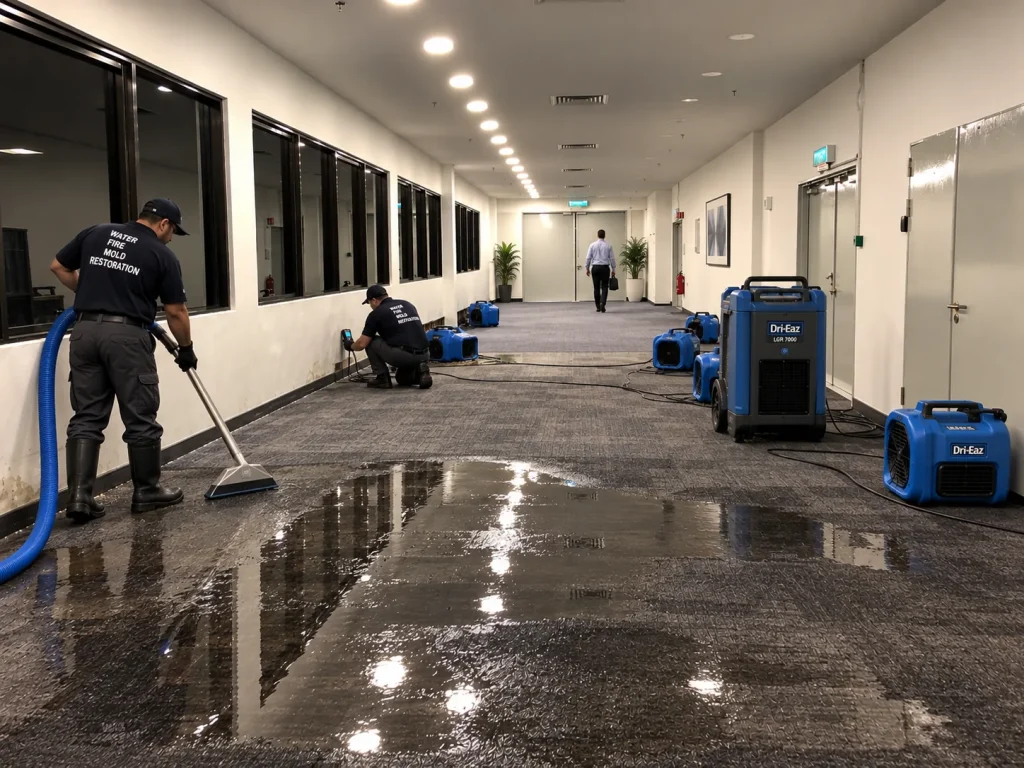
Next, crews remove standing water. On upper floors, that may be rain from roof leaks. On lower floors, by contrast, it may be floodwater. Fast removal limits how far water spreads into walls and contents. Our emergency water extraction team handles both.
Step 5: Handle Contaminated Floodwater
Rain from a roof leak is usually fairly clean at first. However, floodwater that comes in from outside counts as contaminated. It may carry sewage, chemicals, and debris. For that reason, crews wear protective gear, remove porous materials it touched, and clean and sanitize every affected surface.
Step 6: Map Hidden Moisture
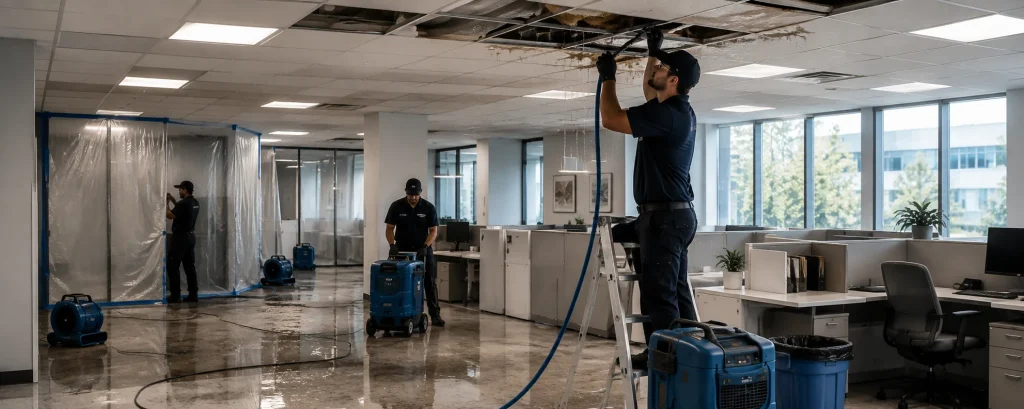
Roof leaks are tricky. Water can travel along the roof deck, through insulation, and down inside walls before it shows up. So technicians map moisture across ceilings, walls, and floors. Thermal cameras and meters reveal wet spots that look dry.
Step 7: Remove Damaged Materials
Wet ceiling tiles, insulation, and drywall often must come out. Crews remove what cannot dry and keep what can. In turn, this step speeds drying and prevents mold.
Step 8: Dry the Structure
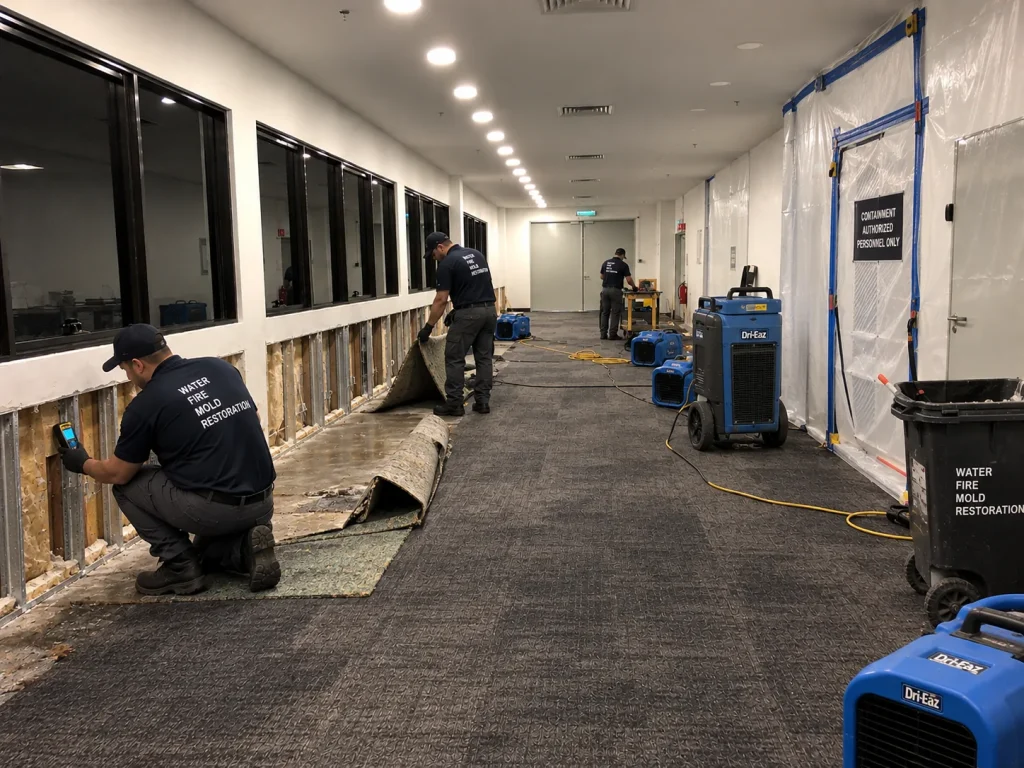
Then the drying begins. Air movers and dehumidifiers run until materials reach their drying goals. Meanwhile, technicians check readings every day. In large buildings, drying may take several days or longer. Our structural drying page explains the process.
Step 9: Permanent Roof and Envelope Repairs
Tarps are only temporary. Once the storm passes, a roofer must make lasting repairs or replace the roof. Windows, siding, and flashing also need repair. Ideally, this work happens before the interior rebuild, so new finishes stay dry. Our roof leak damage page covers this link between roof and interior.
Interior Rebuild in Commercial Storm Damage Restoration
After drying and roof repairs, crews rebuild the interior. They replace drywall, ceilings, flooring, and finishes. Larger projects may also need permits and inspections.
Before walls close, though, check the final moisture readings. If any area is still wet, keep drying. Otherwise, new drywall can trap moisture and grow mold. Also check that new materials match the old ones, so the space looks consistent. Then, once the work is done, walk the space with your contractor and make a short list of any final touch-ups.
Commercial Storm Damage Restoration for Rooftop Equipment
Storms do not only hit the roof surface. They also batter rooftop HVAC units, exhaust fans, and solar panels. For example, hail can crush the fins on a condenser coil. Similarly, high winds can shift units off their curbs, which opens a new path for water. So have a mechanical contractor inspect every rooftop unit after a major storm. Otherwise, a small leak around a curb may keep soaking the ceiling below for weeks.
Commercial Storm Damage Restoration and Business Continuity
Storms often hit many businesses at once, so contractors get busy fast. That is why a restoration partner lined up before storm season gives you priority. In addition, plan how you will keep operating. Can staff work from another location? Can customers use another entrance? Our business continuity page offers ideas.
Insurance After a Storm
Storm claims can be complex. For instance, wind damage and flood damage are often covered differently. Many standard business policies exclude flood, which requires separate coverage. So read your policy, call your agent early, and keep detailed records of every cost.
Working With Adjusters After a Wide Storm
After a large storm, adjusters may handle hundreds of claims at once. As a result, your inspection could take days. Do not wait to start emergency work. Instead, take photos, save damaged samples, and keep receipts. Then share a clear summary when the adjuster arrives. In most cases, good records speed up approval.
Commercial Storm Damage Restoration Costs
Owners often ask what commercial storm damage restoration will cost. The honest answer is that it depends. First, the size of the opening in the roof matters. Second, the type of water matters, since floodwater means more tear-out than clean rain. Third, the time before response matters, because wet materials get worse every day.
Emergency work, such as tarping and water removal, is usually billed by the hour or by the unit. Drying is often billed per piece of equipment per day. Later, the rebuild is priced line by line, much like new construction.
To keep costs in check, act fast and keep records. Also ask for a written scope before the rebuild starts. That way, you and the adjuster can review each line. In most cases, a clear scope prevents surprise bills and speeds up payment. Our insurance process guide explains how to review an estimate.
Preparing Before the Next Storm
- Inspect roofs and drains before storm season.
- Trim trees near the building.
- Secure loose rooftop equipment.
- Know where shutoff valves and main breakers are.
- Keep emergency contacts posted.
- Sign a priority service agreement with a restoration company.
The Ready.gov business guide offers helpful planning templates.
FAQ on Commercial Storm Damage Restoration
How fast should commercial storm damage restoration start?
Right after the storm passes and the site is safe.
Is flood damage covered by insurance?
Often not under standard policies. Flood usually requires separate coverage.
Should I tarp the roof myself?
Only if it is safe. In most cases, a trained crew should handle roof work, especially on tall or steep buildings.
Recover Faster After the Storm
Fast action protects your building and business. With a plan in place, commercial storm damage restoration moves faster and costs less. Visit our storm services page, or call our emergency team today.
Related Reading
- Commercial Water Damage Restoration — the full process from emergency response to final repairs.
- Commercial Water Extraction — why removing standing water is only the first step.
- Commercial Moisture Mapping — finding water behind walls and under floors.
- Hidden Commercial Water Damage — why visible damage is rarely the full damage.
- Commercial Restoration Documentation — why the evidence of the work matters as much as the work.
- Commercial Restoration Downtime — why business interruption can cost more than the damage.