
Baltimore water damage restoration often goes wrong for one simple reason: the visible damage is not the whole story. A stain on a ceiling tile or a puddle on the floor is just the part of the problem you can see. Behind walls, under flooring, inside ceiling cavities, and in the old brick and plaster that fill many Baltimore buildings, water can spread far beyond the obvious wet spot. If that hidden moisture is missed, mold, rot, and repeat repairs follow. This guide explains how restoration teams find moisture beyond visible damage and why it matters.
Owners, property managers, and facility teams across Baltimore can use it as a field guide.
Why Water Travels Farther Than You Think
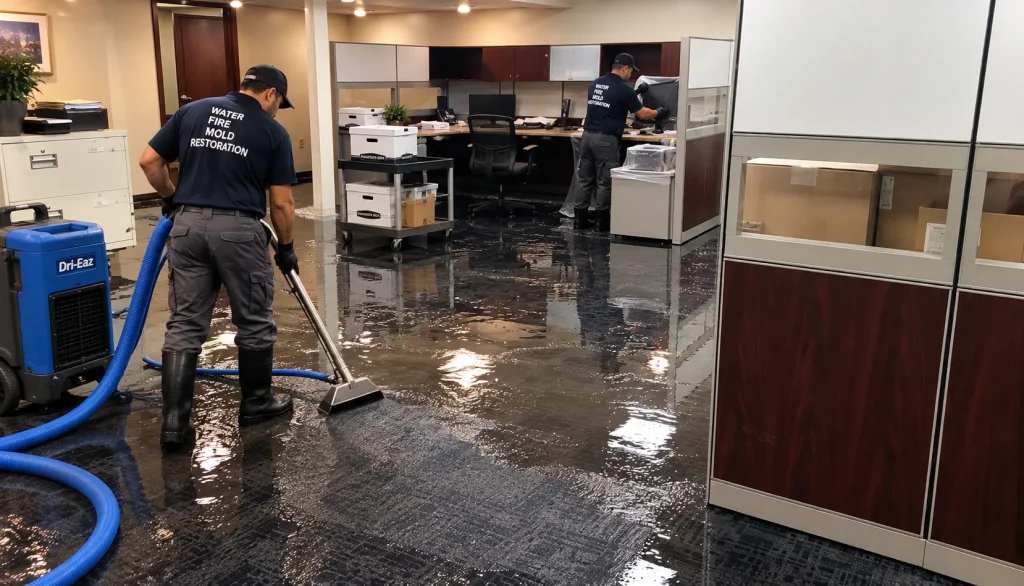
Water follows gravity and wicks through materials. It runs along pipes and framing, soaks into drywall and wood, and spreads under carpet pad and floating floors. In multi-story buildings, it can drop through floor penetrations and appear two floors down. As a result, the damaged area is almost always larger than what you see. A careful search is the only way to know the true extent.
Baltimore Buildings and Hidden Moisture
Baltimore has a large stock of older commercial buildings, from rowhouse storefronts to converted warehouses and historic office blocks. Many have plaster walls, brick, thick wood framing, and layers of past renovations. These materials hold water longer and hide it better than newer construction. In addition, older buildings often have small cavities and chases where water collects unseen. So hidden moisture is especially common here.
Tools for Finding Moisture You Cannot See
Restoration teams use several tools together:
- Pin meters that measure moisture inside wood and drywall
- Pinless meters that scan surfaces without making holes
- Thermal cameras that show temperature differences caused by wet materials
- Hygrometers that measure humidity in the air and in wall cavities
- Borescopes that look inside walls through small holes
No single tool tells the whole story. Combined, they build a reliable picture.
Baltimore Water Damage Restoration Starts With a Moisture Map
A moisture map is a drawing of the building that marks every test point and its reading. Technicians check walls, floors, and ceilings in a grid around the visible damage. Then they keep expanding outward until readings return to normal. The map shows exactly where water traveled and which materials need drying or removal. Our guide to commercial moisture mapping explains this process in detail.
Thermal Imaging and Its Limits
Thermal cameras are powerful, but they do not see water directly. They show temperature differences, which often point to wet areas because evaporation cools surfaces. However, other things can cause temperature changes, like drafts, pipes, or sunlight. So a good technician always confirms thermal findings with a meter. Using both tools avoids false alarms and missed spots.
Checking Under Floors
Floors hide a lot of water. Carpet pad soaks it up, vinyl and laminate trap it underneath, and wood floors absorb it into the boards and subfloor. In older Baltimore buildings, wood subfloors over joists can hold moisture for weeks. So technicians test under flooring, sometimes lifting a section or drilling small holes to check the subfloor. Skipping this step is a common cause of warped floors and odors later.
Inside Walls and Ceilings
Walls and ceilings are another common hiding place. Water can run down inside a wall from a leak above, wetting insulation and the bottom of the drywall. Ceiling cavities can hold pools of water above tiles or plaster. So crews check behind baseboards, inside wall cavities, and above ceilings. In some cases, they drill small holes to measure air inside the wall and to help it dry.
Baltimore Water Damage Restoration in Brick and Plaster
Brick and plaster behave differently from drywall. They absorb water slowly but can hold it for a long time. In addition, they can carry moisture between rooms and floors. Drying them takes patience and steady humidity control. Restoration teams often choose to dry plaster in place rather than remove it, especially in historic buildings, while tracking readings until they reach normal levels.

Setting Goals in Baltimore Water Damage Restoration
How do you know when something is dry? Technicians take readings from similar, unaffected materials in the same building. These become the drying goals. Each wet area must reach its goal before drying stops. Daily readings at the same marked points show progress. Without goals, crews may stop too early and leave moisture behind.
Why Hidden Moisture Leads to Mold
Mold needs moisture, food, and time. Wet drywall paper, wood, and dust inside walls provide the food. Hidden moisture provides the water. Within a few days, mold can start to grow out of sight. By the time it shows up as stains or smells, the problem may be much larger. The EPA’s mold resources explain why fast, complete drying matters.
Baltimore Water Damage Restoration and Insurance Records
Moisture maps and daily readings are not only for drying. They also support insurance claims. Adjusters want proof of how far water spread and how long drying took. Clear records with photos, readings, and dates make that case. In addition, they protect owners if questions come up later about hidden damage or mold.
Basements and Below-Grade Spaces
Many Baltimore buildings have basements with stone or brick foundations. These spaces often stay damp even in good weather. After a leak or flood, they can hold water for a long time. So a thorough Baltimore water damage restoration effort checks basement walls, slabs, and any stored items. Dehumidifiers and good air flow help, but crews may also need to fix drainage or seal cracks to stop water from returning. In addition, basements often house electrical panels and mechanical equipment, which need extra protection.
Checking Neighboring Spaces
In rowhouse-style commercial blocks and multi-tenant buildings, water does not respect property lines. It can move through shared walls and floors into the space next door. So technicians check adjacent suites and units, with permission from their owners. Finding moisture early in neighboring spaces prevents disputes and mold later.
How Long Hidden Moisture Takes to Dry
Drying times vary. Drywall and carpet may dry in a few days with good equipment. Solid wood, plaster, and brick can take much longer. In Baltimore’s humid summers, drying may also slow down. That is why Baltimore water damage restoration relies on daily readings rather than a set number of days. Equipment stays in place until each material reaches its goal.
Common Sources of Hidden Leaks
Many hidden moisture problems start with slow leaks rather than big events. Examples include:
- Failing roof flashing and parapet walls
- Leaky window frames in older masonry
- Small pipe leaks inside walls
- HVAC condensate lines that drip in ceilings
- Groundwater seeping through basement walls
Regular inspections can catch these before they cause major damage.
Baltimore Water Damage Restoration: What to Remove
Not every wet material can be saved. Soaked insulation, swollen particleboard, and drywall with mold growth usually need removal. However, many materials, like plaster, brick, and solid wood, can often be dried in place. The moisture map and the type of water involved guide these choices. Removing only what is needed saves time and money.
Baltimore Water Damage Restoration Checklist
- Assume water spread beyond the visible damage
- Use meters, thermal cameras, and hygrometers together
- Build a moisture map and keep expanding it
- Check under floors and inside walls and ceilings
- Set drying goals from unaffected materials
- Track readings daily until goals are met
- Keep records for insurance
Find the Water You Cannot See
Thorough moisture detection is the key to lasting repairs. If your property needs a full assessment, our Baltimore restoration team can help. You can also send us a message to schedule a moisture survey.
Related Reading
- Commercial Moisture Mapping — finding water behind walls and under floors.
- Hidden Commercial Water Damage — why visible damage is rarely the full damage.
- Commercial Structural Drying — how contractors prove a building is dry.
- Commercial Restoration Documentation — why the evidence of the work matters.
- Philadelphia Owner Guide — steps for building owners.
- Dry Does Not Mean Ready — when a building is actually safe to reoccupy.