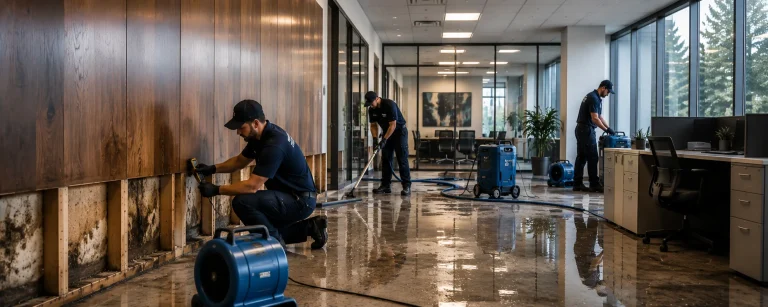
Philadelphia, PA
Commercial Water Damage in Philadelphia Requires Balancing Historic Preservation with Modern Commercial Operations
Philadelphia is one of America’s oldest commercial centers, where centuries-old architecture stands alongside modern office towers, healthcare campuses, universities, manufacturing facilities, distribution centers, and mixed-use developments.
That combination creates unique challenges when commercial water damage occurs. Property owners often need to protect aging building materials while preserving modern tenant improvements, sophisticated mechanical systems, and ongoing business operations.
Commercial Water Damage provides educational resources that help facility managers, property managers, building owners, developers, and commercial contractors better understand commercial water damage throughout the Philadelphia metropolitan area.
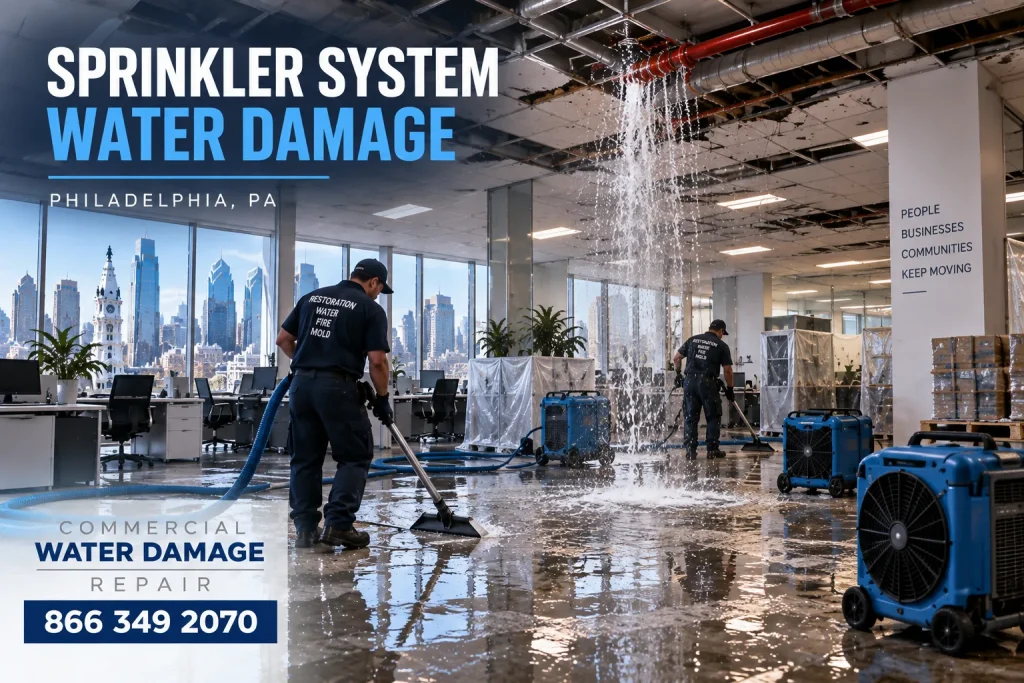
Restoration Often Delivers Greater Value Than Replacement
Commercial construction has become increasingly specialized, while many Philadelphia buildings continue to serve businesses decades—or even centuries—after they were originally built.
Today’s commercial properties frequently include:
- Historic masonry facades
- Original architectural details
- Modern HVAC systems
- Advanced building automation
- Premium office interiors
- Specialized healthcare environments
- Custom tenant improvements
- Energy-efficient upgrades
Replacing these systems and finishes can be both costly and disruptive.
For many Philadelphia commercial properties, restoration offers an opportunity to preserve valuable building components while minimizing operational downtime and protecting long-term asset value.
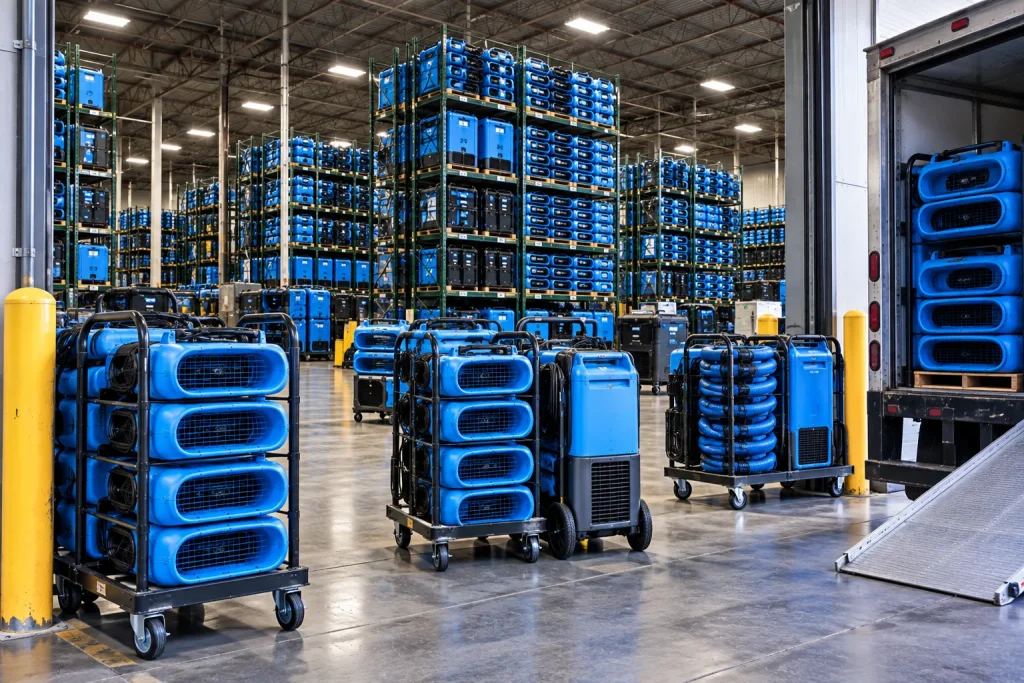
Philadelphia’s Climate Creates Diverse Water Damage Risks
Commercial buildings throughout the region experience a wide range of weather conditions.
Common sources of water damage include:
- Heavy rainfall
- Snow and ice
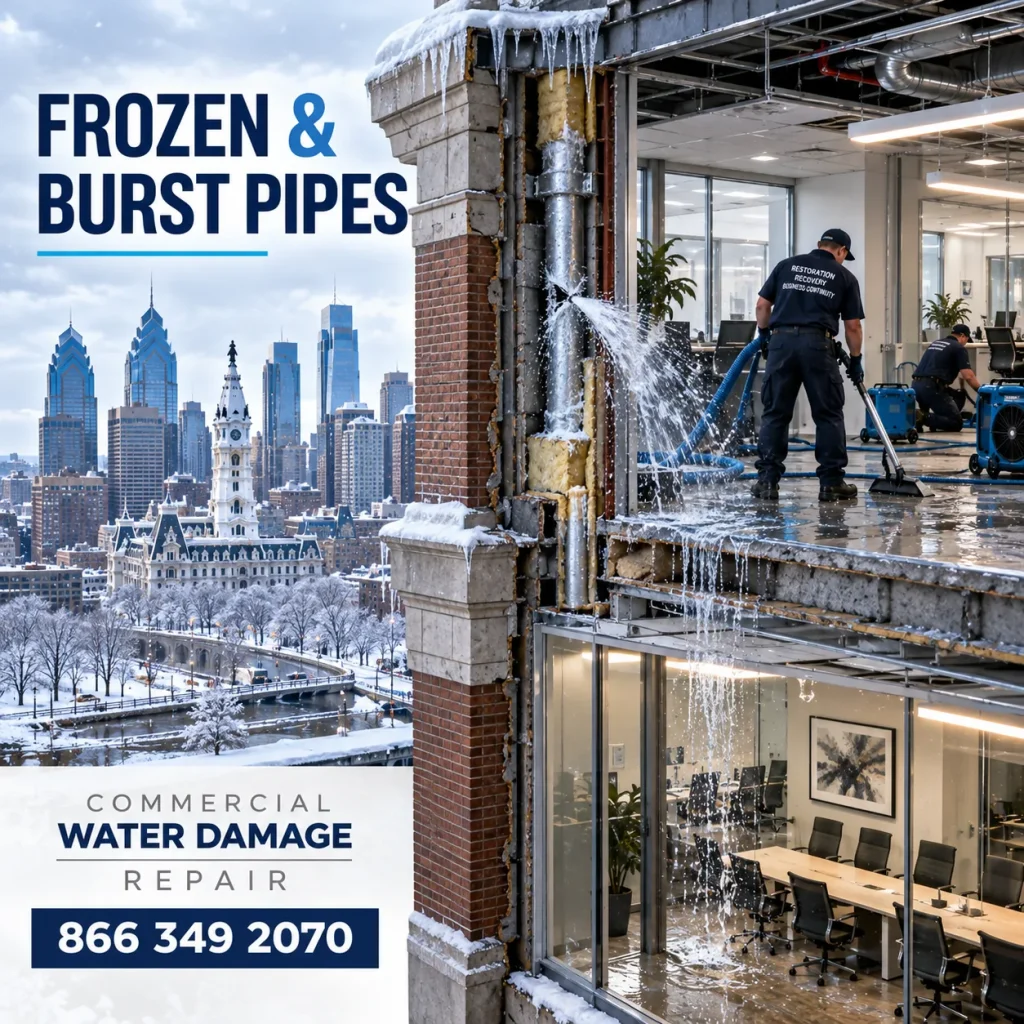
- Freeze-thaw plumbing failures
- Roof leaks
- Fire sprinkler discharges
- HVAC system failures
- Storm-related flooding
- Sewer backups
- Mechanical equipment leaks
- Aging plumbing infrastructure
Older buildings often require additional attention because water may enter through multiple pathways before becoming visible.
Water Can Move Through Historic and Modern Building Systems
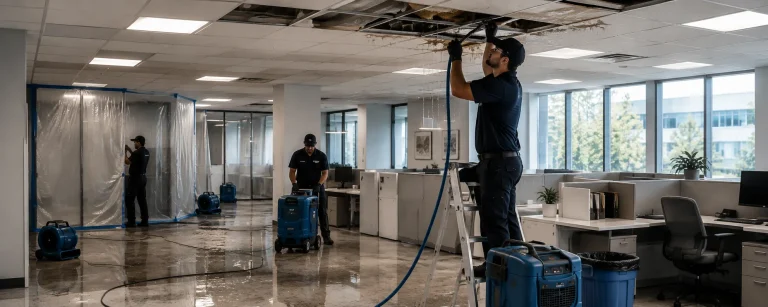
Commercial water damage is rarely confined to one room or floor.
Moisture may migrate through:
- Masonry walls
- Structural steel
- Concrete floor systems
- Ceiling plenums
- Pipe chases
- Elevator shafts
- Mechanical rooms
- Multi-tenant office spaces
Identifying hidden moisture is essential before restoration and reconstruction begin.
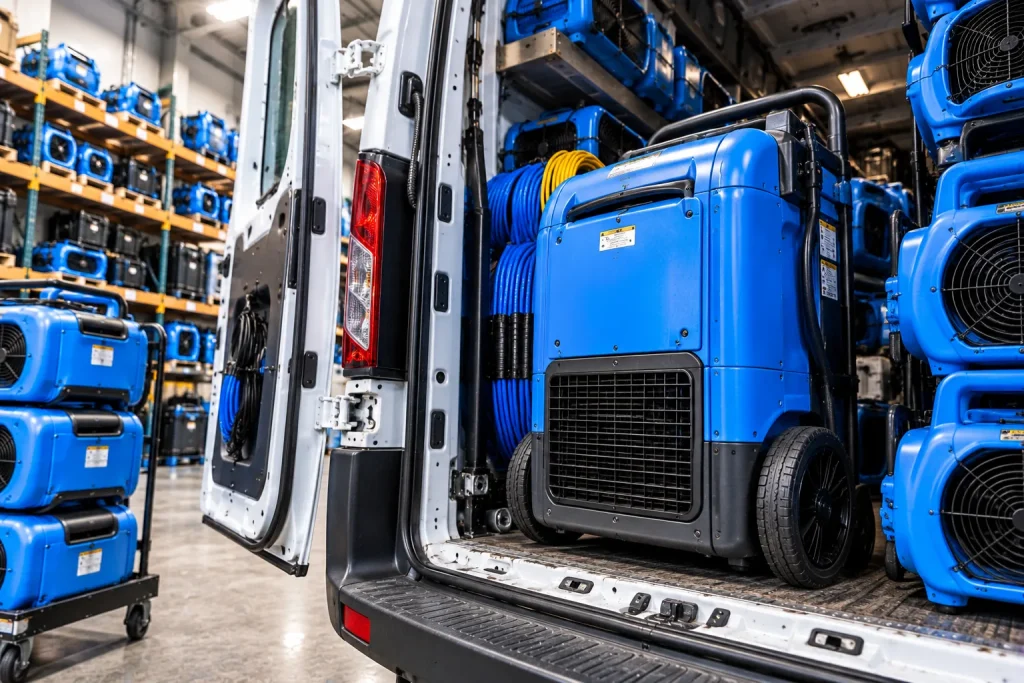
Older Buildings Require Thoughtful Recovery
Philadelphia’s commercial landscape includes numerous historic structures that continue serving modern businesses.
Recovery planning may involve:
- Preserving original architectural features
- Protecting decorative finishes
- Restoring historic masonry
- Coordinating modern building systems
- Minimizing unnecessary demolition
- Protecting occupied tenant spaces
- Maintaining structural integrity
- Supporting long-term building preservation
Whenever practical, preserving existing materials often provides greater long-term value than complete replacement.
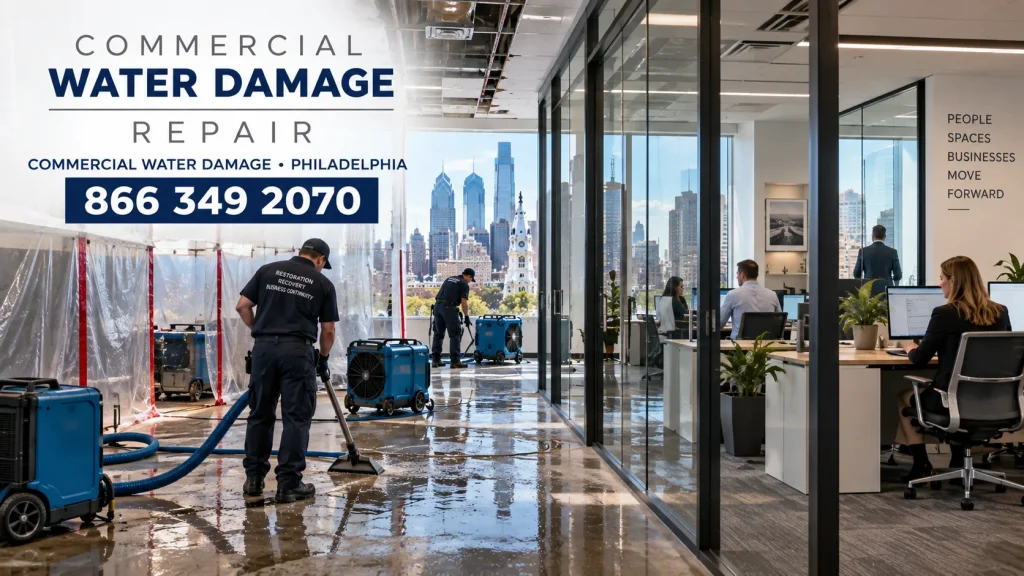
Occupied Commercial Properties Need Business Continuity
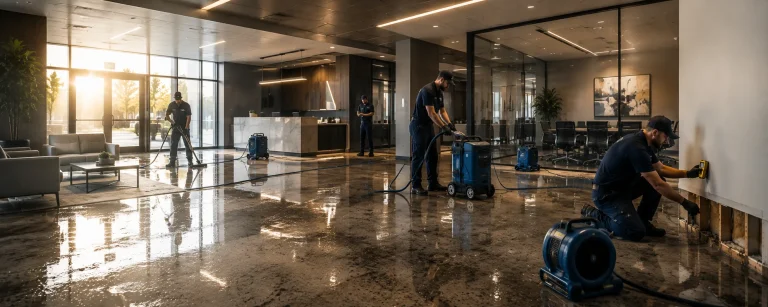
Many Philadelphia businesses continue operating during water damage recovery.
Commercial planning frequently includes:
- Temporary work areas
- Safe employee and customer access
- Tenant communication
- Phased restoration
- Overnight scheduling
- Dust containment
- Noise management
- Business continuity planning
Reducing disruption helps protect both tenants and property owners throughout the project.
Every Philadelphia Property Has Different Priorities
Recovery strategies vary depending on the type of commercial property.
Projects may involve:
- Center City office towers
- Historic commercial buildings
- Healthcare facilities
- Universities
- Manufacturing operations
- Distribution warehouses
- Hotels
- Retail centers
- Mixed-use developments
Each building presents different operational requirements, construction methods, and restoration priorities.
Modern Restoration Preserves Commercial Investments
Commercial restoration has evolved considerably in recent years.
Today’s recovery planning often emphasizes:
- Moisture mapping
- Structural drying
- Industrial dehumidification
- Material preservation
- Controlled demolition
- Building system protection
- Targeted repairs
- Long-term asset management
Rather than replacing every affected material, restoration strategies frequently focus on preserving valuable commercial assets whenever appropriate.
Questions Philadelphia Property Owners Frequently Ask
Commercial recovery involves balancing preservation with operational needs.
Important questions often include:
- How far has moisture migrated?
- Can existing materials be restored rather than replaced?
- Which building systems require immediate attention?
- Can tenant operations continue during repairs?
- How will insurance documentation support the project?
- What preventive improvements should be considered?
- How can future water losses be reduced?
- What strategy best protects long-term property value?
- How will project communication be managed?
Addressing these questions early often leads to more efficient recovery and stronger long-term building performance.
Preparing Commercial Properties for the Future
Many Philadelphia property owners use recovery projects to strengthen their buildings.
Potential improvements include:
- Roof maintenance programs
- Plumbing upgrades
- Building envelope evaluations
- Water detection technology
- Preventive HVAC maintenance
- Emergency response planning
- Routine building inspections
- Capital improvement strategies
Preparing today helps reduce future downtime while improving the property’s resilience.
Why Commercial Water Damage Focuses on Philadelphia
Philadelphia combines historic commercial architecture, modern business districts, world-renowned healthcare institutions, major universities, manufacturing, and logistics into one of the country’s most diverse commercial real estate markets.
Commercial Water Damage provides educational resources that help facility managers, property managers, building owners, developers, and commercial contractors better understand moisture migration, water mitigation, restoration planning, repair strategies, insurance coordination, and long-term building performance.
Whether responding to a roof leak in Center City, water damage inside a University City research facility, flooding at a Delaware River industrial property, or a plumbing failure affecting a historic commercial building in Old City, informed planning helps reduce downtime, preserve valuable assets, and support a faster, more efficient commercial recovery.
Commercial Water Damage Across Greater Philadelphia
Commercial properties across the Philadelphia region share many of the same water damage risks, but each market has its own building stock, climate exposure, and priorities. Explore our local guides:
- Cherry Hill, NJ — Route 70 and Route 38 offices, major retail, and healthcare across the river in South Jersey
- Conshohocken, PA — Schuylkill riverfront office towers, corporate headquarters, and mixed-use development
- King of Prussia, PA — major retail, pharmaceutical and life sciences campuses, and suburban office parks
- Wilmington, DE — banking and corporate offices, the Riverfront, and healthcare in Delaware