Water emergency? Our commercial crews respond 24/7.
Home / Repair / Washington / Kent, WA
Commercial Water Damage in Kent, WA
- 24/7 Response
- Extraction
- Structural Drying
- Restoration
What happens when you call
24/7 dispatch
Call any hour. Crews mobilize for commercial losses, including nights and weekends.
Extraction & drying
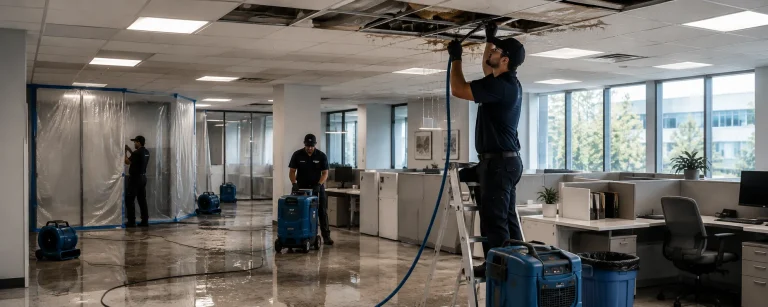
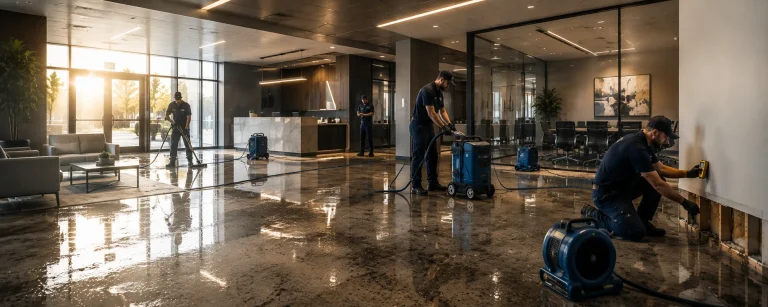
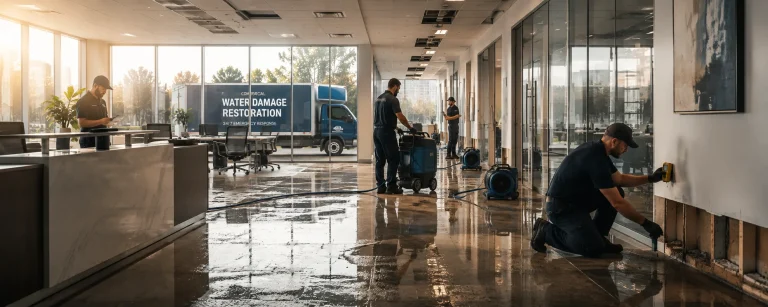
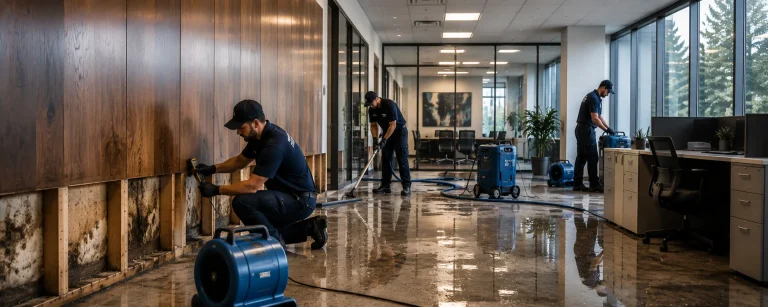
Standing water removed, then structural drying with monitored moisture readings.
Insurance-ready records
Readings, photos and scope notes documented for your carrier from day one.
Kent, WA
Commercial Water Damage in Kent Requires Protecting Warehouses, Distribution Centers, Manufacturing Plants, and Aerospace Facilities
Kent sits at the heart of the Kent Valley, one of the largest warehouse, distribution, and manufacturing concentrations on the West Coast. Freight moves through the valley between the Ports of Seattle and Tacoma, while aerospace, food processing, and advanced manufacturing operations fill large industrial buildings along the Green River.
For Kent property owners, commercial water damage usually means large footprints, high-value inventory, and operations that cannot simply close. A roof leak over racking or a sprinkler discharge in a production area can halt shipping and manufacturing within hours.
Commercial Water Damage provides educational resources that help facility managers, logistics operators, industrial property owners, and commercial contractors understand commercial water damage throughout Kent and the south King County industrial market.
The Kent Valley Is Built for Industry
Kent’s commercial real estate is dominated by large-format buildings with long roof spans, concrete slabs, and high-bay interiors.
- Regional and last-mile distribution centers
- Cold storage and food processing plants
- Aerospace and space-industry facilities
- Manufacturing and fabrication plants
- Third-party logistics warehouses
- Flex industrial and showroom buildings
- Retail and mixed-use space around Kent Station
- Medical and professional offices on the East Hill
These buildings share a common weakness: water that enters a large roof or slab can affect thousands of square feet before anyone sees it. Our warehouse water damage repair guide covers the building type in more depth.
Floodplain Soils and Long Rainy Seasons Raise the Risk
Much of the Kent Valley floor is former Green River floodplain. The river is managed by levees and by the Howard Hanson Dam upstream, but low elevations, saturated soils, and a high water table still shape how water behaves around industrial buildings.
- Ponding on flat and low-slope roofs
- Clogged roof drains and overflowing gutters
- Groundwater and surface water entering at dock doors
- Stormwater backups in site drainage systems
- Fire sprinkler discharges in racked storage
- Freeze-related pipe failures during cold snaps
- Condensation and moisture in cold storage areas
- Process water leaks in manufacturing
During prolonged atmospheric river events, several of these risks can arrive at once, which is why site drainage and roof maintenance matter as much as interior plumbing.
Concrete Slabs and Racking Hide Water
In large warehouses, water often spreads under pallets, behind racking, and across slabs with very little visible evidence. Porous goods and cardboard packaging absorb moisture quickly, and slabs can hold water long after the surface looks dry.
- Map slab moisture across the full affected aisle, not just the spill point
- Check the base of wall panels and dock areas for wicking
- Separate wet inventory quickly to limit mold growth and cross-contamination
- Inspect insulation above the roof deck where leaks started
- Record affected product and locations for claims
Early mapping keeps decisions about inventory, drying, and repairs grounded in measurements rather than guesswork.
What Happens After Water Enters a Kent Commercial Building
The first decisions after a loss shape the cost of everything that follows. In Kent, as everywhere, the goal is to stop the spread, measure it accurately, and dry what can be saved.
- Stop the source and extract standing water from floors, mechanical rooms, and lower levels
- Map wet materials with meters and thermal imaging instead of guessing from visible stains
- Set up building drying equipment and track readings until materials reach dry standard
- Remove only materials that cannot be restored, keeping demolition controlled and documented
- Organize records for the carrier using a clear claims process
- Plan repairs and reconstruction around tenant schedules and building operations
Handled this way, many losses that look like a gut-and-replace job end up as a drying and targeted repair project.
Keeping Freight Moving During Restoration
Kent operations serve customers across the region, so recovery is often planned around shipping schedules.
- Isolating affected aisles or zones with containment
- Relocating inventory to dry sections of the building
- Running drying equipment around dock activity
- Scheduling roof repairs during dry weather windows
- Coordinating with tenants, carriers, and insurers
- Maintaining safe forklift and pedestrian traffic routes
A phased approach can keep a large portion of a distribution center running while the affected area is dried and repaired.
Questions Kent Property Owners Frequently Ask
Is our Kent warehouse in a flood risk area?
Many valley properties sit in areas that were historically part of the Green River floodplain. Check current FEMA flood maps and local flood information for your parcel, and review what your policy covers for flood versus other water damage.
How long does a warehouse slab take to dry?
It depends on slab thickness, how long water sat, vapor retarders, and site conditions. Slabs can take much longer than walls or finishes, so readings should confirm dryness before flooring or storage is restored.
Can wet cardboard inventory be saved?
Clean-water exposure caught very quickly sometimes allows goods to be salvaged, but packaging usually cannot. Product type, water category, and customer requirements drive the decision.
Does a sprinkler discharge count as a flood?
Generally no. A sprinkler discharge is usually treated as a sudden water release rather than flood, but coverage depends on your specific policy wording.
Commercial Water Damage Across Greater Seattle
Kent is part of the greater Seattle commercial market. For the regional picture, read our Seattle commercial water damage guide, or compare nearby markets:
- Bellevue, WA — Class A office towers, corporate headquarters, and technology tenants on the Eastside
- Everett, WA — aerospace manufacturing, Paine Field, the waterfront, and healthcare
- Redmond, WA — technology campuses, labs, and data-heavy office space along the Overlake corridor
- Tacoma, WA — port logistics, manufacturing, healthcare, and historic downtown commercial buildings
Why Commercial Water Damage Focuses on Kent
Kent is a critical link in the Pacific Northwest supply chain. Its warehouses, aerospace facilities, and manufacturing plants combine large roofs, floodplain soils, high-value inventory, and time-sensitive operations.
Whether you are responding to a roof leak over high-bay racking, a sprinkler discharge in a production area, or water entering at a loading dock after heavy rain, informed planning helps protect inventory, reduce downtime, and return the building to service faster.
Water Emergency?
Our commercial response team is available 24/7 for water extraction, structural drying and restoration.
Our Services
Talk To A Specialist
Need help with a water loss right now?
Call our commercial team for extraction, drying and restoration planning built around your building and your operations.