Commercial sewage backup cleanup is one of the most serious jobs a property can face. Sewage carries bacteria, viruses, and other hazards that can make people sick. When it backs up into a restaurant, office, store, or apartment building, it does not just damage floors and walls. It turns the space into a health risk. So the cleanup must follow strict steps to protect workers, occupants, and the building. This guide explains how professionals manage contamination from the first call to the final clearance.
Read on to see how a safe, professional cleanup unfolds.
Why Sewage Is Different From Clean Water
Water damage comes in three categories. Clean water from a supply line is Category 1. Gray water from appliances or drains is Category 2. Sewage is Category 3, often called black water. It carries the highest risk. Because of this, materials it touches are often removed, not dried. In addition, workers wear protective gear, and crews seal off the area.
Common Causes of Commercial Sewage Backups
Backups happen for many reasons:
- Grease buildup in restaurant drain lines
- Tree roots breaking into sewer pipes
- Heavy rain overwhelming city sewers
- Collapsed or sagging pipes under the slab
- Wipes and other items people flush by mistake
- Failed sewage ejector pumps in basements
Knowing the cause helps prevent the next backup.
Step 1: Protect People First
Safety comes before cleanup. First, move people away from the affected area. Close the space to staff, tenants, and customers. Turn off power if water reaches outlets or equipment. Next, stop using sinks and toilets that drain into the blocked line. Then call a plumber and a restoration team. Do not try to clean sewage without proper gear.
Step 2: Containment in Commercial Sewage Backup Cleanup
Containment keeps sewage and its germs from spreading. Crews seal off the area with plastic sheeting and tape. They may also run HEPA-filtered air scrubbers set to pull air into the zone, so airborne particles stay inside. In addition, they create a clean entry and exit path. These steps are central to every commercial sewage backup cleanup.
Step 3: Stop the Source
The plumber must clear or repair the line before cleanup can finish. Otherwise, sewage may back up again. So restoration and plumbing often happen side by side. The plumber may jet the line, remove roots, or replace a broken section of pipe. Then the restoration crew can move forward safely.
Step 4: Remove Standing Sewage
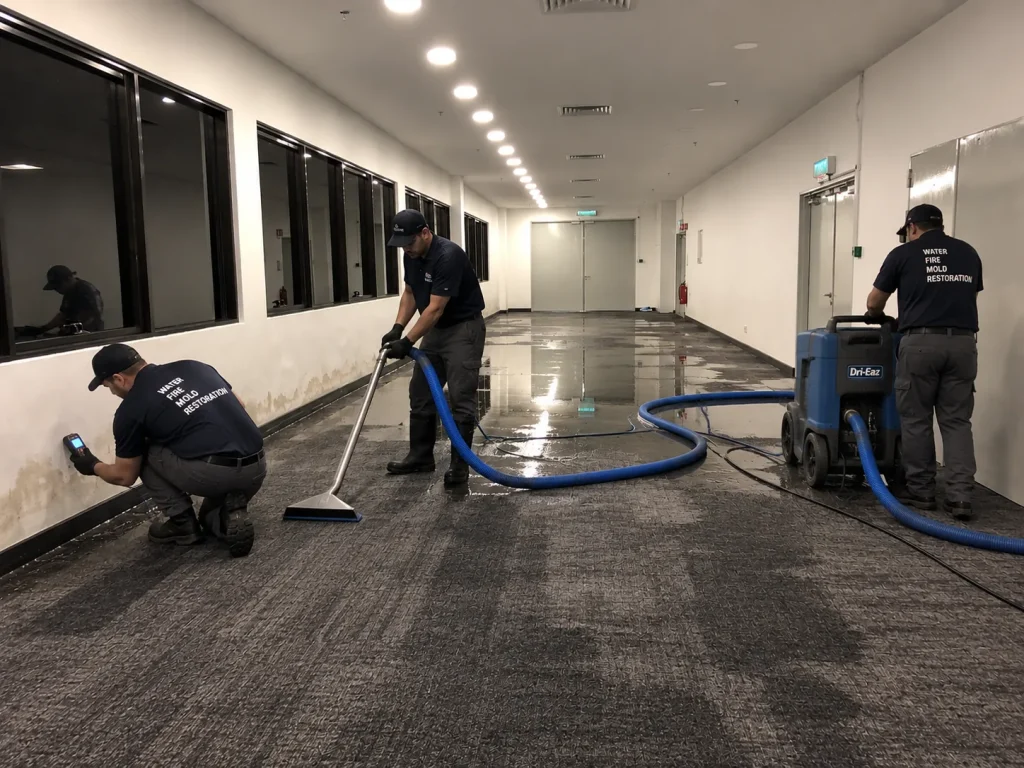
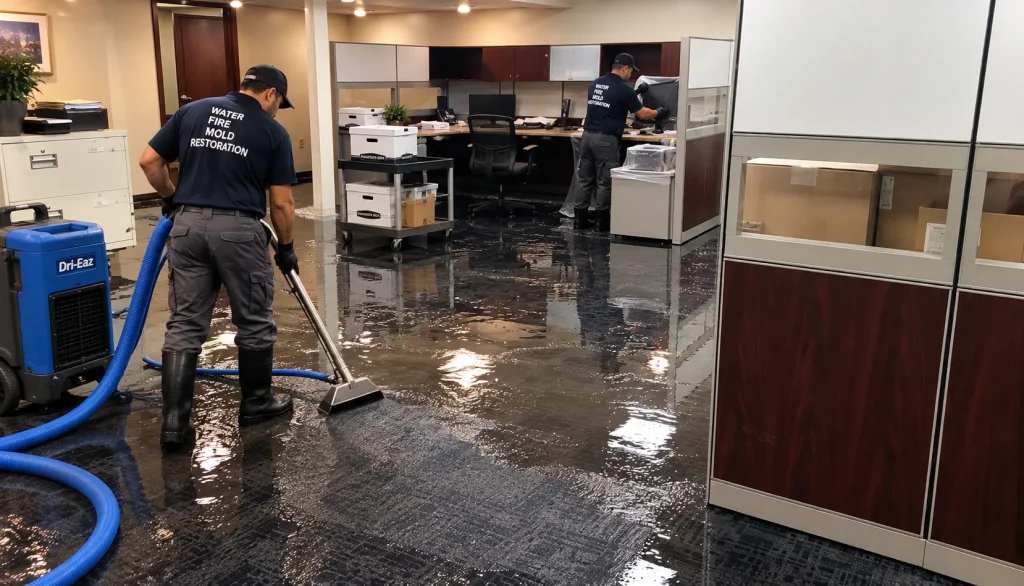
Next, crews extract standing sewage with pumps and truck-mounted units. They send the waste to proper disposal, not into storm drains. This step removes most of the contamination quickly. However, it does not clean the materials that soaked it up.
Step 5: Remove Affected Materials
Crews can rarely save porous materials that touched sewage. These include carpet, carpet pad, drywall below the water line, insulation, and some furniture. Crews cut and bag these materials inside containment. As a result, the contamination leaves the building in sealed bags. However, crews can usually clean non-porous items like metal and sealed concrete.
Step 6: Sanitizing During Commercial Sewage Backup Cleanup
After removal, crews clean every remaining surface. They scrub floors, wall cavities, and framing. Then they apply disinfectants approved for sewage cleanup. The goal is to remove both visible soil and harmful microbes. The U.S. Environmental Protection Agency lists registered disinfectants and offers guidance on safe use.
Step 7: Dry the Structure
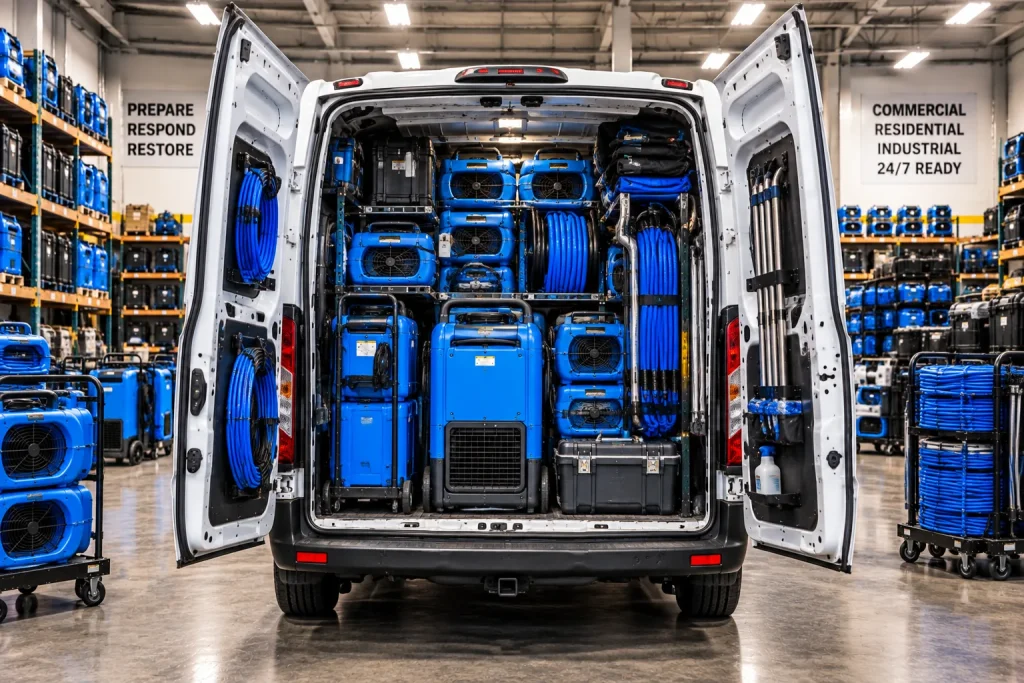
Once cleaned, the remaining structure must dry. Fans and dehumidifiers go in next, and a technician logs readings daily. Drying after sewage follows the same science as other water losses. However, it starts only after contaminated materials are gone and surfaces are sanitized.
Protective Gear for Cleanup Crews
Workers face real risks in sewage. So they wear gloves, boots, eye protection, and suits that keep fluids off their skin. Many also wear respirators. In addition, crews wash and remove gear before leaving the work area. These habits keep germs from spreading to clean parts of the building.
Commercial Sewage Backup Cleanup in Restaurants
Restaurants face extra rules. Staff must throw away any food that touched sewage or sat in the affected area. Crews then sanitize prep surfaces, equipment, and storage. In addition, the local health department may need to inspect before reopening. Also, have a plumber service grease traps and drain lines to prevent another backup.
Commercial Sewage Backup Cleanup in Multi-Tenant Buildings
In shared buildings, sewage may affect several suites. A backup in one unit may come from a shared line. So the property manager must coordinate tenants, the plumber, and the restoration team. Clear notices help tenants know which areas are closed and for how long. In addition, shared restrooms may need to close during cleanup.
Verifying the Space Is Safe
Before people return, the team verifies the space. Crews inspect for remaining soil and odor. In some cases, a third-party hygienist may test surfaces. Moisture readings must also meet drying goals. Only then should rebuilding begin. This step protects the health of everyone who uses the space.
Commercial Sewage Backup Cleanup and Insurance
Sewage coverage varies. Some policies cover backups only with a special endorsement. So check your policy early. Take photos before cleanup. Keep the plumber’s report on the cause. Also, save restoration logs, disposal records, and invoices. Strong records help your claim.
Odor Control After a Backup
Sewage leaves a strong smell. Even after cleaning, odor can linger in wall cavities, subfloors, and HVAC ducts. So crews treat odor at its source. First, they remove every contaminated material. Next, they clean and sanitize hidden surfaces. Then they may use air scrubbers or other odor control tools. Covering the smell with fragrance does not work. Removing the cause does.
Commercial Sewage Backup Cleanup Costs
Costs depend on how far sewage spread and what it touched. A small restroom backup costs far less than a flooded basement or a full dining room. Removal of drywall, flooring, and insulation adds labor and disposal fees. Containment and protective gear add more. In addition, plumbing repairs to the line are usually a separate bill. Ask for a written scope for your commercial sewage backup cleanup, so you can see each cost clearly.
Preventing Future Backups
Prevention saves money and stress. For example, schedule regular drain cleaning in restaurants. Install backflow valves where sewers can surge. Inspect lines with a camera every few years. In addition, train staff on what not to flush or pour down drains. Our page on commercial sewage cleanup covers more prevention tips.
Common Mistakes to Avoid
- Letting staff clean sewage without protective gear
- Drying carpet that touched sewage instead of removing it
- Skipping containment around the work area
- Rebuilding before the line is repaired
- Reopening without verifying the space is clean
FAQ on Commercial Sewage Backup Cleanup
Can carpet be saved after a sewage backup?
Usually not. Porous materials that touched sewage are typically removed.
Is sewage backup covered by insurance?
It depends on your policy. Many require a sewer backup endorsement.
How long does commercial sewage backup cleanup take?
Small areas may take a few days. Larger losses can take a week or more before rebuilding.
Get Safe, Professional Help
Sewage is a health hazard, not a DIY job. Read our guide to when a building is ready to reoccupy, or reach our emergency team now.
Related Reading
- Mitigation vs. Restoration — which services your building needs.
- Healthcare Facility Water Damage — planning around patient care.
- Commercial Water Extraction — why removing standing water is only the first step.
- Dry Does Not Mean Ready — when a building is actually safe to reoccupy.
- Commercial Restoration Documentation — why the evidence of the work matters.
- Partial Occupancy During Restoration — keeping the business operating during repairs.