
Boston office water damage can turn a normal workday upside down. A burst pipe in a winter cold snap, a sprinkler head knocked by a cart, or a leak from the office kitchen one floor up can soak desks, carpets, files, and electronics in minutes. In Boston, where many offices sit in older buildings downtown, in the Back Bay, and along the Seaport, water can spread in unusual ways. A clear plan for cleanup and drying helps teams get back to work faster. This guide walks through that plan step by step.
It is meant for office managers, building engineers, and property owners.
Common Causes of Office Water Damage in Boston
Boston offices face several common water threats. Frozen and burst pipes are a major risk during winter, especially in older buildings with pipes near exterior walls. Sprinkler leaks and accidental discharges happen year round. Kitchen and restroom supply lines fail often. In addition, nor’easters can drive rain through roofs and windows. Knowing these risks helps you prepare.
First Hour Priorities
The first hour sets the tone for recovery. Start by stopping the flow and killing power to any soaked circuits, as long as you can do so safely. Then move people away from hazards. Next, protect electronics, files, and furniture by moving them or covering them with plastic. Finally, call a commercial restoration company with office experience. Quick steps limit how far the damage spreads.
Boston Office Water Damage Assessment
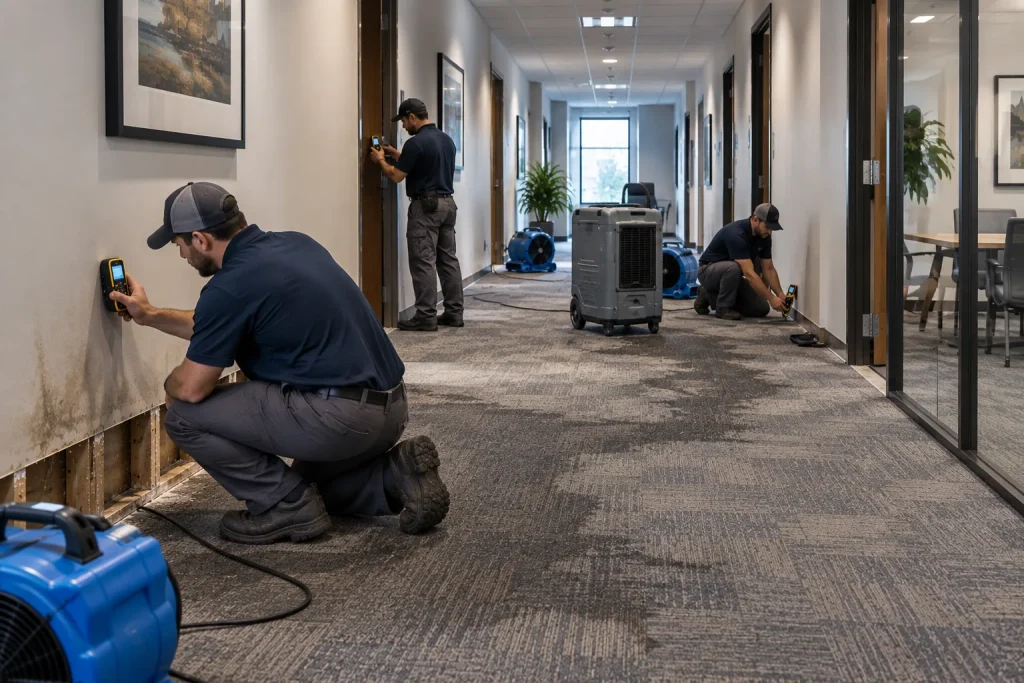
On arrival, technicians chart the wet zones. Moisture meters and infrared cameras reveal soaked carpet, walls, and ceilings. In addition, they check offices on floors below, since water often travels down. The result is a clear picture of affected areas, which drives the cleanup plan and the drying setup.
Boston Office Water Damage Cleanup Floor by Floor
In multi-floor buildings, it also helps to plan cleanup floor by floor. Each floor gets its own crew lead, equipment list, and daily readings. As a result, it is easy to see progress and reopen dry floors sooner. In addition, this approach keeps elevators and stairwells from getting jammed with equipment.
Water Removal and Carpet Decisions
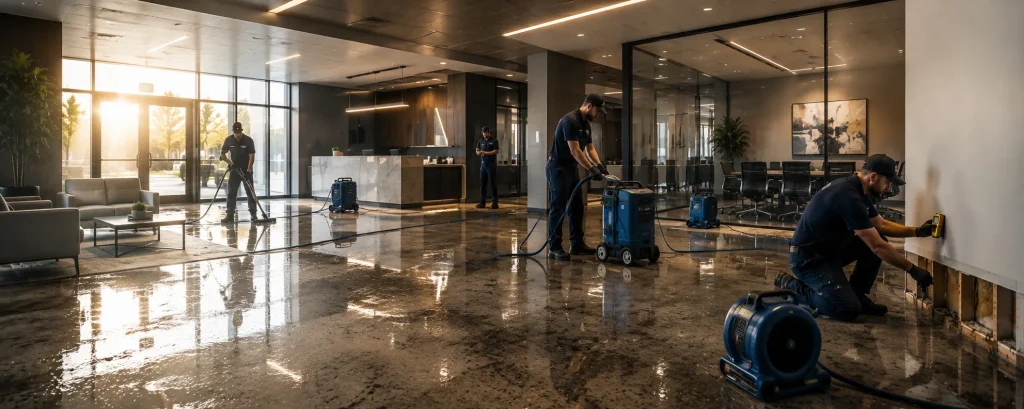
Typically, office carpets hold a lot of water. Crews extract as much as they can with powerful vacuums. Then they decide whether to dry the carpet in place or remove it. Clean water on carpet tiles can often be dried. However, dirty water or soaked pad usually means removal. The choice depends on the source of the water and how long it sat.
Boston Office Water Damage and Drywall
Drywall wicks water upward from wet floors. Technicians test walls to see how high the water traveled. In some cases, they cut away the bottom few inches to let the wall cavity dry. In others, they drill small holes behind baseboards and blow dry air inside. The goal is to remove only what is needed while drying everything else completely.
Protecting Records and Electronics
Of course, offices are full of important files and costly gear. Wet paper records can be frozen and dried by specialists. Computers, phones, and servers should not be turned on until checked by IT or a technician. In addition, keep a log of all affected items for insurance. Fast action saves more records and equipment.
Structural Drying Setup
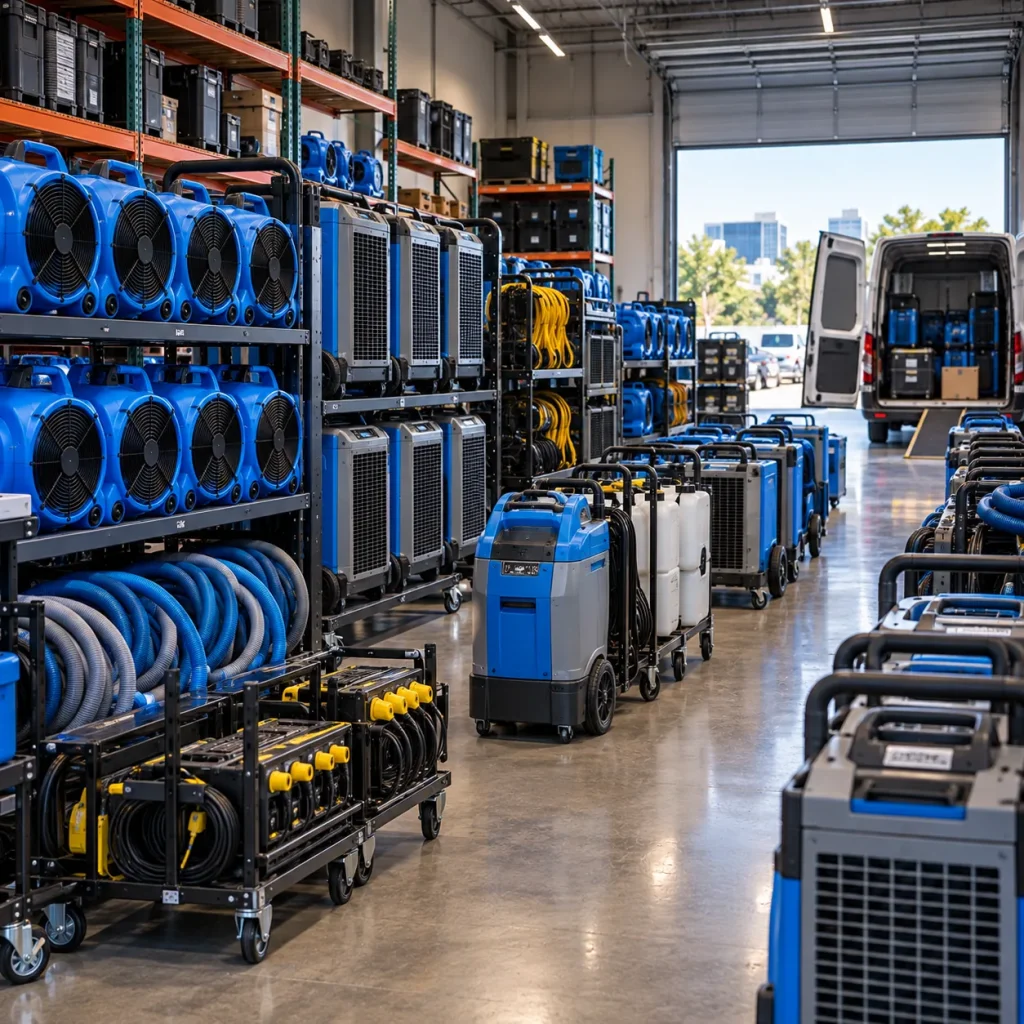
After water removal, crews set up drying equipment. Air movers push air across wet surfaces, and dehumidifiers pull water out of the air. In older Boston buildings with plaster and brick, drying may take longer and need careful monitoring. Our guide to structural drying explains how crews prove a space is dry.
Boston Office Water Damage in Winter
Winter adds challenges. Cold outdoor air can make drying slower, and frozen pipes may burst in more than one place. So crews may add heat to speed evaporation and check other pipes for damage. In addition, building staff should keep heat on and open cabinet doors under sinks during cold snaps to prevent repeat freezes.
Historic Buildings and Boston Office Water Damage
Many Boston offices sit in historic buildings with plaster, wood trim, and brick walls. These materials need gentle handling. For example, crews may dry plaster in place instead of removing it, and they may protect original woodwork during cleanup. In addition, some buildings have preservation rules. So the restoration team should talk with the owner before any demolition. Careful work keeps the building’s character while fixing the damage.
Air Quality During Drying
Staff often worry about the air when drying equipment runs. Air scrubbers with HEPA filters help keep dust and spores out of nearby work areas. Also, crews keep containment closed and clean daily. If anyone notices odors or symptoms, they should report it so the team can check the area.
Working With Building Management
Large Boston office buildings often have strict rules for contractors. These may cover work hours, elevator use, and insurance paperwork. So the restoration company should coordinate with building management from the start. Following the rules avoids delays and keeps tenants on other floors happy.
Keeping Teams Working
Meanwhile, many offices cannot afford to close. So restoration teams contain work areas and let staff keep working nearby. Loud work can be scheduled for evenings or weekends. In some cases, teams move to conference rooms or other floors for a few days. Clear communication helps everyone adjust.
Boston Office Water Damage Documentation
Above all, good records support insurance claims and protect the building owner. Take photos before cleanup starts. Keep moisture readings, equipment logs, and a list of removed materials. In addition, note the cause of the water. Organized records help the claim move faster.
Repairs and Return to Work
Once readings confirm the space is dry, repairs begin. Drywall, paint, carpet, and ceiling tiles go back in. Then furniture and equipment return. Finally, staff move back. A final walk-through confirms that everything is clean, dry, and working before the job closes out.
Moving Teams Back In
Before staff return, check that the space is clean, dry, and safe. Test outlets and lights, run the HVAC, and make sure there are no odors. Then move furniture and equipment back in a set order, so desks and IT come first. A smooth move-in helps teams get back to normal work quickly. Finally, ask staff to report any new stains, smells, or damp spots in the first few weeks, since late signs can point to missed moisture.
Preventing the Next Loss
After recovery, look at what caused the damage. Insulate pipes near exterior walls, add leak sensors near kitchens and restrooms, and check sprinkler heads in busy areas. In addition, keep a shutoff map handy so staff can act fast. The City of Boston shares winter safety tips for buildings.
Office Cleanup Checklist
- Stop the water and protect people
- Move or cover electronics and files
- Map damage, including floors below
- Plan cleanup floor by floor
- Decide what to dry and what to remove
- Set up drying and track readings daily
- Keep teams working where possible
- Document everything for insurance
Get Your Office Back on Track
A clear plan for cleanup and drying gets Boston offices back to work faster. For help at your building, visit our Boston water damage services or reach out for an assessment.
Related Reading
- Restoration in Occupied LA Buildings — working around tenants.
- Office Water Damage Repair — cleanup in an occupied building.
- Commercial Structural Drying — how contractors prove a building is dry.
- Sprinkler Water Damage Cleanup — restoring multi-floor buildings.
- Dry Does Not Mean Ready — when a building is actually safe to reoccupy.
- Denver Burst Pipes — responding to pipe and sprinkler water.