
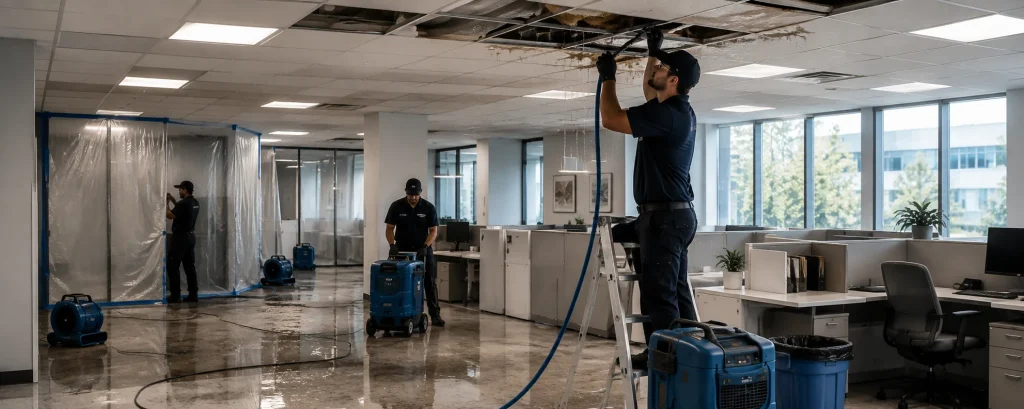
Sprinkler water damage cleanup grows complicated fast in a multi-floor commercial building. A single broken head on the fifth floor can send water down through ceilings, light fixtures, walls, and elevator shafts to every level below. By the time staff shut the valve, water may already reach several tenants. Each floor has its own damage, its own people, and its own schedule. So crews organize the cleanup floor by floor, in the right order. This guide explains how to restore a multi-floor building after a sprinkler discharge.
Building owners, property managers, and facility engineers will find a practical plan below.
How Sprinkler Water Travels Through a Building
Water always seeks the lowest point. In a multi-story building, it follows pipes, conduits, shafts, and gaps around penetrations. It soaks ceiling tiles and runs along beams. It drips through light fixtures and outlets. Then it pools on the next floor down and starts again. As a result, damage on lower floors can be larger than at the source.
Why Sprinkler Water Needs Special Care
Sprinkler water sits in pipes for years. Over time, it picks up rust, oils, and bacteria. So it often looks dark and smells bad. Many restorers treat it as gray water or worse. That means more cleaning and, sometimes, more material removal than a clean supply line leak.
Step 1: Stop the Flow and Restore Fire Protection
First, shut the control valve for the affected zone. Then call the fire alarm company and a licensed sprinkler contractor. While the zone is off, the building may need a fire watch. Fire codes, including NFPA standards, set rules for impaired systems. The sprinkler contractor repairs the head or pipe and puts the system back in service as soon as possible.
Step 2: Walk Every Floor Below the Source
Next, the restoration team inspects every floor beneath the break. They check ceilings, walls, floors, shafts, and electrical rooms. They also check elevator pits and parking levels. Each floor gets its own notes, photos, and moisture readings. This survey sets the scope of sprinkler water damage cleanup for the whole building.
Step 3: Protect Electrical and Elevators
Water and electricity are a dangerous mix. So the building engineer should shut off power to wet areas. The engineer may also need to take elevators out of service if water reached the shaft or pit. An electrician and elevator technician should inspect before anything restarts. These steps protect people and expensive equipment.
Sprinkler Water Damage Cleanup on Each Floor
Once the building is safe, cleanup begins. On each floor, crews:
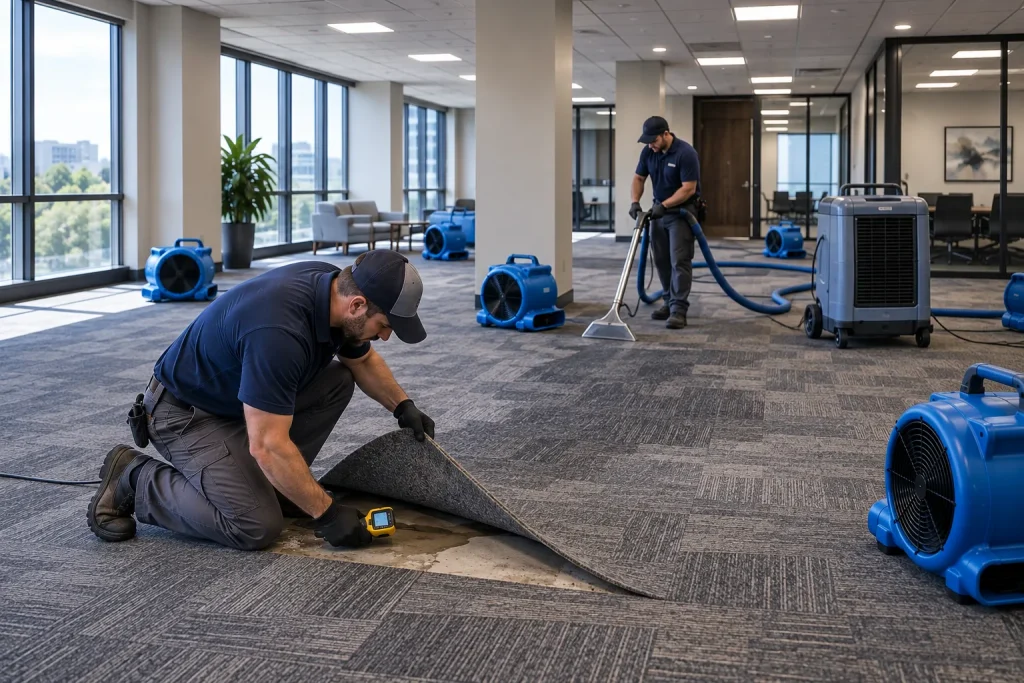
- Extract standing water from carpet and hard floors
- Remove wet ceiling tiles and soaked insulation
- Cut out drywall that cannot dry in place
- Move or protect furniture, files, and electronics
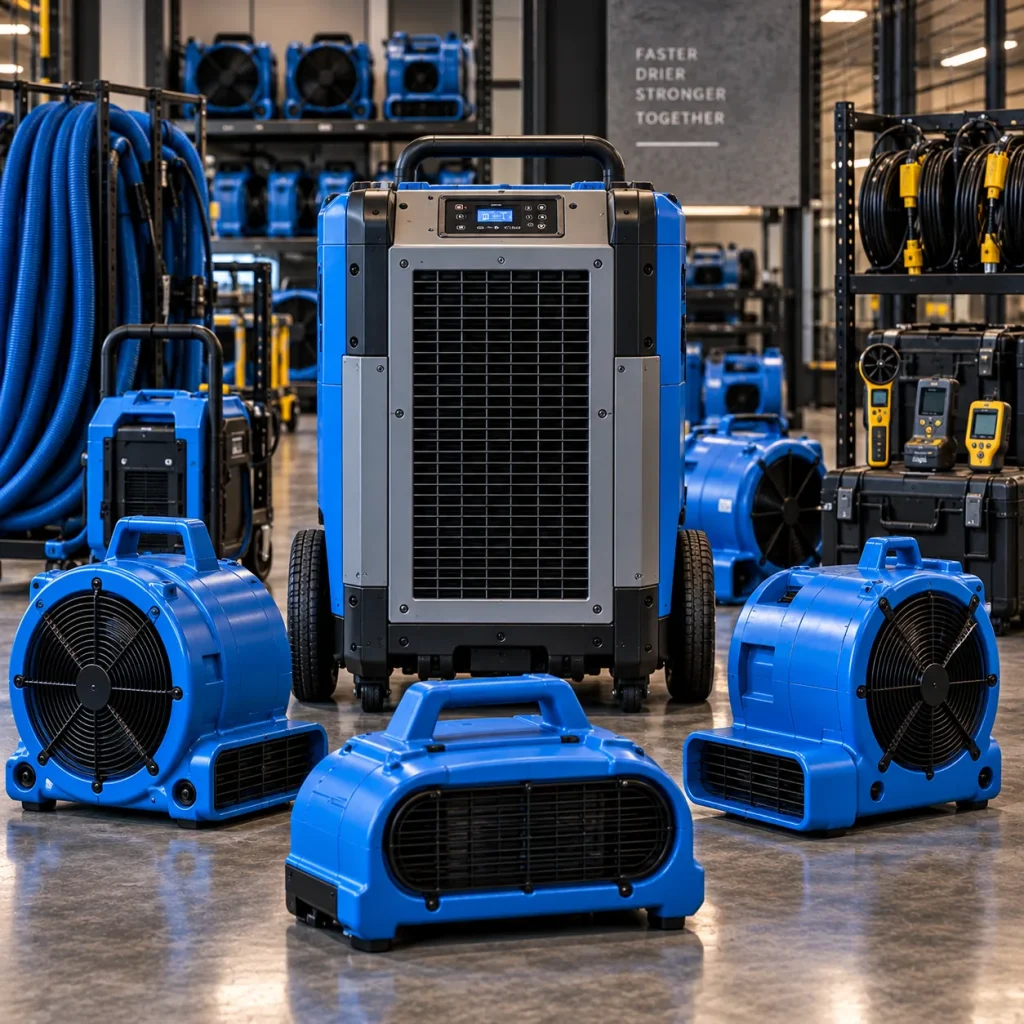
- Set up drying equipment
Work usually starts at the source floor and moves downward, following the water.
Sprinkler Water Damage Cleanup Above the Ceiling
The space above the ceiling grid holds wiring, ducts, and insulation. Water often collects here. So crews remove wet tiles, open the plenum, and dry it with air movers. In addition, they check ducts for water. Wet duct insulation may need replacement. Skipping this step can leave hidden moisture that leads to mold.
Managing Tenants During Sprinkler Water Damage Cleanup
Multi-floor losses affect many tenants at once. Each one has questions. So the property manager should name a single contact for updates. Send daily notices with the schedule for each floor. Also, explain which areas are closed and which are safe. Good communication reduces stress and keeps tenants patient.
Phasing Sprinkler Water Damage Cleanup
Not every floor can be worked on at the same time. Equipment, crews, and power are limited. So the team sets priorities. Floors with the most damage or the most critical uses go first. For example, a data room or medical suite may come before a storage floor. Phasing keeps the building running as much as possible.
Sprinkler Water Damage Cleanup and Insurance
Most property policies cover sudden sprinkler discharges. However, the landlord’s policy and each tenant’s policy may cover different things. The building policy often covers the structure. Tenant policies cover their contents and business income. So keep separate records for each floor and each tenant. Clear documentation helps every claim move faster.
Stairwells, Shafts, and Parking Levels
Water does not stop at tenant spaces. It also runs down stairwells, pipe chases, and elevator shafts. In addition, it may pool in parking garages or loading areas at the bottom of the building. These shared spaces are easy to miss. So the restoration team should check every one. Wet stair treads can be slippery. Wet shafts can hide water behind walls for weeks. A full check prevents surprises later.
Protecting Contents and Records
Tenants often store files, computers, and inventory in their suites. Water from above can ruin them quickly. So crews move dry items away from wet zones first. They cover items that cannot move. Wet paper records can be frozen and sent to a document recovery service. Meanwhile, electronics should stay off until a technician checks them. Careful handling saves a lot of value.
Sprinkler Water Damage Cleanup Timeline
- Day one: stop the flow, restore fire protection, and survey every floor
- Days one and two: extract water and remove wet materials
- Days two to six: dry each floor and monitor readings
- Week two and beyond: rebuild floor by floor
Every building is different. Still, this rough timeline helps tenants plan. Clear sprinkler water damage cleanup schedules also help insurers track progress.
Restoring Floor by Floor
After drying is verified, rebuilding begins. New gypsum board, tiles, insulation, and floor coverings go in, followed by paint and a final clean. Floors can reopen one at a time as they finish. In addition, the fire alarm and sprinkler systems should be tested before final sign-off.
Keeping the Building Open
Many multi-floor buildings stay partly open during cleanup. Floors with no damage can often keep working. However, tenants need safe paths, working elevators, and clear signs. So the property manager should map open routes each day. In addition, noisy work may move to nights or weekends to limit disruption.
Preventing Future Discharges
Many sprinkler breaks are preventable. Keep heads clear of boxes and equipment. Protect pipes from freezing in cold spaces. Train maintenance staff to avoid hitting heads with ladders or lifts. Also, follow the inspection schedule for the sprinkler system. Our page on sprinkler system water damage shares more tips.
Common Mistakes to Avoid
- Inspecting only the floor where the break happened
- Restarting elevators before they are checked
- Leaving wet insulation above the ceiling
- Treating sprinkler water as clean
- Failing to keep separate records for each tenant
FAQ on Sprinkler Water Damage Cleanup
Why is damage worse on lower floors?
Water collects and spreads as it travels down through the building.
Do I need a fire watch after a sprinkler break?
Often, yes, while the system is out of service. Check with your fire department.
How long does sprinkler water damage cleanup take?
Drying often takes several days per floor. Full restoration can take weeks.
Restore Every Floor With Confidence
A floor-by-floor plan keeps your building moving. Learn about fire sprinkler discharges, or call our multi-floor response team today.
Related Reading
- Multi-Tenant Losses in Minneapolis — managing many tenants at once.
- Commercial Structural Drying — how contractors prove a building is dry.
- Office Water Damage Repair — cleanup in an occupied building.
- Operational Choke Points — small damage that can shut down a property.
- Commercial Restoration Sequencing — why the order of recovery matters.
- Partial Occupancy During Restoration — keeping the business operating during repairs.