
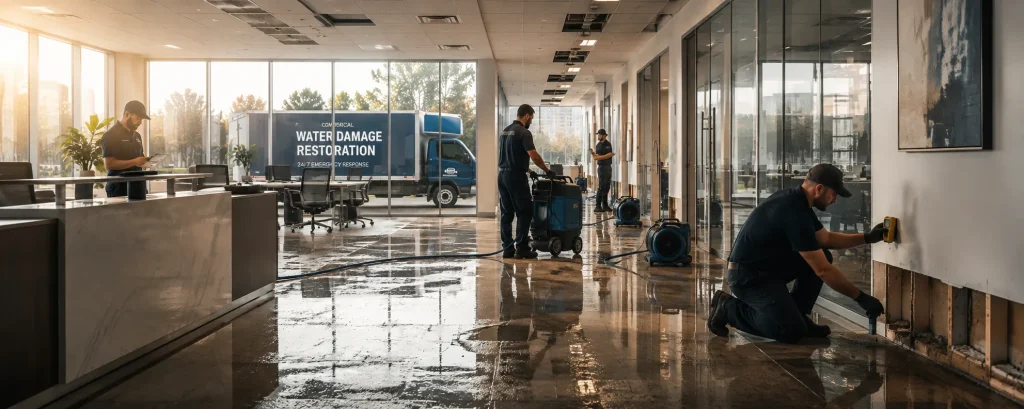
Minneapolis commercial water damage gets complicated when a building has many tenants. A frozen pipe in one suite can flood the offices below. Or a roof leak during spring thaw can soak several stores at once. Even a sprinkler line can burst in a stairwell and affect every floor. Each tenant has its own business, lease, and insurance. Meanwhile, the landlord must protect shared systems and keep the building running. This guide explains how to manage a multi-tenant water loss in Minneapolis from the first call to the final repair.
Property managers, building engineers, owners, and tenants will find a practical framework below.
Why Minneapolis Buildings Face Unique Risks
Minnesota winters are long and cold. Pipes in exterior walls, loading docks, and unheated stairwells can freeze and burst. Heavy snow builds ice dams that push water under roofing. Then spring thaw sends meltwater into basements and through aging roofs. In addition, many downtown buildings are decades old, with older plumbing and connected skyways. All of this raises the risk of Minneapolis commercial water damage.
Step 1: Stop the Water and Protect Shared Systems
The landlord’s first job is to stop the source. Shut the water or sprinkler valve. Then protect shared systems. Check electrical rooms, elevator pits, telecom rooms, and mechanical spaces. Water in these areas can shut down the whole building. So the building engineer should inspect them right away.
Step 2: Survey Every Suite Hit by Minneapolis Commercial Water Damage
Next, the restoration team walks every suite near the source. They check the floors above, below, and beside the leak. They take photos and moisture readings in each suite. Then they rank suites by how badly they were hit and how critical they are. A clinic or server room, for instance, jumps ahead of a storage suite. This survey sets the plan for Minneapolis commercial water damage recovery.
Step 3: Communicate With Tenants Early
Tenants need answers fast. They want to know what happened, when crews will arrive, and when they can work again. So send a short notice right away. Then send daily updates. Name one contact person for questions. In addition, spell out which spaces are off limits and which are open. Clear communication keeps tenants calm and reduces disputes.
Understanding Who Pays
Leases usually split responsibility. Owners typically handle the shell, roof, and base building systems. Tenants typically handle their build-outs, furnishings, stock, and lost revenue. Still, leases vary. So read every lease now and send tenants a one-page recap. This avoids confusion when bills arrive.
Minneapolis Commercial Water Damage and Insurance
Multi-tenant losses often involve several insurers. In most cases, the owner’s insurer pays for the building itself. Meanwhile, each tenant’s carrier covers its contents and lost income. For that reason, log every suite on its own. Track moisture readings, photos, equipment, and invoices by tenant. In addition, schedule joint walk-throughs with adjusters when possible. Clear records speed up every claim.
Phasing Minneapolis Commercial Water Damage Cleanup
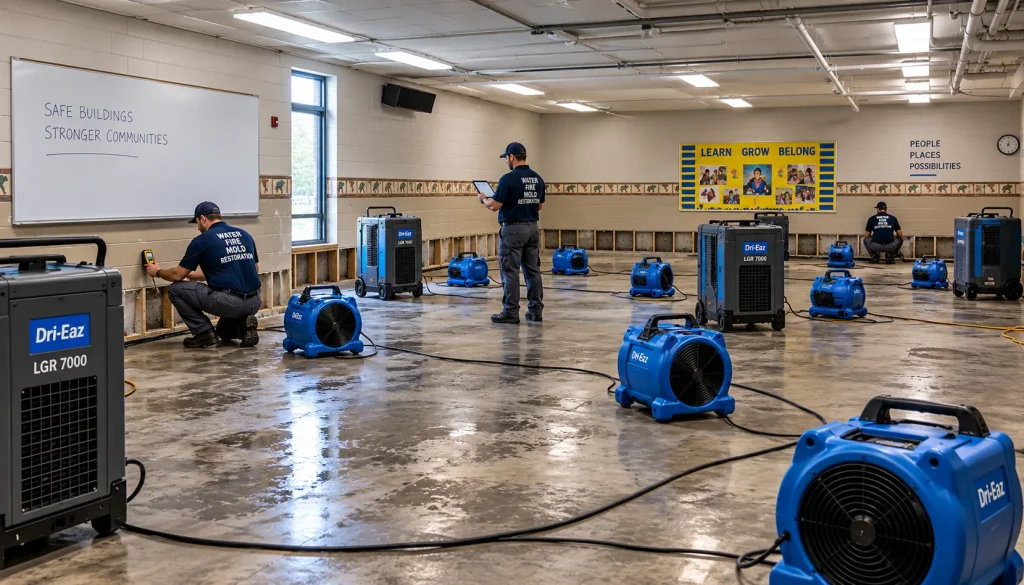
Crews and equipment are limited, so the work must be phased. Usually, shared spaces and the most damaged suites go first. Then crews move through the building in a set order. Each suite gets extraction, material removal, and drying. Technicians track progress daily in every space. Phasing keeps as much of the building open as possible.
Drying Minneapolis Commercial Water Damage in Winter
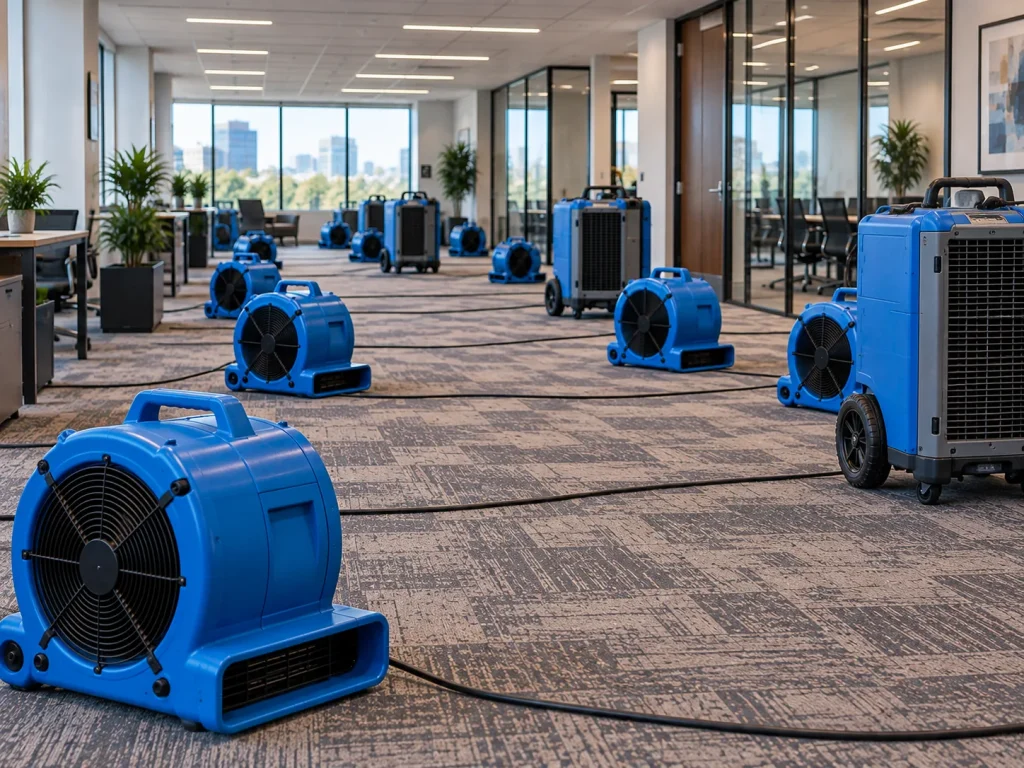
Winter drying needs care. Outdoor air is cold and dry, but buildings are sealed and heated. Crews balance heat, airflow, and dehumidification. They also protect pipes and equipment from freezing if heat is off in damaged areas. In addition, doors propped open for hoses can let cold air in, so crews manage access carefully.
Minneapolis Commercial Water Damage in Skyway-Connected Buildings
Downtown skyways connect many buildings. A water loss near a skyway can affect foot traffic, retail tenants, and neighboring properties. So coordinate with adjacent owners if water reaches shared corridors. In addition, post signs to guide the public around closed areas. Keeping skyway routes open helps tenants keep their customers.
Ice Dams and Roof Leaks
Ice dams are a classic Minneapolis problem. Heat escapes through the roof and melts snow. Then the water refreezes at the cold edge and blocks drainage. As a result, meltwater backs up under the roofing and drips into top-floor suites. So after a big snow, check ceilings for stains. Clear roof drains and gutters. In addition, call a roofer to remove dangerous ice safely. Fixing insulation and ventilation can prevent repeat leaks.
Watching Vacant Suites
Empty suites are easy to forget. However, they are often where pipes freeze first. No one is there to notice a leak, so water can run for days. So keep heat on in every vacant space. Check them on a regular schedule. Also, consider leak sensors that send alerts to the engineer’s phone.
Restoring Suite by Suite
After drying is verified, repairs begin. Landlord crews repair the shell, shared systems, and common areas. Tenants may hire their own contractors for interior finishes. So coordinate schedules to avoid conflicts. Each suite should reopen only when it is dry, clean, and safe. Before any suite reopens, tour it with the tenant.
Keeping Tenants in Business
Tenants lose money every day they cannot work. So help them stay open where you can. Offer an empty suite as a temporary office. Keep lobbies and restrooms open. Also, share drying timelines, so tenants can plan staff and deliveries. Small gestures build trust during a hard time.
Permits and Inspections
Many repairs need permits, especially electrical, plumbing, and structural work. The City of Minneapolis handles building permits and inspections. Plan inspections into the schedule. In addition, fire alarm and sprinkler systems must be tested before suites reopen.
Preventing Minneapolis Commercial Water Damage
Prevention saves money and stress. Insulate pipes in exterior walls and unheated spaces. Keep heat on in vacant suites. Clear snow from roofs and drains to reduce ice dams. Inspect sprinkler systems in cold areas before winter. In addition, install leak sensors in mechanical rooms and above critical tenants. Our Minneapolis water damage repair page shares more local tips.
Building a Multi-Tenant Response Plan
Planning ahead is the single best step a manager can take.
A written plan makes every step faster. Include tenant contacts, shutoff maps, vendor lists, and lease summaries. Pre-qualify a restoration contractor with multi-tenant experience. Then review the plan before each winter. A good plan turns a stressful event into a managed process.
Common Mistakes to Avoid
- Checking only the suite where the leak started
- Forgetting elevator pits and electrical rooms
- Sending tenants mixed or late messages
- Mixing landlord and tenant costs in one record
- Letting vacant suites go cold in winter
FAQ on Minneapolis Commercial Water Damage
What causes most Minneapolis commercial water damage?
Frozen pipes, ice dams, spring thaw, and plumbing or sprinkler failures are the most common causes.
Who covers repairs when many tenants are affected?
The lease sets the split. Usually, owners handle the building and tenants handle their own spaces.
Can some tenants reopen before others?
Yes. Phased work lets dry, safe suites reopen first.
Manage Every Tenant With Confidence
A clear process protects your building and your tenants. See our Minneapolis restoration services, or call our response team today.
Related Reading
- Dallas Response Plan — a water damage plan for property managers.
- Sprinkler Water Damage Cleanup — restoring multi-floor buildings.
- Partial Occupancy During Restoration — keeping the business operating during repairs.
- Commercial Restoration Downtime — why business interruption can cost more than the damage.
- Operational Choke Points — small damage that can shut down a property.
- Commercial Restoration Documentation — why the evidence of the work matters.