
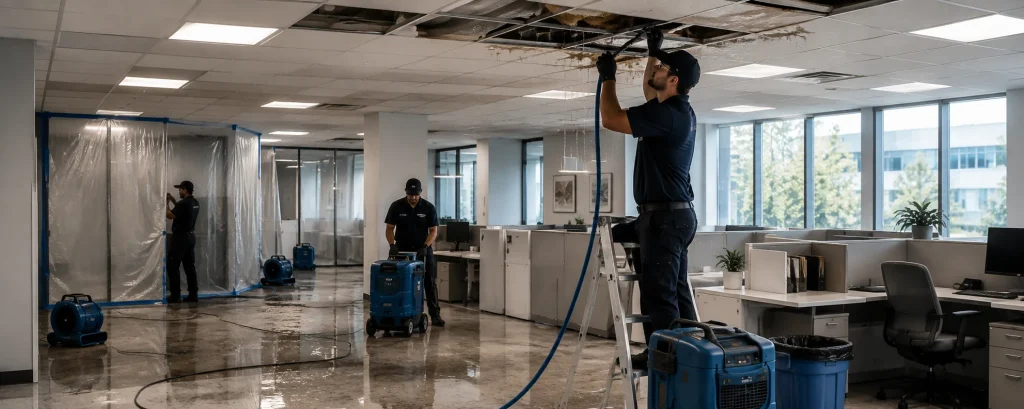
Philadelphia water damage restoration can feel overwhelming for a building owner, especially the first time it happens. One day the building is running normally. The next, a supply line has burst over a tenant suite, a storm has pushed water through the roof, or the basement has flooded after heavy rain. Suddenly you are juggling tenants, insurance, contractors, and costs. This guide maps out each step for Philadelphia building owners, start to finish.
Owners of office buildings, retail properties, mixed-use blocks, and warehouses will find practical steps below.
Philadelphia Buildings and Their Water Risks
Philly has some of the oldest buildings in the country. Builders put up many shops and offices in Center City, Old City, Fishtown, and along the river long before today’s plumbing and roof codes. As a result, they face several common risks:
- Aging cast-iron and galvanized pipes that crack or corrode
- Flat roofs and parapets that leak during heavy storms
- Basements prone to groundwater and sewer backups
- Frozen pipes during winter cold snaps
- Older sprinkler systems that may fail or discharge
Knowing these risks helps owners respond faster and plan prevention.
Your First Moves as an Owner
Your first job is to protect people and limit the damage. Shut off the water at the main or the nearest valve. Kill power to soaked circuits if you can reach the panel without stepping into water. Next, move tenants and staff away from hazards. Then call a commercial restoration company. While you wait, take photos and video of every wet area before anyone moves a thing. These early steps matter a great deal for both safety and your insurance claim.
Philadelphia Water Damage Restoration: Understanding the Water
Not all water is the same. Clean water from a supply line is the least risky. Gray water, such as from a washing machine or dishwasher, contains some contaminants. Black water from sewage or outside flooding is the most dangerous and requires strict cleanup. The water type changes how crews work and which materials have to go. So ask your contractor to identify the water category early.
Choosing a Philadelphia Water Damage Restoration Contractor
Pick a firm that does commercial work, not just homes. Ask about their equipment capacity, their response time, and how they handle multi-tenant buildings. In addition, check their certifications. Many reputable firms follow standards from the Institute of Inspection, Cleaning and Restoration Certification. Finally, ask how they document work for insurance.
What Happens During Restoration
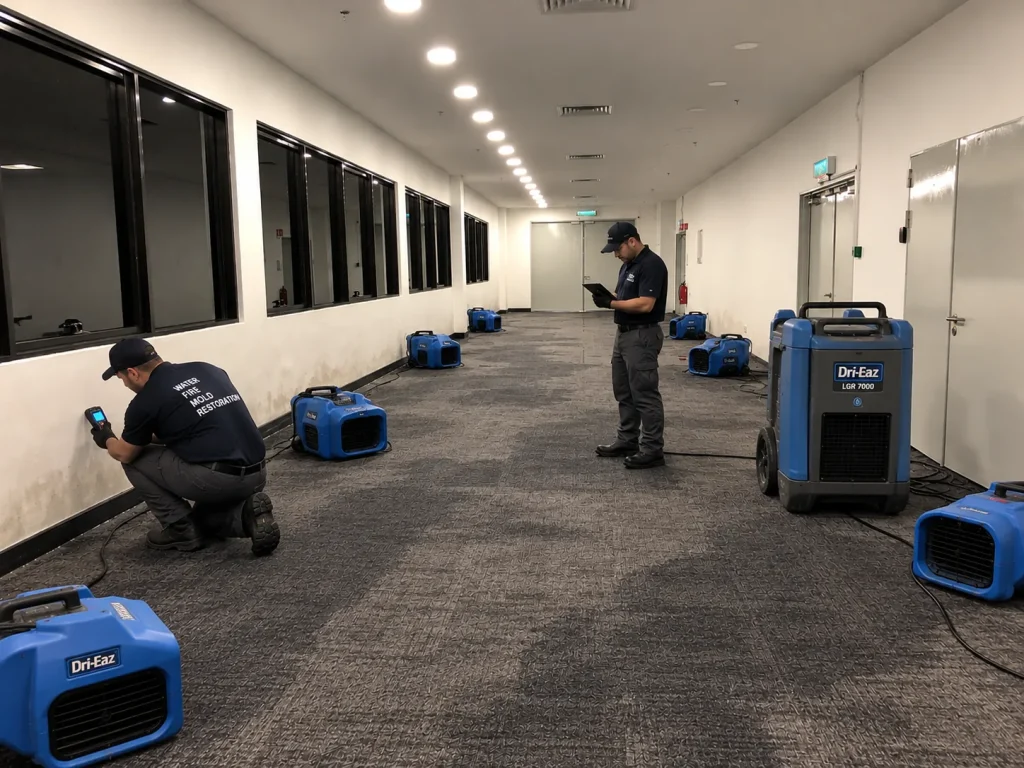
A typical commercial restoration follows a set of steps. Crews first assess and map the damage. Then they extract standing water. Next, they pull out what they cannot save, like soaked carpet pad or swollen drywall. After that, they set up drying equipment and monitor moisture each day. Finally, once the building is dry, repairs begin. Our article on the restoration process explains each stage in more detail.
Philadelphia Water Damage Restoration in Older Buildings
Old buildings need care. Crews can often dry plaster walls, wood floors, and brick in place instead of tearing them out, which saves money and keeps the look. However, they also hold water longer. In addition, older buildings may contain materials like asbestos or lead paint, which require testing before demolition. A good contractor will plan for these issues from the start.
Basement Flooding
Many Philadelphia buildings have basements that flood during heavy rain or when sewers back up. Basement water is often contaminated, so cleanup must include disinfection. In addition, basements often house electrical panels, boilers, and storage. Protecting these quickly limits the damage. After cleanup, owners should look at sump pumps, backflow valves, and drainage to reduce future risk.
Tenants and Philadelphia Water Damage Restoration
As the owner, you are the link between tenants and the restoration team. Tenants want to know what happened, how long it will take, and whether their space is safe. So send clear updates and set expectations. In addition, remind tenants to contact their own insurers about contents and lost income. Good communication protects relationships and future leases.
Philadelphia Water Damage Restoration and Insurance
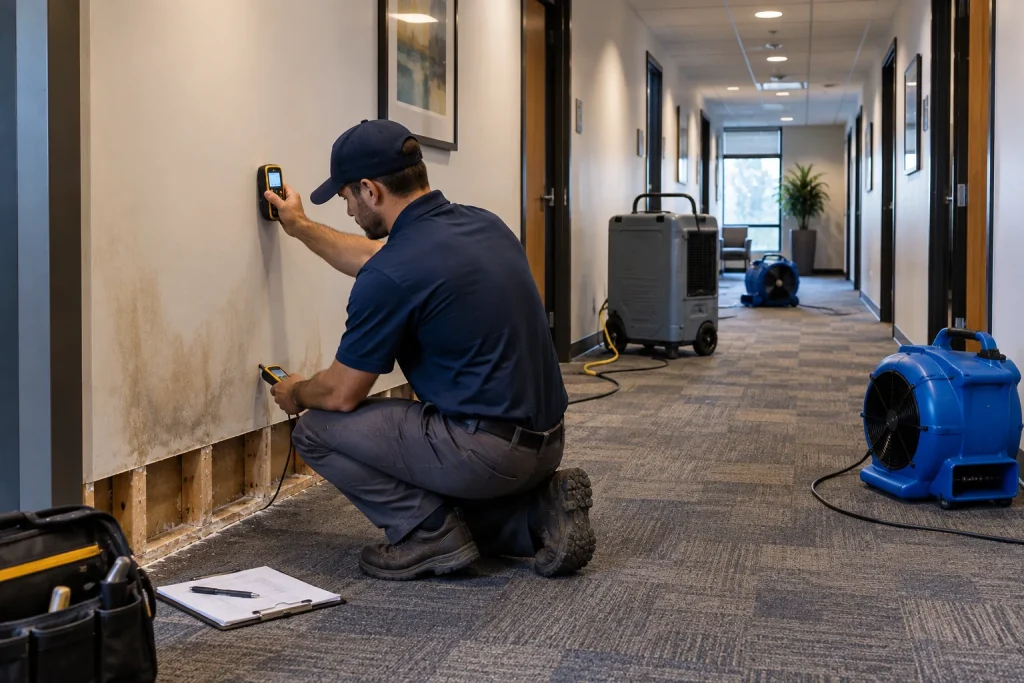
Insurance is often the biggest concern for owners. Report the loss to your carrier quickly. Then keep detailed records: photos, moisture logs, invoices, and a list of damaged items. Meet the adjuster on site if you can. In addition, understand your policy limits and exclusions, such as flood or long-term leaks. Our guide to restoration documentation shows what adjusters look for.
Philadelphia Water Damage Restoration Costs
Costs hinge on the size of the loss, the type of water, and how fast work starts. Fast response usually lowers the total cost, since less material is ruined. Ask your contractor for daily updates on equipment and labor. In addition, review estimates carefully before repairs start. Clear communication prevents surprises at the end.
Frozen Pipes in Philly Winters
Philadelphia winters bring cold snaps that freeze pipes in unheated spaces, near outer walls, and in vacant suites. When the pipe thaws, the crack leaks fast. So keep heat on in every space, even empty ones. Also, open cabinet doors under sinks on cold nights and check sprinkler lines in unheated areas. If a pipe does burst, shut the water off at once and call for help. Quick action keeps the damage small.
Vacant Suites and Slow Leaks
Empty suites are a hidden risk. Nobody is there to notice a drip, so a small leak can run for weeks. By then, water may have spread into nearby suites and floors below. So walk vacant spaces often, or add simple leak sensors that send alerts to your phone. This small step can save a large repair bill.
A Simple Plan Before the Next Event
The best time to plan is before water shows up. Keep a list of shutoff valves, emergency contacts, and your restoration company in a place staff can find. Train building staff on where the main water valve is. In addition, review your insurance each year. Owners who plan ahead recover faster and spend less.
Permits and City Rules
Most cleanup and drying work does not need a permit. However, repairs that involve electrical, plumbing, or structural changes usually do. The City of Philadelphia handles building permits and inspections. Your contractor should know when permits are needed and handle the paperwork.
Preventing the Next Loss
After recovery, look for ways to prevent the next event. Replace old supply lines and valves, inspect roofs twice a year, and add leak sensors in risky areas. In addition, keep a shutoff map and emergency contact list in the building. Prevention costs far less than another major loss.
In short, a little planning now beats a big bill later.
Also, ask your restoration firm to walk the building with you once a year. A fresh set of eyes can spot small leaks and weak spots before they grow.
Owner Checklist
- Stop the water and protect people
- Document damage before cleanup starts
- Identify the water category
- Hire a commercial restoration contractor
- Test older materials before demolition
- Keep tenants informed
- Report the loss and keep detailed records
- Plan prevention after repairs
Get Expert Help With Your Building
Philadelphia water damage restoration goes smoother with a clear plan and an experienced team. Learn more about our Philadelphia restoration services, or talk with our team about your property.
Related Reading
- Commercial Water Damage Restoration — the full process from emergency to repairs.
- Commercial Restoration Documentation — why the evidence of the work matters.
- Finding Hidden Moisture in Baltimore — what meters reveal behind walls.
- Commercial Sewage Backup Cleanup — handling contaminated water.
- Hidden Commercial Water Damage — why visible damage is rarely the full damage.
- Commercial Restoration Downtime — why business interruption can cost more than the damage.