Denver burst pipe damage tends to show up on the coldest mornings of the year. A pipe near an outside wall freezes overnight, splits, and then floods a suite when it thaws. Or a sprinkler line in an unheated stairwell or loading dock bursts and sends water pouring across several floors. Either way, business owners and property managers need to act fast. This guide explains how to respond to burst pipes and sprinkler discharges in Denver commercial buildings, from the first minutes to full recovery.
It covers offices, retail centers, warehouses, schools, and multi-tenant buildings across the metro.
Why Pipes Burst in Denver
Denver weather swings fast. A mild afternoon can turn into a sub-zero night when an Arctic front moves in. Pipes in exterior walls, attics, crawl spaces, parking garages, and vacant suites are most at risk. When water freezes, it expands and puts pressure on the pipe. Often the break happens later, when the ice melts and water rushes out. That is why staff often discover burst pipes the morning after a cold snap.
Sprinkler Discharges and Dry Systems
Fire sprinkler systems are another common source of water. Wet-pipe systems hold water in the lines at all times, so a frozen section can burst. Dry-pipe systems in unheated areas use air instead, but leftover water in low points can still freeze and crack the pipe. In addition, heads can break when hit by carts, forklifts, or ladders. A sprinkler discharge releases a lot of water fast, so quick action is vital.
Denver Burst Pipe Damage: The First Ten Minutes
Speed limits the damage. Here is what to do right away:
- Shut off the water at the nearest valve or the main
- For sprinklers, call the fire protection contractor and alarm company before closing valves
- Cut power to soaked areas if you can do so without stepping in water
- Move people away from wet floors and falling ceiling tiles
- Call a commercial restoration company
Then start taking photos for your records.
Sprinkler Safety Steps
Turning off a sprinkler system leaves the building without fire protection. So you must follow safety rules. Notify the fire alarm company and, in many cases, the fire department. Set up a fire watch if the system will be off for a while. Then have a licensed fire protection contractor repair the system and restore it as soon as possible. The National Fire Protection Association sets the standards these contractors follow.
Mapping Denver Burst Pipe Damage
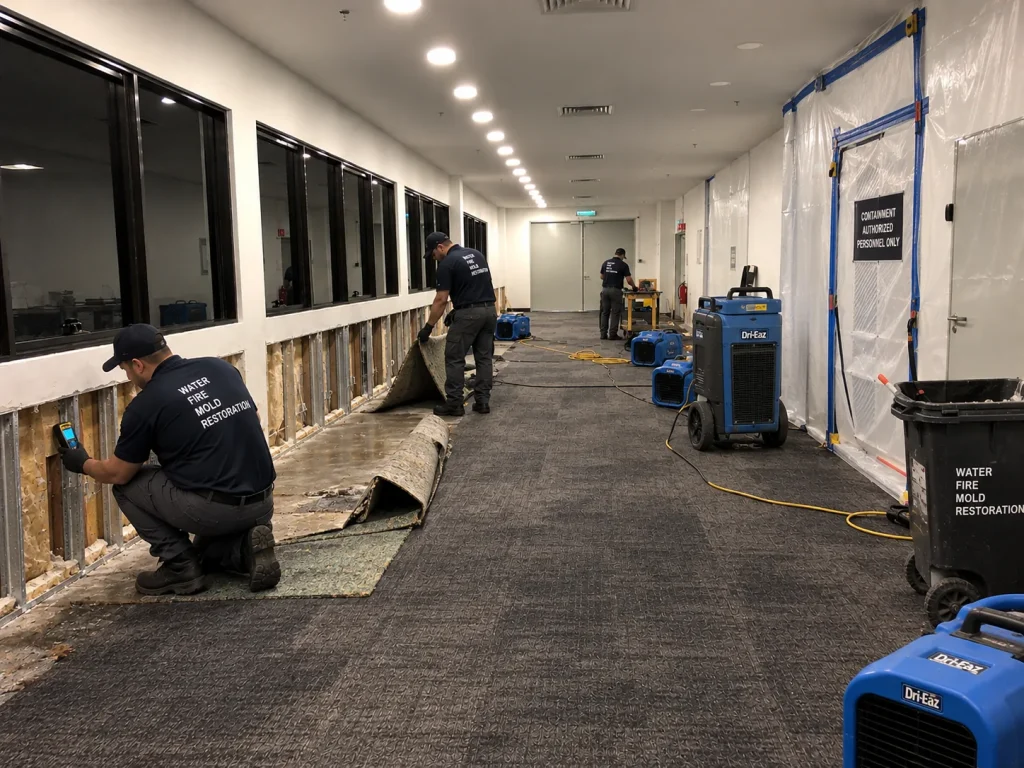
Water from a burst pipe rarely stays in one spot. It runs across floors, soaks into walls, and drops through ceilings to the levels below. So technicians use moisture meters and thermal cameras to map the full spread. They check walls, floors, ceilings, and nearby suites. The map guides both the drying plan and the insurance claim.
Denver Burst Pipe Damage Extraction
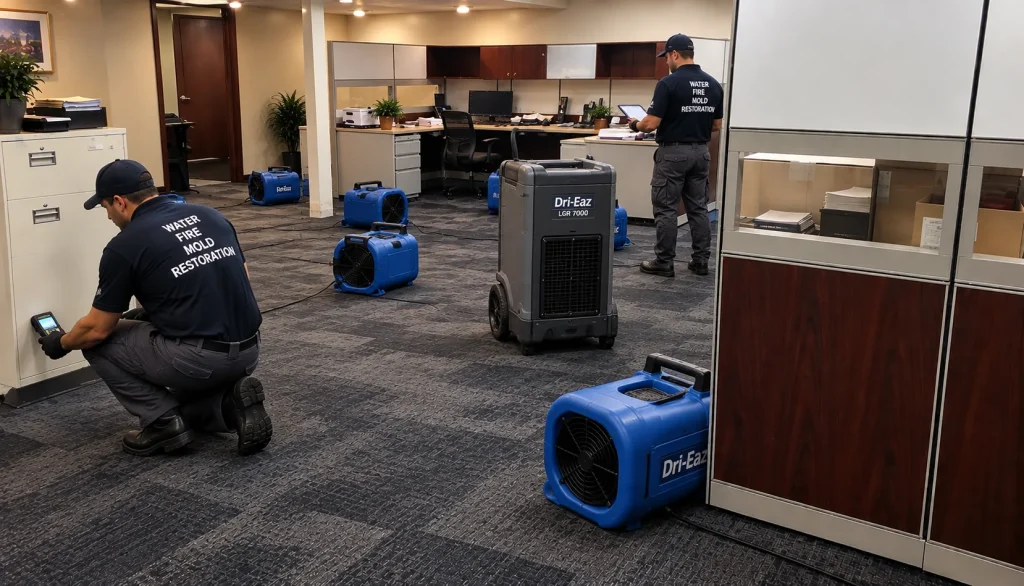
Next, crews remove standing water. They use extractors on carpet and hard floors and squeegees and pumps for large puddles. Sometimes crews open ceiling cavities to drain trapped water. Fast extraction keeps water from soaking deeper into the building. In multi-floor losses, crews often work on several levels at once.
Drying in Denver’s Dry Air
Denver’s dry, high-altitude air helps drying in some ways. However, cold weather slows evaporation, and closed buildings in winter can trap moisture. So crews use dehumidifiers and air movers, and often add heat to speed things up. Daily readings track progress. Drying stops only when every material reaches its goal, not just when it feels dry to the touch.
What to Remove and What to Save
Clean water from a supply line or sprinkler lets crews save more materials. Carpet tiles, drywall, and wood can often dry in place if work starts fast. However, ceiling tiles that sag or stain usually need replacement. Insulation that got soaked should also go. In addition, water from old sprinkler lines can be dirty and smelly, which may change these choices.
Denver Burst Pipe Damage in Multi-Tenant Buildings
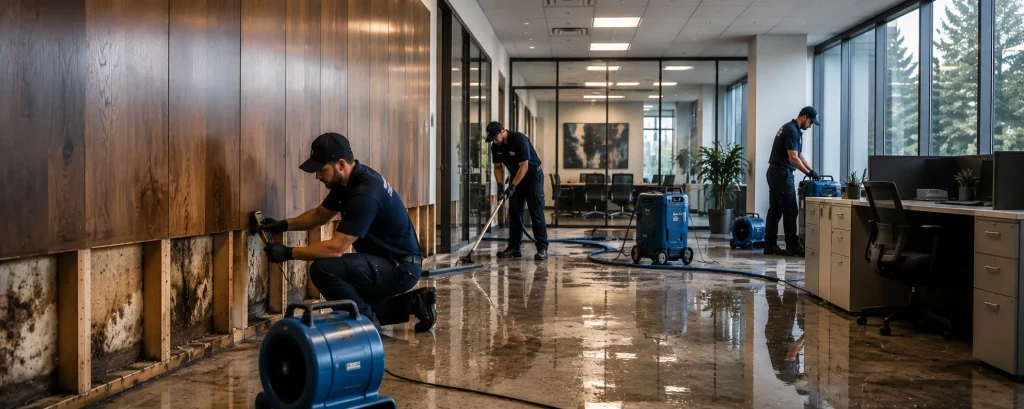
When a pipe bursts in a shared building, several tenants may be affected. Each one needs updates on what happened and when they can return. So the property manager should send clear notices and share the work plan. In addition, each tenant should call its own carrier about damaged furniture, equipment, and lost revenue. Our article on multi-floor sprinkler cleanup covers this in more depth.
Insurance Records for Denver Burst Pipe Damage
Burst pipe and sprinkler losses are usually covered under commercial property policies, as long as the damage was sudden. So document everything. Keep photos, video, moisture logs, invoices, and notes on the cause. In addition, save the broken pipe section or sprinkler head if possible, since adjusters may want to see it.
Repairs After Drying
Once the space is dry, repairs can begin. First, fix the pipe or sprinkler line. Then replace damaged drywall, ceiling tiles, flooring, and finishes. Licensed trades should check any electrical items that got wet. Finally, do a walk-through to confirm everything is clean, dry, and working.
Preventing Denver Burst Pipe Damage
Prevention is cheaper than recovery. Before winter, take these steps:
- Insulate pipes near exterior walls and in unheated areas
- Keep heat on in every space, including vacant suites
- Seal gaps where cold air reaches pipes
- Drain low points on dry sprinkler systems
- Add temperature and leak sensors in risky areas
- Know where every shutoff valve is
In addition, watch forecasts from the National Weather Service in Boulder and check buildings before big cold snaps.
Denver Burst Pipe Damage in Vacant Suites
Vacant suites are one of the biggest risks in winter. With no one inside, the heat may be turned down or off, and nobody notices a drip. When a pipe bursts there, water can run for days before anyone sees it. By then, Denver burst pipe damage may reach several nearby suites and the floors below. So keep heat on in every empty space, check them on cold days, and add low-cost sensors that send alerts when temperatures drop or water appears.
Loading Docks and Garages
Loading docks, parking garages, and back stairwells often have pipes and sprinkler lines in cold, open air. These are prime spots for frozen lines. Heat tape, insulation, and dry-type sprinkler systems help. In addition, check these areas after every hard freeze. A quick walk can catch a small crack before it floods the building.
Restaurants and Food Service
Restaurants and cafes face extra risk, since water near kitchens can affect food safety. If a pipe bursts in a kitchen, stop service, protect food, and call the restoration team right away. After cleanup, sanitize all surfaces before cooking resumes. Denver burst pipe damage in a restaurant can also trigger a health check, so keep records of what was cleaned and when.
A Cold Snap Plan for Property Managers
Write a short plan for cold weather. List who checks the building, which areas to inspect, and how to reach the restoration company after hours. Share it with staff and tenants. Then practice it once a year. A simple plan turns a stressful morning into a quick, organized response.
Burst Pipe Response Checklist
- Shut off water and notify fire protection if needed
- Protect people and cut power to wet areas
- Map the spread with meters and cameras
- Extract water on every affected floor
- Dry with heat and dehumidifiers
- Document damage and save broken parts
- Repair the pipe and the building
- Winterize before the next cold snap
Respond Fast to Pipe and Sprinkler Water
Quick action keeps Denver burst pipe damage from turning into a major loss. Our Front Range restoration crews respond day and night. To get help now, contact us.
Related Reading
- Sprinkler Water Damage Cleanup — restoring multi-floor buildings.
- Frozen Pipes in Commercial Buildings — lessons from a Texas winter storm.
- Boston Office Cleanup — drying offices floor by floor.
- Commercial Structural Drying — how contractors prove a building is dry.
- Commercial Restoration Documentation — why the evidence of the work matters.
- Partial Occupancy During Restoration — keeping the business operating during repairs.