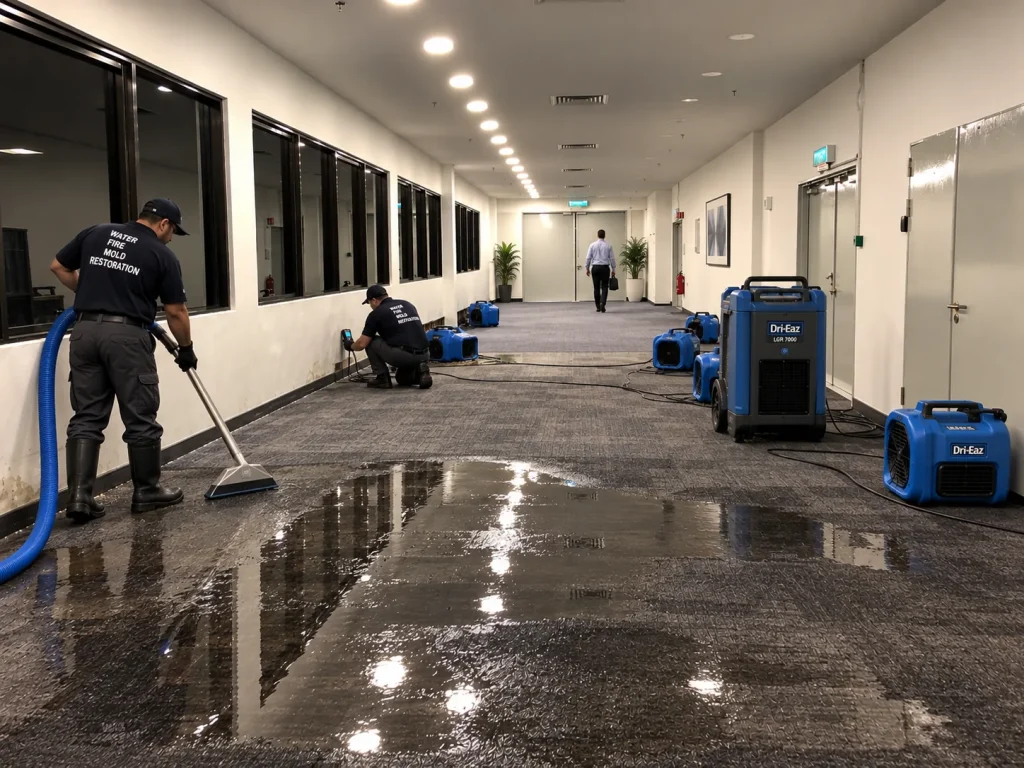
Las Vegas water damage can strike a hotel, a retail store, or an office building at any hour, and each type of property faces its own pressures. A hotel cannot leave guests in wet rooms. A shop on the Strip or in a suburban center loses sales every hour its doors stay closed. An office has teams, files, and servers to protect. In a city that runs around the clock, cleanup plans need to be fast, flexible, and built around the business. This guide explains how to plan water damage cleanup for hotels, retail, and offices in Las Vegas.
Owners, managers, and engineers of commercial properties across the valley will find it useful.
Common Water Sources in Las Vegas Buildings
Even in the desert, water damage is common. Typical causes include:
- Failed supply lines in guest rooms, restrooms, and kitchens
- Sprinkler leaks and accidental discharges
- HVAC condensate lines and rooftop units
- Pool and spa equipment leaks in hotels
- Monsoon storms that overwhelm roofs and drains
- Ice machines and beverage equipment
Knowing these sources helps staff respond quickly.
Las Vegas Water Damage in Hotels
Hotels face unique challenges. A leak in one guest room can travel through walls and ceilings into several rooms below. Guests may need to move, and rooms come off the market until they are dry. So hotel teams must act fast to stop the water, protect guests, and track which rooms are affected. In addition, large resorts may have water damage in casinos, ballrooms, back-of-house corridors, and kitchens, each with its own needs.
Planning Around Guests
Guest comfort is the top concern. Crews should work quietly, use containment to keep dust and noise in work areas, and avoid busy lobbies during peak hours. In addition, they should coordinate closely with housekeeping and engineering. Clear signs and short detours keep guests safe and informed. The goal is to restore rooms without disturbing the rest of the property.
Las Vegas Water Damage in Retail Spaces
For stores, every closed hour costs money. So retail cleanup often happens overnight. Crews extract water, protect stock, and set up drying in back areas while the sales floor stays open, if possible. In addition, damaged stock must be photographed and logged for insurance before disposal. Our article on retail water damage restoration explains how to protect customers and inventory.
Las Vegas Water Damage in Offices
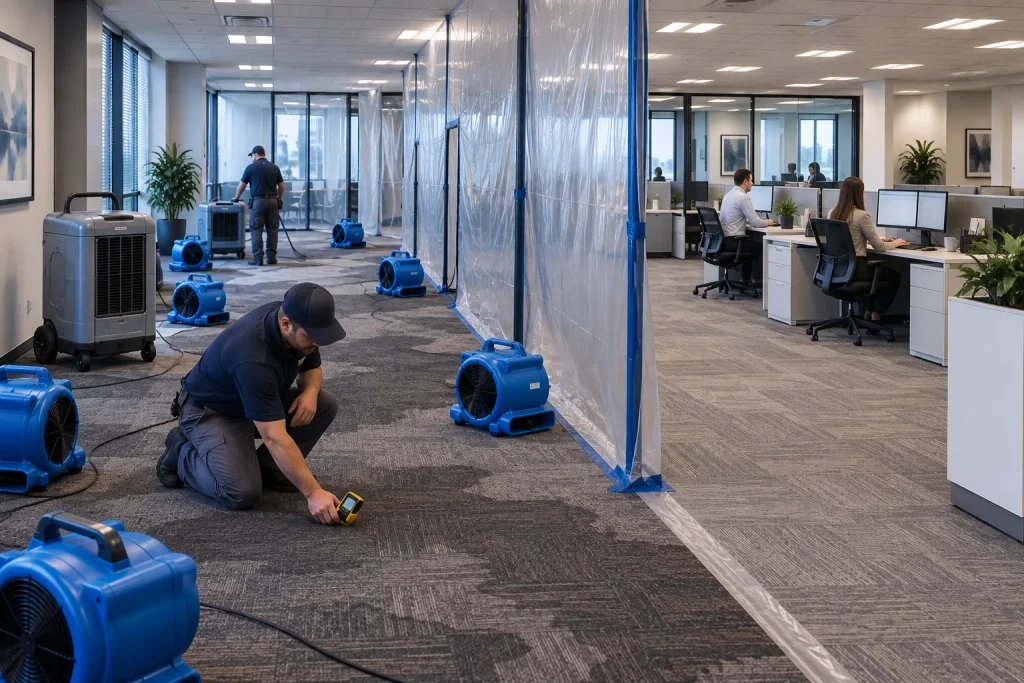
Offices need to protect people, records, and technology. Wet carpet and drywall can be dried, but servers and paper files need fast action. So move or cover electronics, freeze wet documents for later drying, and keep teams working in dry areas. Loud work can wait until evenings or weekends. In addition, clear updates help staff plan their days.
Drying in Desert Air
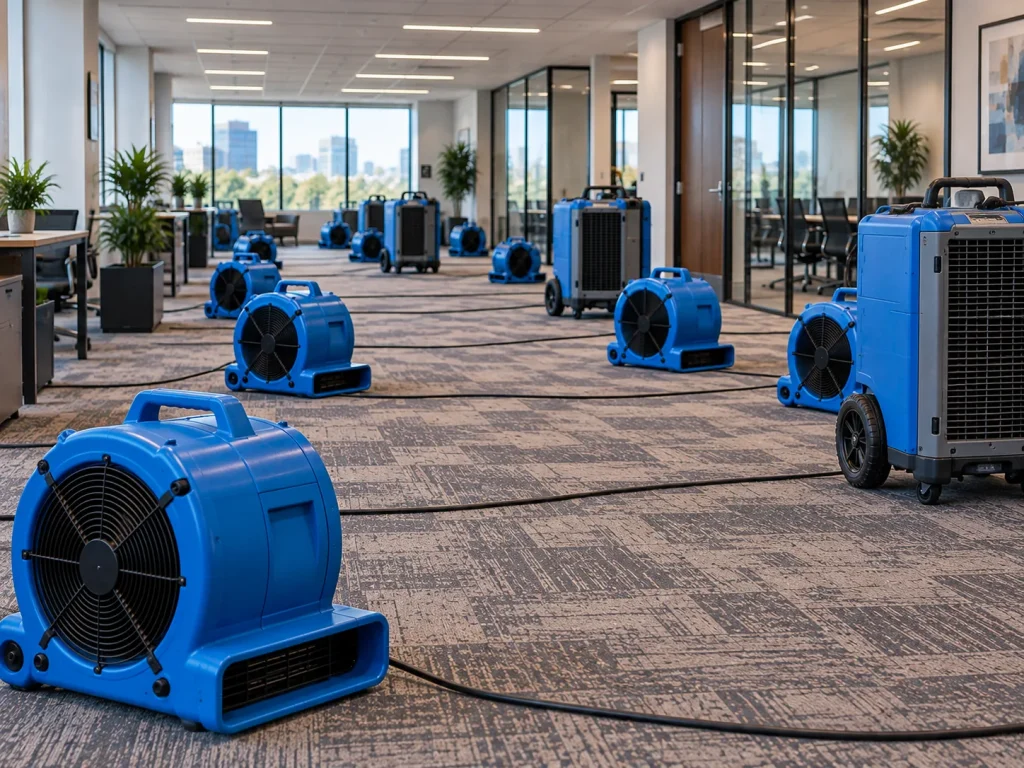
Las Vegas air is very dry for most of the year, which helps drying. However, buildings are often sealed and heavily air conditioned, so moisture can linger in walls and under floors. During monsoon season, humidity can spike and slow things down. So crews still use dehumidifiers and air movers and track readings daily. Drying continues until every material reaches its goal.
Las Vegas Water Damage and Large Properties
Many Las Vegas properties are very large. A single resort may have thousands of rooms, miles of corridors, and huge back-of-house areas. So cleanup must be organized in zones, each with its own crew and equipment. A central project lead tracks progress and works with property engineers. This approach keeps work moving and lets dry areas reopen sooner.
Mold Risk in Air-Conditioned Spaces
Mold may seem unlikely in a dry city, but it grows wherever materials stay wet. Inside walls, under carpet, and in ceiling cavities, moisture can linger even in the desert. In addition, cold air-conditioning ducts can create condensation. So thorough drying and follow-up checks are important. The EPA’s mold resources explain how moisture leads to growth.
Casinos and Gaming Floors
Gaming floors run day and night, so closing them is costly. When water hits a casino, crews must work around machines, tables, and guests. They often contain small sections at a time and dry them with quiet equipment. In addition, gaming equipment may need inspection by technicians before it returns to service. Close coordination with security and operations keeps the floor safe and open.
Convention and Event Spaces
Ballrooms and meeting rooms host events booked months in advance. A leak before a big event creates a race against time. So crews focus on fast extraction and drying, and they may bring extra equipment to finish quickly. Meanwhile, event teams can plan backup rooms. Clear updates help sales and event staff keep clients informed.
Las Vegas Water Damage in Kitchens and Restaurants
Hotel and restaurant kitchens are busy, wet spaces. When a leak or backup happens, food safety comes first. Crews remove water, clean and sanitize surfaces, and dry walls and floors. In addition, health rules may require an inspection before cooking resumes. The Southern Nevada Health District shares guidance for food businesses. A quick, clean response protects guests and the business.
Documentation for Insurance
Hotels, retailers, and offices often carry business interruption coverage as well as property coverage. So document both damage and lost income. Keep photos, moisture logs, invoices, and records of closed rooms or lost sales. Clear records speed up claims and reduce disputes with adjusters.
Working With Property Engineers
Large properties have their own engineering teams who know the building inside and out. They can find shutoffs, isolate systems, and guide crews to problem areas. So restoration teams should meet with engineers early and keep them updated. In addition, engineers can help plan around events, conventions, and peak occupancy.
Las Vegas Water Damage Prevention
Prevention saves money and guest goodwill. Inspect supply lines, ice machines, and water heaters regularly. Check roofs and drains before monsoon season. In addition, add leak sensors in guest rooms, server rooms, and ceilings below kitchens. Train staff to report leaks right away. The City of Las Vegas shares information on building safety and permits.
Repairs and Reopening
Once areas are dry, repairs begin. Hotels may need to refresh paint, carpet, and furniture to meet brand standards. Retailers may need new fixtures and displays. Offices may need new flooring and ceiling tiles. In every case, a final inspection confirms the space is clean, dry, and ready for guests, shoppers, or staff.
Staff Training for Fast Response
Front desk staff, housekeepers, store clerks, and office managers are often the first to spot a leak. So train them on what to do. Show them where shutoff valves are, who to call, and how to keep guests or customers away from wet areas. In addition, post a simple card with emergency contacts in back offices. Fast, calm action in the first minutes saves money and protects people.
Planning Checklist
- Identify water sources and shutoffs
- Protect guests, shoppers, and staff first
- Work in zones on large properties
- Schedule loud work around peak hours
- Dry with dehumidifiers and track readings
- Document damage and lost income
- Coordinate with property engineers
- Prevent repeat leaks with sensors and inspections
Keep Your Property Open for Business
Smart planning keeps Las Vegas water damage from shutting down your hotel, store, or office. Our Southern Nevada restoration team works around the clock. To start, get in touch.
Related Reading
- Retail Water Damage Restoration — protecting customers and inventory.
- Restoration in Occupied LA Buildings — working around tenants.
- Commercial Restoration Downtime — why business interruption can cost more than the damage.
- Partial Occupancy During Restoration — keeping the business operating during repairs.
- Operational Choke Points — small damage that can shut down a property.
- Seattle Leaks and Downtime — keeping the business open.