
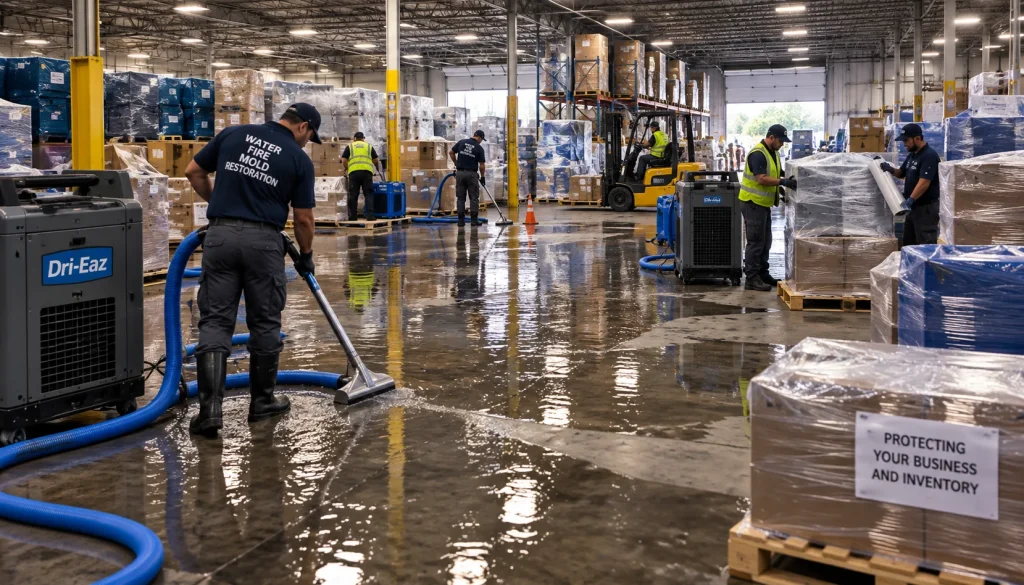
Slidell commercial water damage has a long history. This city on the north shore of Lake Pontchartrain has faced hurricane surge, river flooding, and heavy tropical rain many times. Hurricane Katrina in 2005 and Hurricane Isaac in 2012 both left businesses here under water. Even outside storm season, burst pipes, roof leaks, and failed water heaters cause losses every year. Recovering from any of these takes a clear path, from the first pump to the final coat of paint. This guide walks Slidell business owners through every stage.
It applies to shops along Gause Boulevard, offices and clinics near Northshore Boulevard, restaurants, warehouses, and multi-tenant centers across St. Tammany Parish.
Why Speed Matters in Southeast Louisiana
Heat and humidity make water damage worse here. For example, mold can begin to grow within a day or two. Wood swells. Drywall loses strength. Odors set in fast. So every hour counts. Getting water out and drying started quickly saves more of the building and lowers the final cost.
Stage 1: Safety and Assessment
Safety comes first. So after a flood or storm, check for downed power lines, gas leaks, and structural damage. Do not enter flooded rooms with live power. Next, call your restoration contractor and insurer. When the crew arrives, they will inspect the building, identify the water source and category, and take photos. This assessment shapes the entire Slidell commercial water damage project.
Stage 2: Slidell Commercial Water Damage Removal
After that, the crew pulls out standing water with submersible pumps for deep spots, plus truck-mounted extractors for carpet and hard floors. After hurricanes, floodwater often carries mud, silt, and debris. So crews also shovel and squeegee out sediment. This “mud-out” step must be thorough. Any silt left behind will hold moisture and bacteria.
Stage 3: Removing Damaged Materials
In most cases, floodwater is Category 3, which means it is contaminated. As a result, porous materials it touched often cannot be saved. Crews remove wet drywall, insulation, carpet, and pad. They often cut walls a set height above the water line. This exposes framing for drying and cleaning. Contents are sorted into items to clean, items to test, and items to discard.
Stage 4: Cleaning and Disinfecting
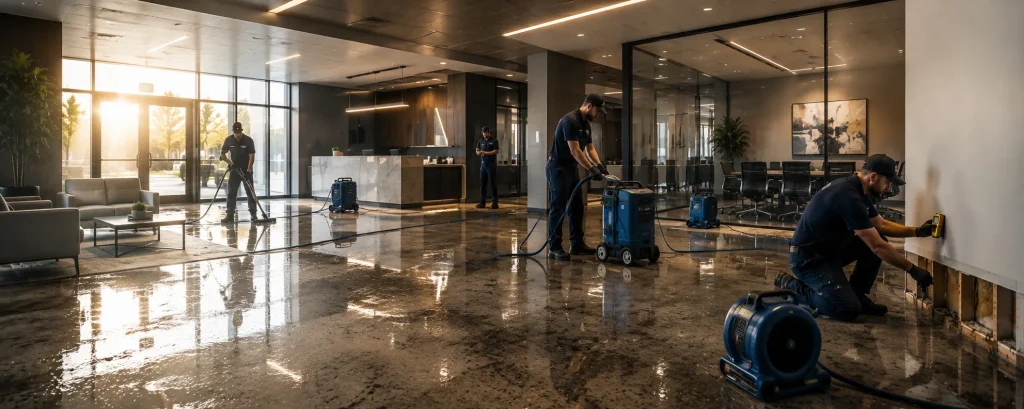
Once materials are out, crews then clean every remaining surface. They wash framing, slabs, and wall cavities. Then they apply antimicrobial treatments. This step removes the bacteria and residue floodwater leaves behind. It also lowers the risk of mold during drying.
Stage 5: Drying Slidell Commercial Water Damage
In short, drying in Slidell is a battle against humidity. Outside air is often warm and wet, so opening windows can slow drying. Instead, crews close the building and run dehumidifiers and air movers. They check moisture readings every day. Framing and slabs must reach their drying goals before rebuilding. In large buildings, desiccant dehumidifiers may be used for faster results.
Why Slidell Buildings Flood
Slidell sits low and close to water. Lake Pontchartrain lies to the south. Bayous and the Pearl River run nearby. So storm surge and heavy rain can raise water fast. Drains back up. Streets fill. In some spots, water enters buildings within hours. Knowing your risk helps you plan ahead.
Stage 6: Documentation for Insurance
In addition, good records are essential. Snap photos before any cleanup. Then save every moisture log, equipment record, and bill. Note which damage came from wind and which came from flood, since different policies may cover each. Many commercial properties here carry separate flood insurance. Clear documentation helps you work with every carrier.
Working With Your Adjuster
Adjusters may be busy after a big storm. So be patient but organized. First, send your photos and logs early. Next, ask what else they need. Also, keep notes of every call. As a result, your claim moves faster, even when many businesses file at once.
Slidell Commercial Water Damage and Mold
Unfortunately, mold is the biggest follow-up risk in this climate. Even after drying, hidden pockets of moisture can feed it. So inspect closely before closing walls. If mold appears, trained professionals should remove it under containment. Fast, complete drying is the best prevention.
Stage 7: Rebuild Planning After Slidell Commercial Water Damage
After drying is verified, the rebuild can begin. First, the owner and contractor agree on the scope. Then they order materials and schedule trades. In flood-prone areas, many owners choose more water-resistant materials. Examples include tile instead of carpet, raised electrical outlets, and moisture-resistant drywall or wall panels. These choices can reduce damage in the next event.
Permits and Flood Rules
Rebuilding often needs permits from the City of Slidell or St. Tammany Parish, depending on the address. In flood zones, rules may limit how much can be rebuilt without raising the structure or meeting flood standards. So ask your contractor and local officials early. Getting this right avoids delays and fines.
Stage 8: Rebuilding the Space
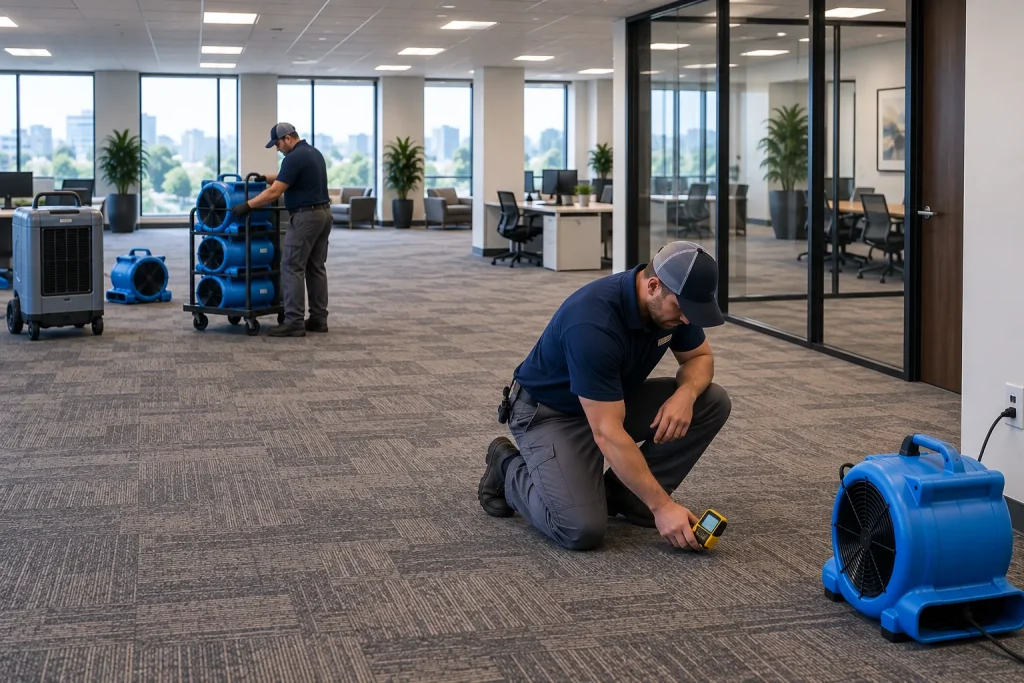
Reconstruction follows a set order. First, framing repairs happen. Next, electricians and plumbers repair their systems. Then crews hang drywall, install insulation, and finish walls. Flooring, cabinets, and fixtures go in after that. Finally, painters and cleaners prepare the space for reopening.
Slidell Commercial Water Damage and Business Continuity
Of course, closing for weeks can hurt any business. So plan how to keep serving customers. Options include temporary locations, mobile service, or partial reopening of dry areas. In addition, business interruption coverage may pay for lost income. Keep careful records of lost sales and extra expenses.
Preparing for Slidell Commercial Water Damage Before Storm Season
Above all, preparation reduces damage and speeds recovery. Keep a list of emergency contacts. Back up records off site. Move critical equipment above expected flood levels. Sign a service agreement with a restoration contractor before hurricane season. Watch forecasts from the National Weather Service New Orleans/Baton Rouge office when storms approach.
Restaurants and Food Businesses
Food businesses face extra steps. All food that touched floodwater must go. So must paper goods and open supplies. Next, crews clean and sanitize every kitchen surface. Then the health department may need to inspect. Also, check walk-in coolers and ice machines for damage. Fast, careful work gets the kitchen back to serving meals.
A Short Checklist for Owners
Keep this list close. First, stay safe and wait for power to be checked. Next, call your restoration team and insurer. Then take photos of every room. After that, move what you can to a dry place. Also, keep a log of calls and costs. Finally, ask questions at every step. A clear list keeps you calm when water hits.
Common Mistakes to Avoid
- Waiting too long to start water removal in humid weather
- Leaving silt and mud in wall cavities
- Drying flood-soaked drywall instead of removing it
- Rebuilding before moisture readings meet goals
- Ignoring local flood rules during reconstruction
FAQ on Slidell Commercial Water Damage
How fast does mold grow after a flood in Slidell?
Often within one to two days in warm, humid weather.
Is flood damage covered by my commercial policy?
Often not. Many businesses need separate flood insurance.
How long does Slidell commercial water damage restoration take?
Drying takes days. Full reconstruction can take weeks or months, depending on the damage.
From Water Removal to Reopening
A clear plan brings your business back faster. Visit our Slidell water damage repair page, or read about commercial flood damage recovery.
Related Reading
- Mitigation vs. Restoration — which services your building needs.
- Commercial Sewage Backup Cleanup — managing contamination safely.
- Commercial Storm Damage Restoration — roof leaks and flooded interiors.
- Commercial Restoration Sequencing — why the order of recovery matters.
- Commercial Restoration Documentation — why the evidence of the work matters.
- Commercial Restoration Downtime — why business interruption can cost more than the damage.