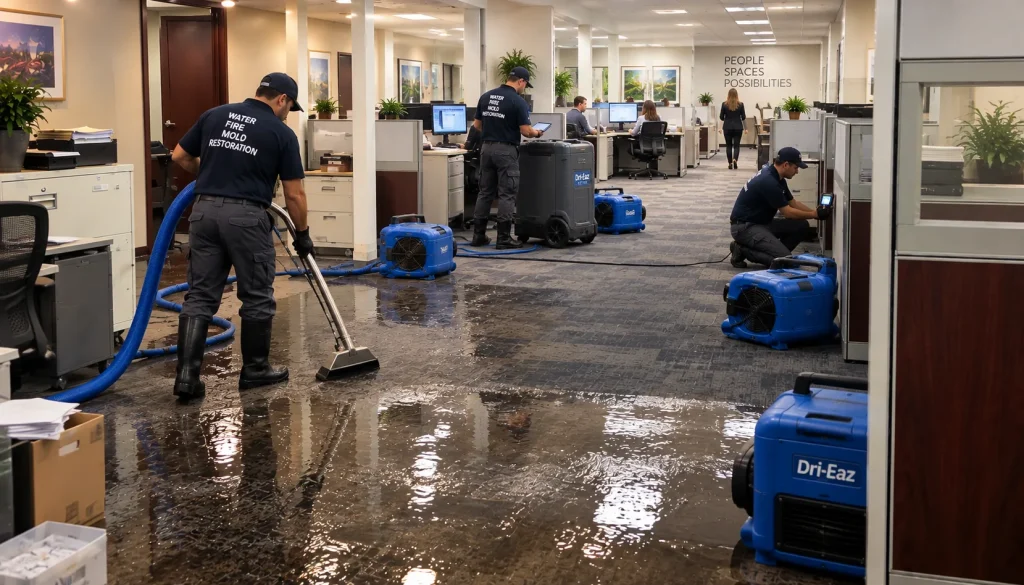
New Orleans storm damage rarely stays in one room. When a hurricane or a slow-moving Gulf storm pushes wind-driven rain through roofs, windows, and doors, water can reach a dozen suites, several floors, and the shared spaces between them all at once. For property managers and building owners, the hardest part is not any single wet room. It is deciding where to start, who goes next, and how to keep track of everything. This guide explains how to plan cleanup across multiple spaces after a storm in New Orleans.
It is written for owners and managers of office buildings, retail centers, hotels, and mixed-use properties.
Why Multi-Space Storm Losses Are Different
A pipe break usually affects one area. A storm, by contrast, can hit the whole building at once. Roof leaks soak top-floor suites, wind pushes rain through window seals on every side, and street flooding can reach the ground floor. Meanwhile, power may be out and crews may be in short supply across the city. As a result, the response must be organized like a small project, not a single service call.
Step One: Make the Building Safe
Safety comes before cleanup. First, check for downed power lines, damaged electrical panels, gas smells, and structural damage. Keep people out of flooded areas until an electrician confirms it is safe. In addition, look for falling ceiling tiles and slippery floors. Only when the building is safe should crews begin moving water.
New Orleans Storm Damage Triage
Next, walk every space and rank it. A simple triage list might use three levels:
- Urgent: standing water, active leaks, or contaminated floodwater
- High: wet carpet, drywall, or ceilings with no standing water
- Watch: damp spots, minor stains, or areas next to wet rooms
This list tells crews where to go first. It also helps you explain the plan to tenants and insurers.
Stopping New Water After New Orleans Storm Damage
Cleanup means little if rain keeps coming in. So the next priority is drying in the building. Crews tarp damaged roofs, board broken windows, and seal open doors. In many New Orleans buildings, older roofs and flat surfaces are common sources of leaks, so check them closely. Temporary repairs buy time until permanent work can start.
New Orleans Storm Damage and Floodwater Contamination
Rainwater from a roof leak is usually clean at first. Floodwater from the street is a different story. It can carry sewage, chemicals, and debris. Therefore, areas touched by floodwater need stricter handling: protective gear, removal of porous materials like carpet and lower drywall, and cleaning with proper disinfectants. Mark these areas clearly on your building map so crews treat them correctly.
Dividing the Building Into Zones
Large losses are easier to manage in zones. For example, you might split the property by floor, by wing, or by tenant. Each zone gets a lead technician, its own drying setup, and its own daily readings. This approach keeps work organized and makes progress easy to report. It also prevents one busy area from drawing all the equipment while other areas wait.
Managing Humidity in a Gulf Climate
New Orleans air is already humid, which slows drying. So open windows rarely help after a storm. Instead, crews use dehumidifiers sized for the space and keep doors closed to control the air. If power is limited, generators may run the equipment. Daily readings show whether the air and materials are getting drier. Without humidity control, mold can start growing within a couple of days.
Tenant Updates During New Orleans Storm Damage Cleanup
Tenants want to know when they can return. Clear updates reduce stress and calls. Share the triage plan, the order of work, and an estimated timeline for each zone. In addition, tell tenants what to move, what to leave, and what crews may need to remove. A simple daily email or posted notice works well.
New Orleans Storm Damage Documentation
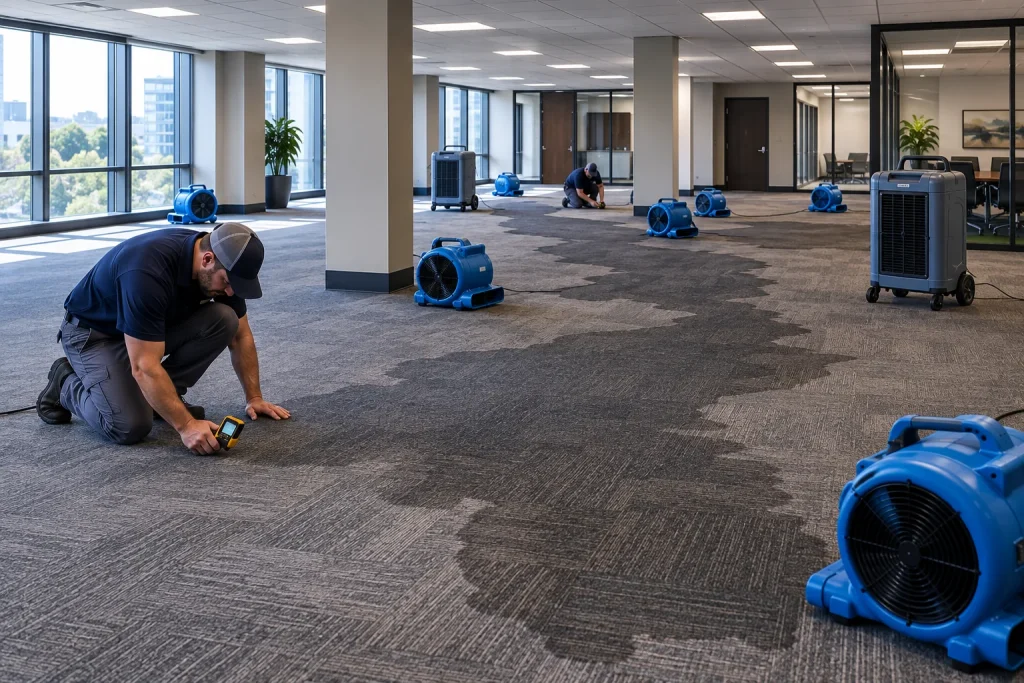
Insurance claims after a storm can be complex, especially with many tenants and spaces. So document everything from the start. Take photos and videos of each space before cleanup, keep a log of affected materials, and save all moisture readings. In addition, note which damage came from wind-driven rain and which came from rising water, since policies often treat them differently. Our guide to restoration documentation explains what adjusters want to see.
Sequencing Repairs After Drying
When a zone passes its final readings, the rebuild crews can move in. Even then, sequence is key. Electrical, HVAC, and fire systems that serve the whole building get attention first. Next come common areas, such as lobbies and corridors. Then individual suites follow based on lease priorities and tenant needs. Planning this sequence early keeps trades from stepping on each other.
New Orleans Storm Damage in Historic Buildings
Many commercial properties in the French Quarter, the Warehouse District, and the CBD sit in older buildings. These structures often have plaster walls, wood floors, and brick that hold water longer than modern materials. In addition, some have historic protections that limit what crews can remove or replace. So restoration in these buildings needs extra care. Crews may dry plaster in place rather than tearing it out, and they may use gentler methods on old wood. Talk with the owner and any preservation advisors before demolition starts.
Contents Across Many Spaces
Each tenant has its own furniture, files, and stock. When many spaces are wet, contents can quickly become a puzzle. So label everything by suite before moving it. Then photograph each item and note whether it will be cleaned, stored, or discarded. Clear labels prevent mix-ups and make insurance claims much easier for each tenant.
Power Outages and Generators
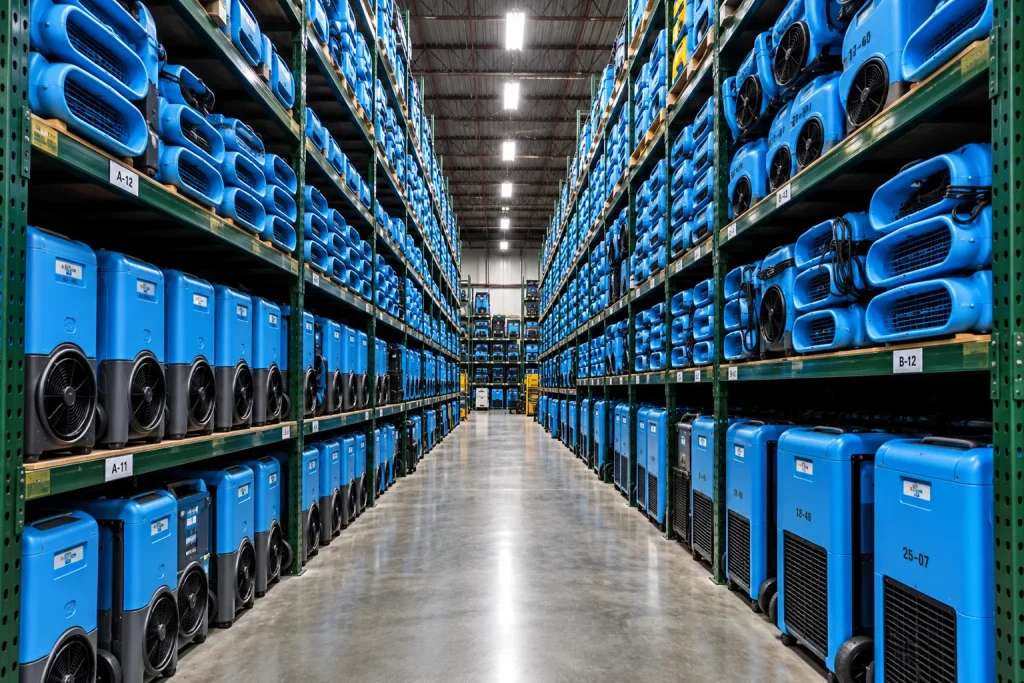
After a major storm, the grid may be down for days. Drying equipment needs steady power, so many crews bring large generators. Placement matters, since generators must sit outside and away from doors and vents to keep exhaust out of the building. In addition, fuel deliveries must be planned. Ask your restoration team how they handle power during regional outages.
Working With Limited Resources
After a major storm, crews, equipment, and materials can be scarce across the region. A pre-storm agreement with a restoration company can secure faster response. In addition, keeping a list of vendors, shutoff locations, and emergency contacts on hand saves precious time. The city’s official website shares storm updates and recovery resources.
Preparing for the Next Storm
Every storm teaches lessons. After recovery, review what worked and what did not. Update your building map, contact list, and supply kit. Inspect roofs and windows before the next season. Owners who prepare tend to recover faster and spend less.
New Orleans Storm Damage Checklist
- Make the building safe before cleanup
- Triage every space by urgency
- Stop new water with tarps and board-ups
- Separate floodwater areas from clean water areas
- Divide the building into zones with leads
- Control humidity with dehumidifiers
- Document damage for insurance
- Plan the order of repairs
Get Help Planning Your Storm Recovery
Multi-space storm losses need a clear plan and a team that can scale. For help with New Orleans storm damage at your property, see our Crescent City restoration services, or reach our crew to set up a building walk-through.
Related Reading
- Commercial Storm Damage Restoration — roof leaks and flooded interiors.
- Houston Large Losses — managing big building water damage.
- Commercial Restoration Sequencing — why the order of recovery matters.
- Commercial Restoration Documentation — why the evidence of the work matters.
- Partial Occupancy During Restoration — keeping the business operating during repairs.
- Austin Flood Repair — from extraction to rebuild.