Houston commercial water damage can grow very large very fast. A single failed sprinkler line on an upper floor, a roof breach during a tropical storm, or flooding in a ground-level parking garage can soak tens of thousands of square feet before anyone fully understands the scope. In a humid city like Houston, the clock starts ticking the moment water appears. This guide explains how building owners and managers can organize the response to a large water loss and keep it under control.
It focuses on office towers, hospitals, warehouses, schools, and other large facilities.
What Counts as a Large Loss
There is no single definition, but a large loss usually involves several floors, many tenants, or a big open space like a warehouse or gym. It often needs dozens of drying units, multiple crews, and careful coordination with building staff. In addition, large losses tend to involve several insurance policies and longer timelines. Recognizing the scale early helps you bring in the right resources from the start.
Houston Commercial Water Damage: The First Hours
Speed matters most in the first hours. First, stop the water at its source. Next, cut power to wet areas if it is safe to do so. Then call a restoration company with large-loss experience and enough equipment to cover your building. While crews are on the way, move people away from hazards and protect key equipment and records.
Houston Commercial Water Damage Command Structure
Big jobs need a clear chain of command. Many teams use a simple setup:
- A project manager who leads the restoration effort
- Zone supervisors for each floor or section
- A building contact who knows the systems and tenants
- A documentation lead who tracks photos, readings, and logs
Daily meetings keep everyone aligned on progress, safety, and next steps.
Extraction at Scale
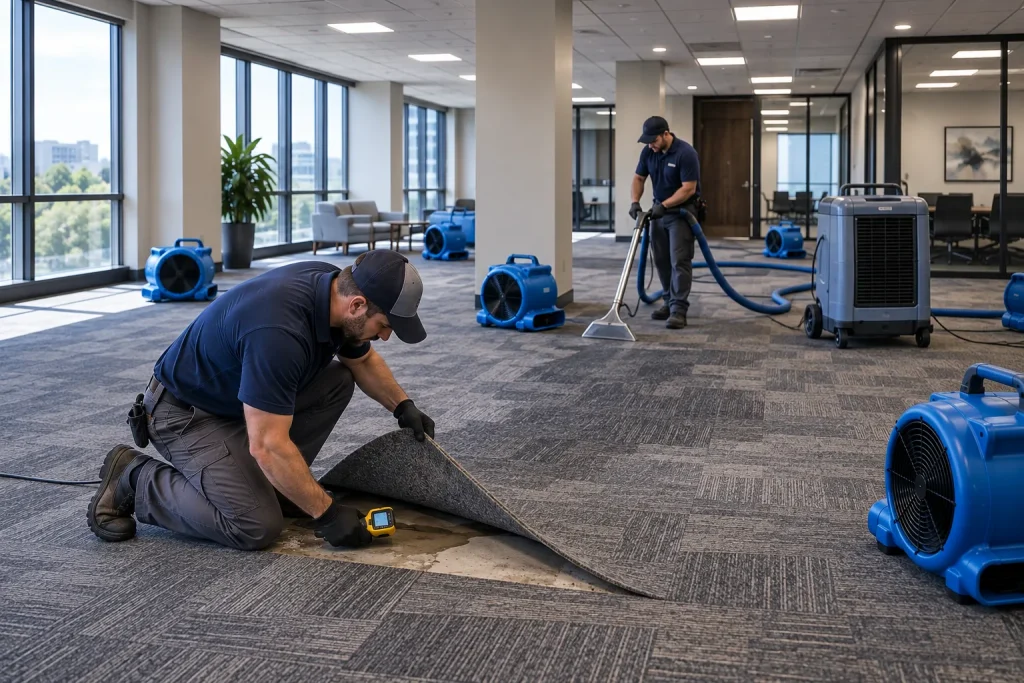
Removing standing water is the first major task. In large spaces, crews use truck-mounted extractors, submersible pumps, and many portable units at once. The faster water leaves the building, the less it soaks into walls, floors, and contents. Our article on commercial water extraction explains why this step sets up everything that follows.
Houston Commercial Water Damage and Humidity
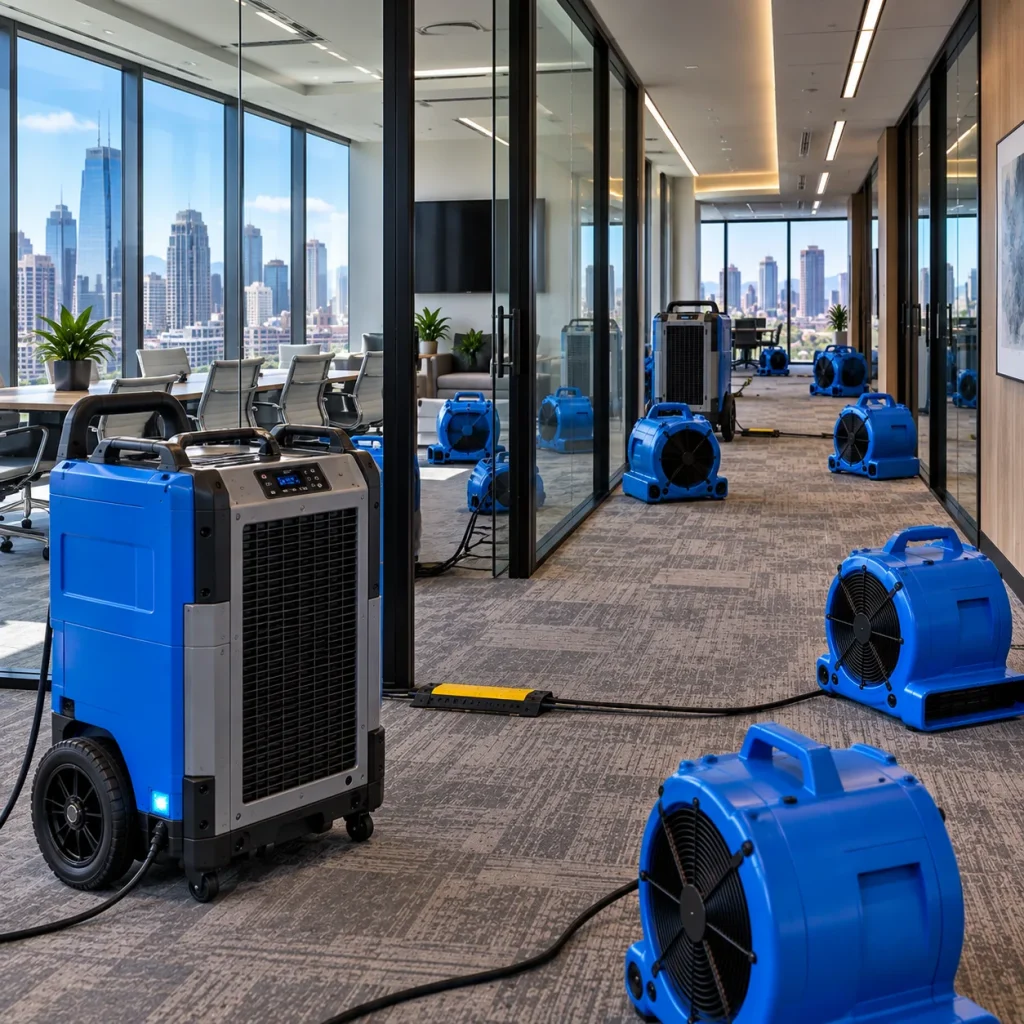
Houston’s air is often warm and wet, which slows drying and speeds mold growth. Therefore, humidity control is critical. Crews keep the building as closed as possible and run large dehumidifiers sized for the space. In some cases, they bring in desiccant units or temporary cooling to pull moisture from the air faster. Daily readings show whether the air is drying or not.
Zone Drying for Houston Commercial Water Damage
Large buildings dry best in zones. Each zone gets its own equipment plan, containment, and moisture readings. This approach makes it easy to see which areas are dry and which still need work. It also lets building staff reopen dry zones while others continue drying. As a result, the business can recover in stages instead of waiting for the entire building.
Protecting Building Systems
Large buildings rely on electrical rooms, elevators, fire alarm panels, and HVAC equipment. Water near these systems can cause long outages. So crews protect or dry these areas first. In addition, licensed trades should inspect any system that got wet before it goes back into service. The National Fire Protection Association sets many of the codes that cover fire and electrical safety.
Contents and Inventory
Warehouses and offices often hold costly contents, from stock to servers to files. Moving them out of wet areas quickly can save a lot of money. Crews dry and clean some items on site and send others to off-site facilities. A careful inventory with photos tracks what moved, what got cleaned, and what went to the dump.
Houston Commercial Water Damage Documentation
On a large loss, documentation is a major task. Adjusters will want photos, moisture logs, equipment counts, and daily reports. So assign someone to own this work from day one. Organize records by zone and date. Clear records speed claims and cut disputes, especially when several policies apply.
Safety on Large Job Sites
Big water losses bring many hazards at once: wet floors, live wires, heavy equipment, and tired crews. So safety needs its own plan. Mark wet areas with signs and cones, keep cords off walkways, and hold short safety talks each morning. In addition, check that crews wear the right gear, especially in areas with dirty water. A safe job runs faster because it avoids injuries and stoppages.
Equipment Logistics
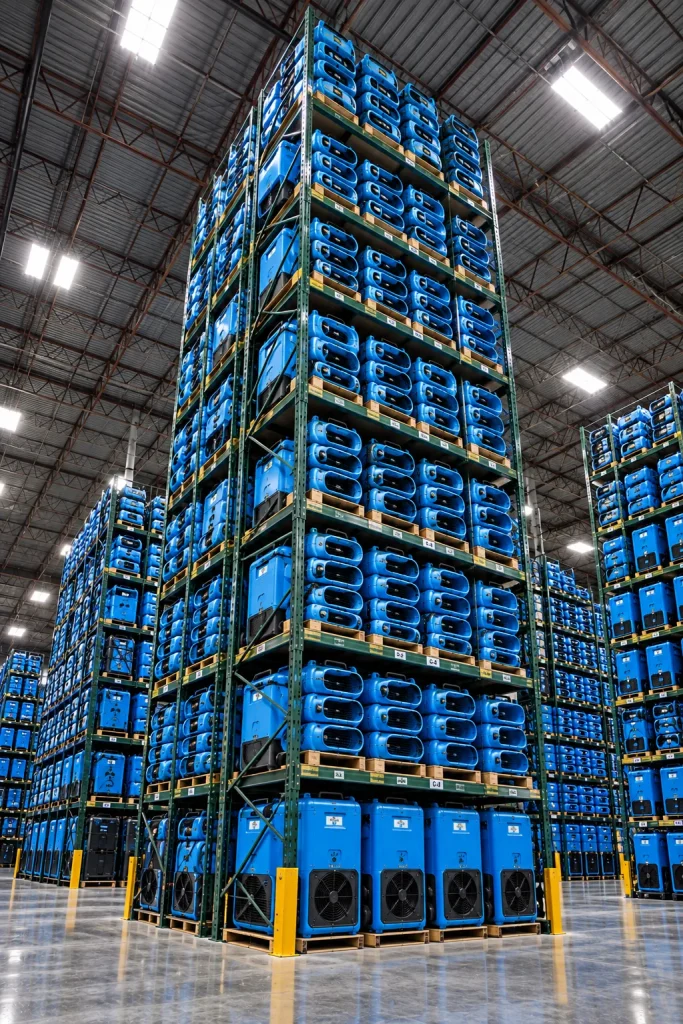
A large loss may need hundreds of fans and dozens of dehumidifiers. Moving all that gear in and out takes planning. The team needs to reserve loading docks, freight elevators, and staging areas. Also, the building’s power must handle the load, or generators must fill the gap. Good logistics keep drying on schedule.
Budget Tracking
Large losses can cost a great deal. So track costs daily, by zone. Equipment counts, labor hours, and materials should all be logged. Then owners and adjusters can see where money goes and catch problems early. Clear budgets also make final settlements smoother.
Communication With Tenants and Staff
Large buildings often house many tenants or departments. Each one needs updates on what happened, which areas are closed, and when they can return. Short daily notices and a single point of contact keep everyone informed. In addition, clear signs help visitors avoid work zones.
When Floodwater Is Involved
If water came from outside, such as bayou or street flooding, it may carry sewage and chemicals. That changes the work. Crews must wear more protective gear and remove more porous materials. They also clean and disinfect every surface the water touched. Keep these areas clearly marked and separate from clean-water zones.
From Drying to Rebuild
As each zone hits its drying targets, the build-back phase can start there. Common areas and building-wide systems typically lead, with individual suites close behind. Planning the rebuild while drying is still underway saves time. Contractors can order materials and schedule crews so work starts as soon as each zone is ready.
Preparing for Houston Commercial Water Damage in Storm Season
Houston’s storm season makes large losses more likely. Owners can prepare by keeping updated floor plans, shutoff maps, emergency contacts, and a pre-loss agreement with a restoration company. In addition, regular roof and drainage checks reduce the risk of storm leaks. Preparation turns a chaotic response into an organized one.
Lessons Learned
After the building is back to normal, hold a short review with staff, tenants, and the restoration team. Talk about what went well and what could improve. For example, maybe shutoff valves were hard to find, or tenant contacts were out of date. Fixing these gaps now makes the next response faster.
Also, update the building map with any new shutoffs or drains found during the job.
Large Loss Checklist
- Stop the water and make the building safe
- Set up a clear command structure
- Extract standing water fast
- Control humidity with the right equipment
- Dry in zones and track readings daily
- Protect critical building systems
- Document everything by zone
- Plan the rebuild early
Get Large Loss Support in Houston
Large Houston commercial water damage needs fast, organized action. Our Houston large-loss team can mobilize crews and equipment for big buildings. To start, call or message us.
Related Reading
- New Orleans Storm Cleanup — planning across many spaces.
- Commercial Water Extraction — why removing standing water is only the first step.
- Sprinkler Water Damage Cleanup — restoring multi-floor buildings.
- Commercial Restoration Documentation — why the evidence of the work matters.
- Commercial Restoration Sequencing — why the order of recovery matters.
- Warehouse Water Damage Repair — keeping shipping on track.