
Austin flood damage repair is a process with clear stages, and each one builds on the last. Central Texas gets sudden, heavy storms that can drop inches of rain in an hour. Flash floods can push water into ground-floor offices, retail spaces, and warehouses along creeks and low-lying streets. When that happens, owners need to move fast and in the right order. This guide walks through the full path from water extraction to finished interior repairs.
Business owners and property managers across the Austin area can use it as a roadmap.
Why Flood Damage Is Different
Floodwater is not the same as water from a broken pipe. It comes from outside, so it often carries mud, sewage, chemicals, and debris. As a result, crews treat it as dirty water from the start. That changes how crews clean, what they remove, and how they protect workers. In addition, floods often hit many buildings at once, so crews and gear get stretched across the region.
Safety Before Austin Flood Damage Repair Starts
Do not enter a flooded building until it is safe. Floodwater can hide electrical hazards, sharp debris, and structural damage. First, have the power shut off by the utility or an electrician. Next, check for gas leaks and weak floors. Then wear boots, gloves, and eye protection before entering. The Ready.gov flood guide lists key safety tips.
Austin Flood Damage Repair Step One: Extraction
Once the building is safe, crews remove standing water. They use pumps for deep water and powerful extractors for carpets and hard floors. Workers shovel and scrape out the mud and silt. Every hour the water sits, it climbs higher into walls and deeper into floors. For more on this stage, read our extraction guide.
Step Two: Removing Contaminated Materials
Because floodwater is dirty, crews cannot save most soft, porous items. Carpet and pad, lower drywall, insulation, and particleboard furniture usually go. Crews cut drywall a set distance above the waterline, often called a flood cut. This removes contaminated material and opens the wall cavity for drying. Crews photograph and log each item before it goes in the dumpster.
Step Three: Cleaning and Disinfecting
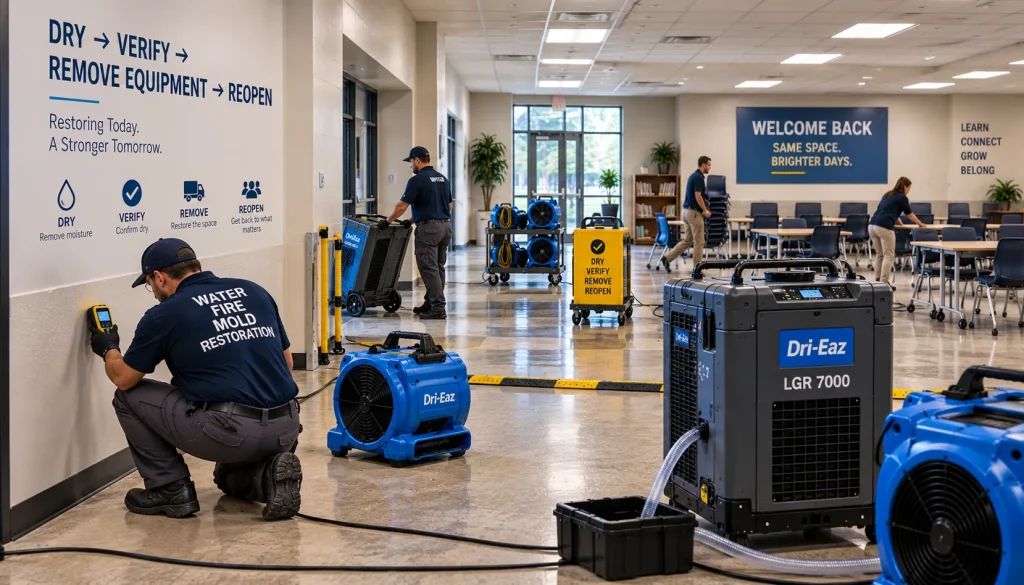
After removal, crews clean every surface the water touched. They scrub concrete, framing, and remaining walls with cleaners and disinfectants. Hard furniture and equipment may be cleaned and saved. This step reduces health risks and prevents odors. It must happen before drying, since drying contaminated materials only locks the problem in place.
Austin Flood Damage Repair Step Four: Structural Drying
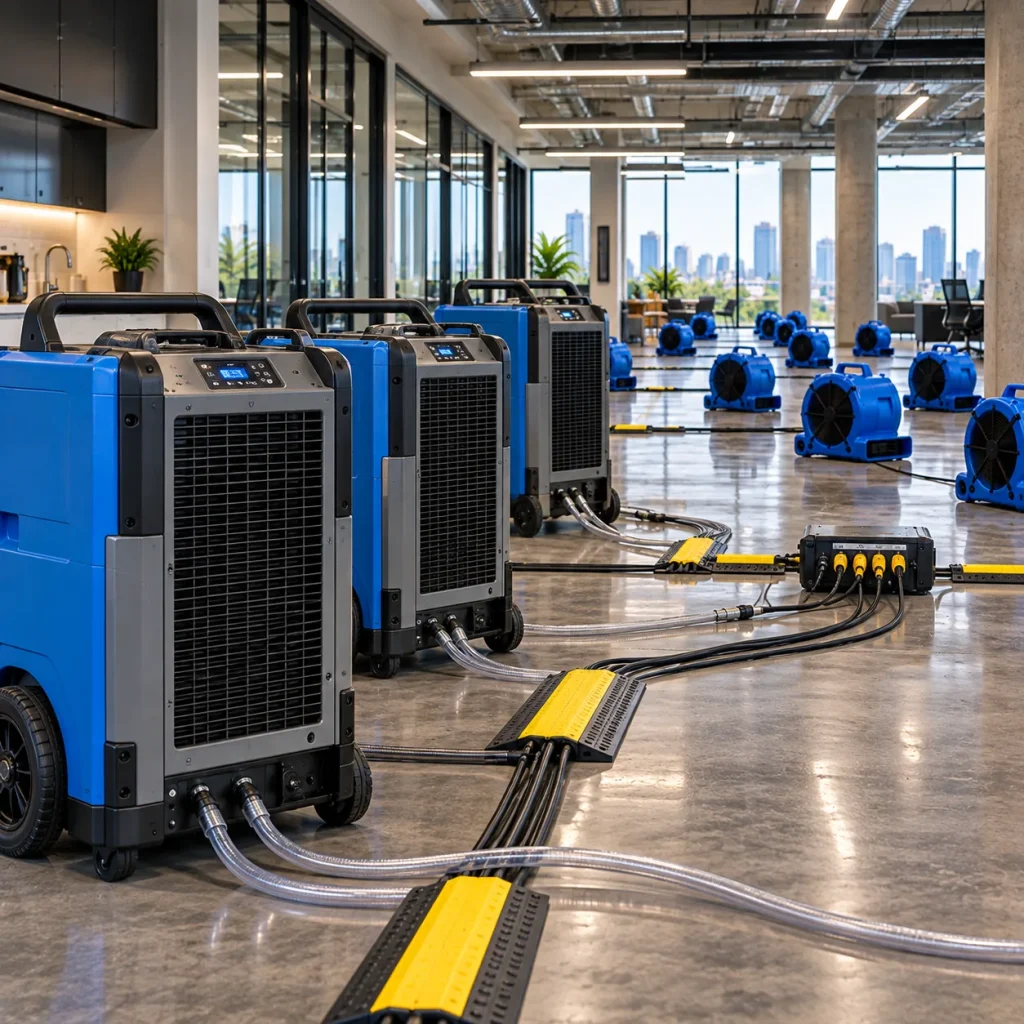
With contaminated materials gone and surfaces clean, drying can begin. Air movers push air across wet framing and slabs, and dehumidifiers pull moisture from the air. In Austin’s warm, humid spring and summer, humidity control is key. Technicians take daily readings at marked points until every material reaches its drying goal. Only then is the building ready for repairs.
Mold Prevention During Austin Flood Damage Repair
Warm temperatures and floodwater create perfect conditions for mold. On damp drywall or wood, it can show up in as little as two days. That is why speed matters at every step. Fast extraction, quick removal of wet porous items, thorough cleaning, and steady drying all reduce mold risk. If mold does appear, crews treat it under containment before rebuilding.
Step Five: Documentation for Insurance
Flood claims can be complex. Many commercial policies exclude flood unless the owner has separate flood coverage. So review your policy early. In addition, keep thorough records: photos before and after, moisture logs, disposal lists, and invoices. Clear records support the claim, whether it goes to a flood policy, a commercial property policy, or both.
Austin Flood Damage Repair Step Six: Interior Repairs
Once the building is dry, rebuilding starts. Common repairs include:
- Insulation and drywall below the flood cut
- Baseboards, trim, and doors
- Flooring, such as carpet tile, vinyl, or polished concrete
- Paint and wall finishes
- Electrical outlets and fixtures that got wet
- Cabinetry and built-ins
Licensed trades should inspect electrical and HVAC systems before they return to service.
Choosing Flood-Resistant Materials
Rebuilding is a chance to reduce future damage. For example, some owners choose cement board instead of drywall near the floor, tile or sealed concrete instead of carpet, and raised outlets. These choices make the next cleanup faster and cheaper. Talk with your contractor about options that fit your space and budget.
Austin Flood Damage Repair Timelines
Timelines vary with the size of the flood and the availability of crews and materials. Extraction and cleanup may take a few days. Drying often takes several more. Repairs can take weeks, especially if materials are in short supply after a regional event. A good contractor will share a realistic schedule and update it often.
Keeping the Business Running
Many businesses cannot wait weeks to reopen. So consider partial reopening. Dry and repair the most critical areas first, such as the sales floor, reception, or production line. Meanwhile, work continues in other zones. In addition, temporary space or remote work can bridge the gap. Planning these options early limits lost income.
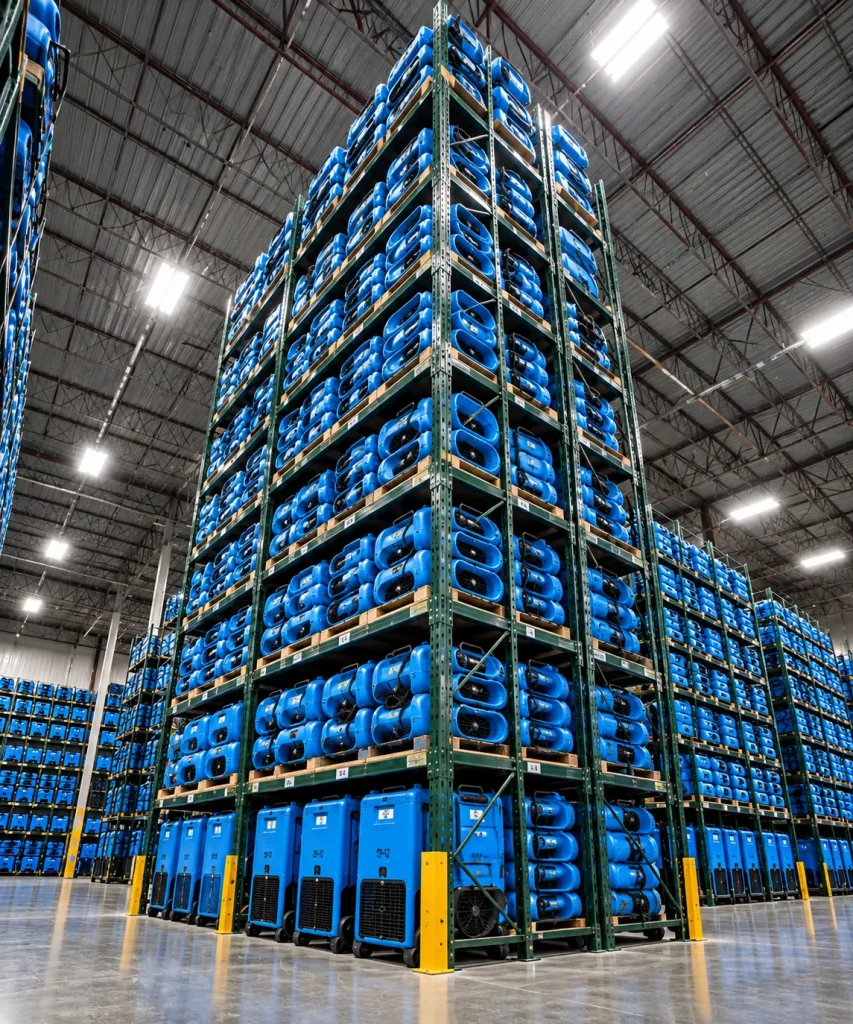
Austin Flood Damage Repair for Warehouses
Warehouses along low streets and creeks often take the worst of a flash flood. Stock on the floor, racks, forklifts, and dock doors all get wet. So start by moving or saving the most costly stock. Then pump out water, clean the slab, and dry the space with large dehumidifiers. In addition, check rack bases and anchors for rust and damage before you load them again. A careful plan gets shipping back on track sooner.
After the Water Goes Down
Even after the floor looks dry, water can hide under the slab edges, inside walls, and in cabinet bases. So keep taking readings until every spot hits its goal. Also, watch for odors in the weeks after the job. A musty smell can mean a damp spot was missed.
Keep a few spare fans and a wet vac on site, too. They help staff handle small leaks while crews are busy elsewhere in town.
Permits and City Rules
Repairs after a flood may need permits, especially for electrical, plumbing, or structural work. Some properties in flood zones may face extra rules for rebuilding. The City of Austin website has information on permits and flood safety.
Talking With Your Team and Customers
Floods disrupt staff and customers. So tell your team when to return and where to work in the meantime. Post updates on your website and social pages so customers know when you will reopen. In addition, let key suppliers know about any delays. Clear, early messages keep trust high while repairs move forward.
Finally, keep a short list of your flood lessons. Note where water came in, how high it rose, and which items you lost. That list will guide your next plan and help you protect the most costly things first.
Flood Repair Checklist
- Make the building safe before entering
- Extract standing water and mud
- Remove contaminated porous materials
- Clean and disinfect every surface
- Dry with daily moisture checks
- Document everything for insurance
- Rebuild with flood-resistant materials
- Plan partial reopening
Recover From Flooding Step by Step
A clear plan makes Austin flood damage repair faster and less stressful. Our Central Texas restoration team handles every stage, from pumping to final paint. To get started, reach out today.
Related Reading
- Commercial Water Extraction — why removing standing water is only the first step.
- Commercial Sewage Backup Cleanup — handling contaminated water.
- New Orleans Storm Cleanup — planning across many spaces.
- Commercial Structural Drying — how contractors prove a building is dry.
- Warehouse Water Damage Repair — keeping shipping on track.
- Commercial Restoration Sequencing — why the order of recovery matters.