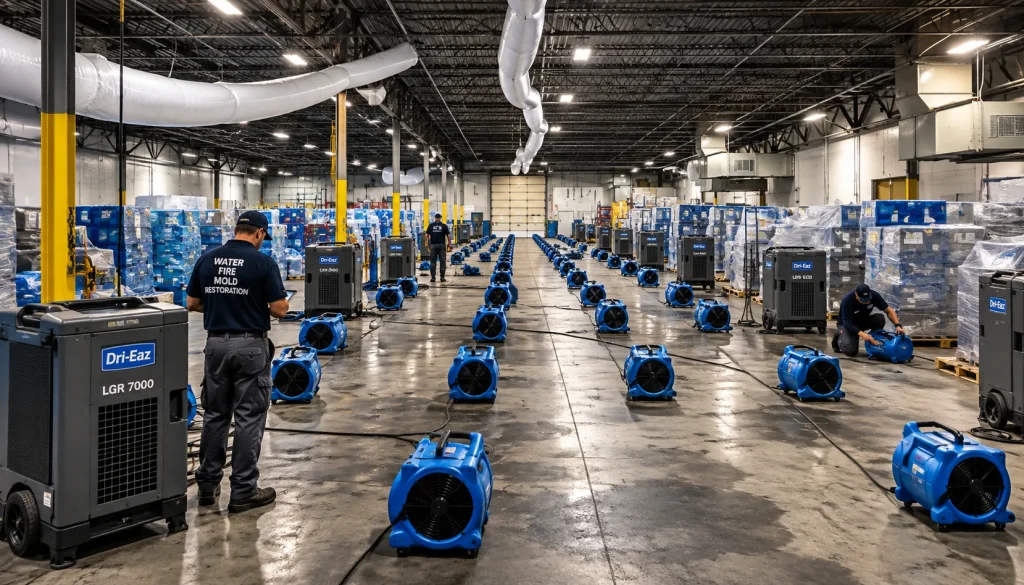
Dallas commercial water damage can strike any property, at any hour, in any season. Spring hailstorms crack roofs. Flash floods fill parking garages. Winter freezes burst pipes, as the 2021 storm showed across North Texas. Aging plumbing and fire sprinklers fail without warning. For property managers, the question is not if a water loss will happen, but when. A written response plan turns a chaotic emergency into a series of clear steps. This guide shows Dallas property managers how to build one.
It works for office buildings, retail centers, medical properties, industrial parks, and multifamily communities across the Dallas–Fort Worth area.
Why Property Managers Need a Written Plan
When water hits, people panic. Phones ring. Tenants want answers. Owners want updates. Without a plan, valuable time slips away while someone searches for a shutoff valve or a phone number. In contrast, a written plan tells everyone what to do and who to call. As a result, damage stays smaller and recovery moves faster.
Dallas Commercial Water Damage Risks
North Texas sees a wide mix of water threats:
- Severe storms and hail that damage roofs and let rain inside
- Flash flooding in low streets, garages, and ground floors
- Hard freezes that burst pipes and sprinkler lines
- Plumbing failures in older buildings
- HVAC leaks from clogged condensate lines during long, hot summers
The National Weather Service Fort Worth office posts watches and warnings for the region, which can help you prepare.
Part 1: Build Your Contact Tree
Start with people. List who must be called, in what order. Include:
- Building engineers and maintenance staff
- The property owner or asset manager
- Your restoration contractor with a 24-hour number
- Plumber, roofer, and fire sprinkler contractor
- Insurance agent and carrier claims line
- Security and alarm company
Keep phone numbers in print and on every manager’s phone.
Part 2: Map Shutoffs and Critical Systems
Next, map every water shutoff, sprinkler valve, and electrical panel. Mark them on a simple floor plan. Label them in the field with bright tags. In addition, note the locations of elevator pits, server rooms, and electrical rooms. These spaces need fast protection. A clear map can save thousands of dollars in the first ten minutes.
Part 3: A Restoration Partner for Dallas Commercial Water Damage
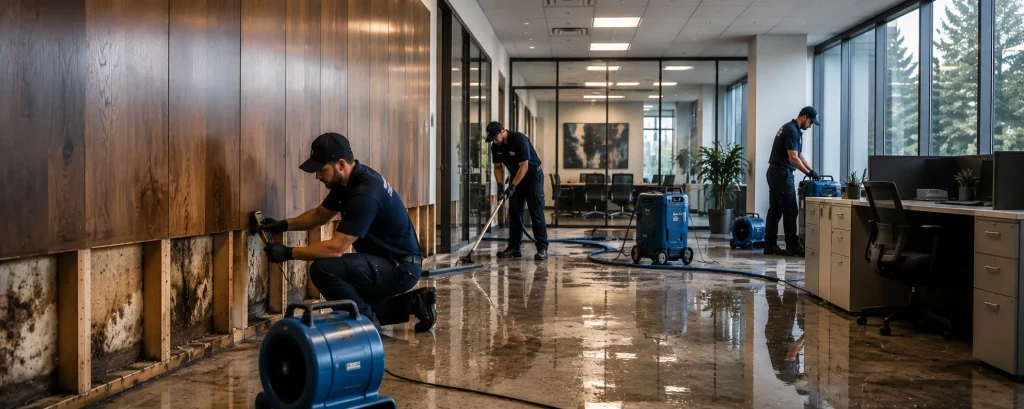
Do not wait for a disaster to choose a contractor. After major Dallas storms, demand spikes, and crews get booked quickly. So sign a service agreement in advance. Look for commercial experience, large equipment capacity, and clear documentation practices. In addition, confirm insurance and safety records. A pre-qualified partner puts your property at the front of the line.
Part 4: Plan Tenant Communication
Tenants want to know three things: what happened, when they can use their space, and who to call. So prepare message templates now. Send short updates by email and text. Post notices in lobbies and elevators. Name one contact person for tenant questions. Good communication keeps tenants calm and reduces disputes.
Keeping Records Ready
Store floor plans, lease summaries, and insurance policies in one shared folder. Keep a printed copy in the engineering office too. When water hits, no one should have to search.
Part 5: Know Your Lease Responsibilities
Leases split responsibility for repairs. Typically, the landlord covers the structure and building systems. Tenants cover their own improvements and contents. However, every lease is different. Review them before a loss, and summarize who handles what. This step speeds up repairs and insurance claims for Dallas commercial water damage.
The First Hour of Dallas Commercial Water Damage
When water hits, follow these steps:
- Keep people safe and away from wet electrical areas
- Shut off the water source
- Call your restoration partner and building engineer
- Protect elevators, server rooms, and electrical rooms
- Take photos and video of all damage
- Notify affected tenants and the owner
Post this checklist in engineering rooms and management offices.
Documenting Dallas Commercial Water Damage for Insurance
Insurers want clear records. So capture photos before cleanup. Keep moisture logs, equipment lists, and invoices. In addition, separate costs by tenant and by building area. This makes claims faster and reduces disputes between the landlord’s carrier and tenants’ carriers.
Dallas Commercial Water Damage in Multi-Tenant Properties
Shared buildings add complexity. A leak in one suite can affect neighbors above and below. Shared corridors, restrooms, and elevators may close. So the property manager must coordinate the restoration team, tenants, and vendors. Phasing the work by floor or suite helps keep the rest of the building open.
Dallas Commercial Water Damage After Hail and Storms
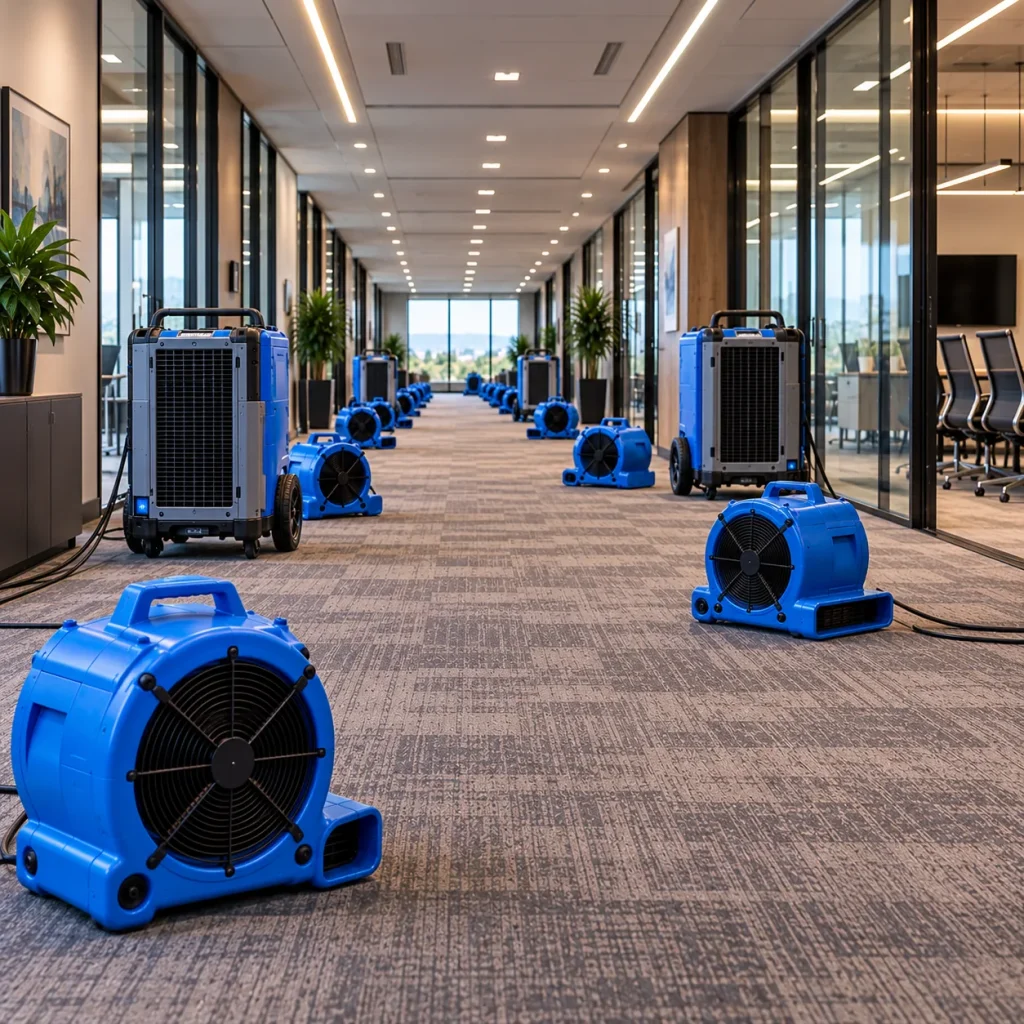
North Texas hail can punch holes in roofs, crack skylights, and damage rooftop HVAC units. Then the next rain pours inside. So after any major hailstorm, inspect the roof right away. Look for dents, missing granules, cracked flashing, and damaged drains. Call a roofer to tarp any openings. In addition, check ceilings on the top floor for stains. Catching storm leaks early keeps Dallas commercial water damage from spreading through the building.
Protecting Garages and Lower Levels
Flash floods can fill parking garages and ground floors in minutes. Water may carry mud, oil, and debris. So know where floodwater enters your property. Keep drains clear of leaves and trash. Consider flood barriers at garage ramps and loading docks. Also, move critical equipment off the lowest level when you can. These steps limit damage when heavy rain hits.
Getting Ready for Winter Freezes
Dallas does not freeze often, but when it does, pipes burst. The February 2021 storm proved how costly that can be. So insulate pipes in exterior walls, attics, and unheated rooms. Keep heat on in vacant suites. Check sprinkler systems in loading docks and stairwells. In addition, show staff where to shut off water if a pipe breaks.
After the Emergency: Restoration and Reopening
Once the water is out and the structure is dry, repairs begin. Crews replace damaged materials, test building systems, and clean the space. Then tenants can return. Walk each suite with the tenant before reopening. Note any remaining issues on a punch list.
Practicing Your Dallas Commercial Water Damage Plan
Even a great plan fails if no one remembers it. So review it twice a year. Update contacts when staff change. Walk new engineers through the shutoff map. In addition, run a short drill before storm season and before winter. After every real event, note what worked and what did not. Then improve the plan.
Common Mistakes to Avoid
- Waiting until a storm to find a restoration contractor
- Keeping shutoff locations only in one person’s memory
- Forgetting to protect elevators and server rooms
- Sending tenants mixed messages
- Mixing tenant and landlord costs in one record
FAQ on Dallas Commercial Water Damage
What causes most Dallas commercial water damage?
Storms, flash floods, frozen pipes, and plumbing or HVAC failures are the most common causes.
Should I sign a service agreement before a loss?
Yes. It helps you get priority service after major storms.
Who pays for repairs in a multi-tenant building?
It depends on the lease, but landlords usually cover the structure and tenants cover their own improvements.
Be Ready Before Water Hits
A clear plan protects your property and your tenants. Visit our Dallas water damage repair page, or read our property manager guide today.
Related Reading
- Multi-Tenant Losses in Minneapolis — managing many tenants at once.
- Sprinkler Water Damage Cleanup — restoring multi-floor buildings.
- Commercial Storm Damage Restoration — roof leaks and flooded interiors.
- Commercial Restoration Downtime — why business interruption can cost more than the damage.
- Commercial Restoration Documentation — why the evidence of the work matters.
- Partial Occupancy During Restoration — keeping the business operating during repairs.